Top-Five Rod End Supplier Lists Don't Compare: A Sourcing Scorecard
A top-five rod end supplier list usually answers a comfort question: which names are familiar? It does not answer the procurement question that matters: which supplier and product family fit a hydraulic cylinder on a construction machine, a sealed linkage in a gas spring, a low-speed solar tracker, or a 4x4 steering assembly exposed to mud and salt. Word-of-mouth recommendations often carry the same gap. They compress very different product ranges, materials, sealing choices and customization capabilities into a single reputation signal.
This article replaces that signal with a buyer worksheet. It uses a six-dimension sourcing scorecard and illustrates each dimension with catalog evidence from Deyuan Smart Technology (Fujian) Co., Ltd, the manufacturer behind the LDK brand. Deyuan was established in 1986 and operates IATF16949-certified manufacturing facilities for bearings and housings. The scoring is a worksheet, not an independent performance rating. Its purpose is to make supplier conversations specific enough to shortlist against the application.
Why a top-five list rarely answers a sourcing question
Rod ends and spherical plain bearings are interface components. Their fit depends on load direction, misalignment, contamination, temperature, maintenance access and the linkage around them. A supplier list that ranks names without those conditions cannot tell a buyer whether a steel-on-steel rod end is appropriate, whether a maintenance-free liner is needed, or whether a sealed ET-2RS design suits a dirty environment. The same brand can offer several answers, and the same catalog can contain families with different materials and sealing logic.
A second problem is that popularity and specification coverage are not the same. A supplier may be well known for one product family while a project needs a different bore range, thread direction, liner, stainless body, hydraulic clamping slot or clevis end. A third problem is customization. When a project needs private labeling, custom packaging, prototyping or an 8D response, the buyer needs evidence of process capability, not a slogan. The scorecard below separates these issues so they can be scored and weighted.
The six-dimension sourcing scorecard
The scorecard has six dimensions. Each dimension receives a star rating from one to five, plus a short rationale and a request for evidence. The example reading in the table records how LDK catalog evidence might be entered on the worksheet. It is not a claim that LDK outperforms another supplier on every project. A buyer should re-score each supplier for the actual application and should change the weighting when one dimension is more critical.
| Dimension | What the buyer scores | Evidence to request | Example reading from LDK catalog evidence |
|---|---|---|---|
| 1. Brand history | Operating history, manufacturing continuity and quality-system maturity | Company history, certification scope, plant information, export experience | ★★★★☆ Founded in 1986; IATF16949-certified facilities; 90,000 m² site; 130 employees; 15,000,000 units annual output |
| 2. Technical advantages | Engineering support, material combinations, testing and in-house production | R&D headcount, laboratory scope, test reports, bearing and housing production scope | ★★★★☆ 12 engineers; laboratory and precision measuring room; fatigue, tensile, noise/vibration and salt-spray testing; in-house bearings and housings |
| 3. Product precision | Material hardness, grinding, plating and measurement control | Material specifications, hardness ranges, surface treatment, inspection records | ★★★★☆ GCr15 inner rings hardened HRC 58–64; outer rings HRC 54–60; precision ground and hard-chrome-plated options |
| 4. Wear resistance | Liner, seal, lubrication and material choices for the duty cycle | Sliding-contact materials, seal design, re-greasing option, application conditions | ★★★★☆ PTFE fabric and PTFE composite liners; two seals on ET-2RS designs; stainless steel and re-greasable options |
| 5. Specification coverage | Bore range, thread types, product families and standards coverage | Catalog range, metric and inch sizes, hydraulic and clevis options | ★★★★★ Rod ends, hydraulic rod ends, ball joints, clevis ends and spherical plain bearings across small metric to large bore sizes |
| 6. Customization service | OEM/ODM process, packaging, prototyping, problem-solving and IP protection | NDA, DFM, prototype capability, MOQ, lead time, 8D and FMEA process | ★★★★☆ OEM/ODM, private labeling, custom packaging, 2D/3D prototyping, NDA/IP protection, 8D and FMEA capability |
Use the stars as a recording method, not as a market ranking. A five-star entry means the supplied evidence is strong for that dimension on this worksheet. It does not prove that the supplier is the best choice for a specific load, environment or delivery requirement.
1. Brand history: a starting filter, not an answer
Brand history matters because rod ends and spherical plain bearings are safety- and downtime-sensitive components. A buyer wants evidence that the supplier has a stable quality system and can support repeat orders. On the worksheet, brand history should be scored from verifiable facts: founding year, plant area, employee count, annual output, certification and export experience. LDK's company profile states that Deyuan was established in 1986, operates a 90,000 m² site with approximately 130 employees, and produces 15,000,000 units annually. The profile also lists IATF16949-certified manufacturing facilities, a laboratory, a precision measuring room and more than ten workshops.
Those facts justify a positive history score, but they do not close the evaluation. A long history does not tell the buyer whether the supplier has the exact hydraulic rod end with a clamping slot, the required stainless steel rod end, or the sealed spherical plain bearing for a dusty linkage. The next dimensions convert history into product-specific evidence.
2. Technical advantages: look for engineering and test evidence
Technical advantage is often written as a vague claim. For sourcing, it should be evidenced by engineering headcount, material combinations, test capability and production scope. The LDK profile lists 12 engineers and a laboratory with fatigue life, tensile strength, noise and vibration, and salt-spray testing. The company also states that it produces both bearings and housings in-house and offers a broad range of material and housing combinations. For a buyer, this matters because a rod end is not only a bearing insert; the body, race, thread, plating and seal all interact.
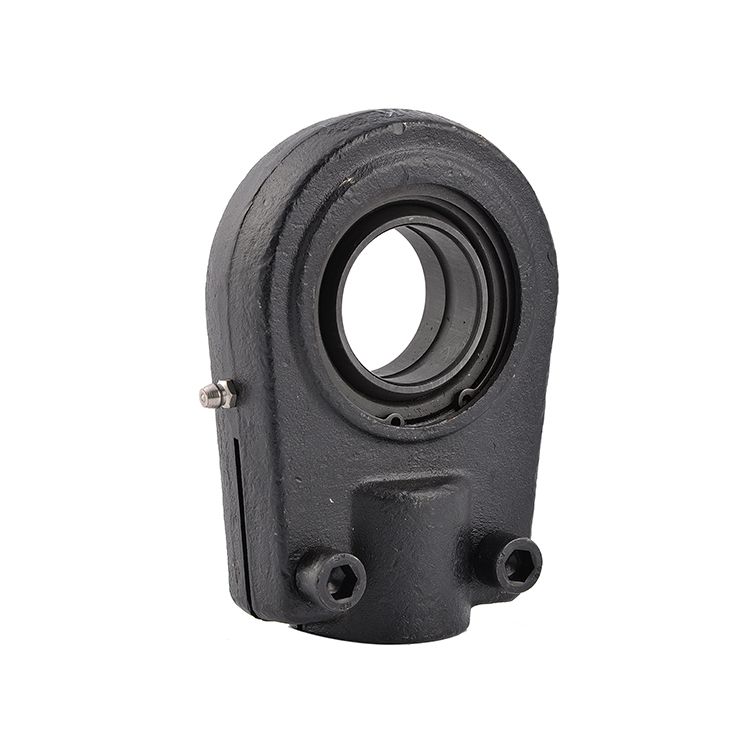
Score this dimension by asking what the supplier can test and what it can make in-house. If a project needs a stainless steel rod end for a corrosive environment, the buyer should look for a documented stainless steel family such as SCHS, not merely a general corrosion-resistance claim. If a project needs a hydraulic rod end with a locking slot, the buyer should look for a documented hydraulic family such as SIR..ES. A strong technical score should be supported by those specific families and by a route for engineering questions.
3. Product precision: ask for material and process evidence
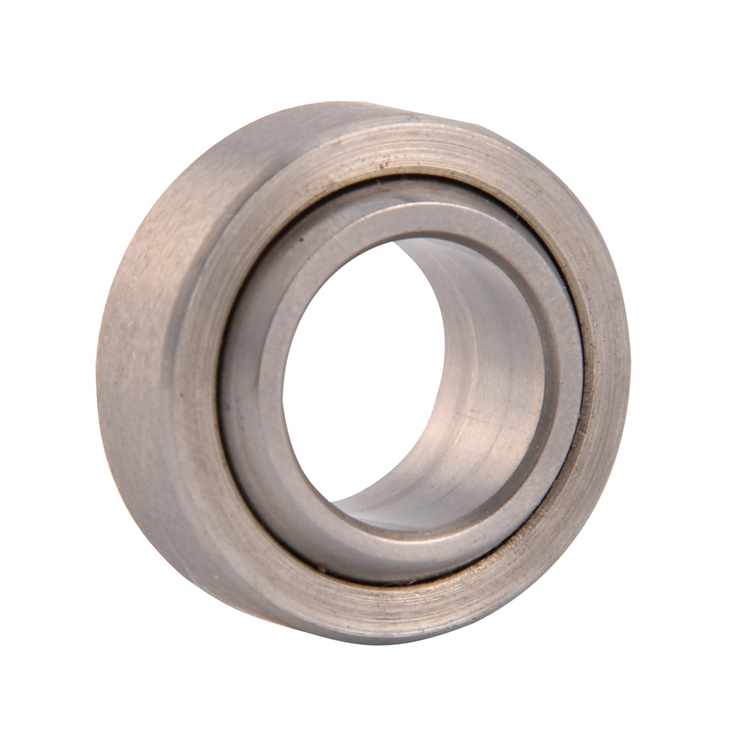
Product precision should be scored from documented material and process details. The LDK catalog evidence shows, for example, that GEG..ET-2RS spherical plain bearings use a GCr15 outer ring hardened to HRC 54–60 with a PTFE fabric liner, and a GCr15 inner ring hardened to HRC 58–64 with hard chrome plating. The GE..C and GEG..C family uses a carbon steel outer ring with PTFE and a GCr15 inner ring hardened to HRC 58–64. The SIR..ES hydraulic rod end uses a mild steel body with a mounted GE..ES radial spherical plain bearing, and the inner ring is heat treated to HRC 58–64.
These details are more useful than a generic precision claim because they tell the buyer what to verify. For a high-load linkage, hardness and liner choice matter. For a corrosive application, body material and plating matter. For a replacement part, thread direction and bore size matter. The scorecard should record the exact evidence available for the proposed series, not the best evidence from another series. That is why the example precision rating is four stars rather than five: the catalog provides strong material data, but the buyer still needs to confirm the tolerance and inspection record for the specific order.
4. Wear resistance: match the liner and seal to the environment
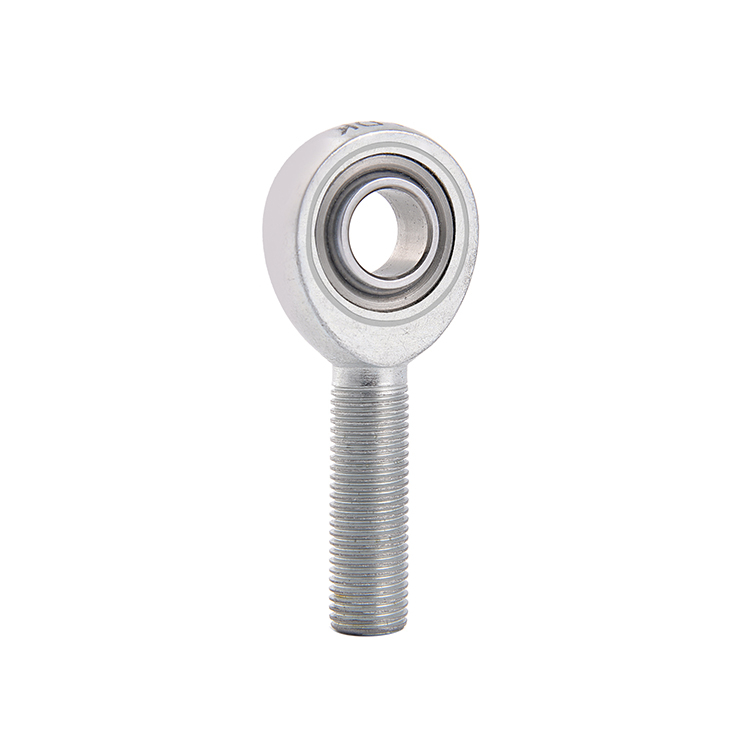
Wear resistance is application-dependent. A maintenance-free liner may be appropriate for a sealed cylinder where re-lubrication is impossible, while a re-greasable steel-on-steel rod end may be appropriate where maintenance access exists and higher load capacity is needed. The LDK catalog includes several design routes. The GEG..ET-2RS family uses a PTFE fabric liner, a fractured outer ring and two seals. The GE..C and GEG..C family is maintenance-free with a steel/PTFE composite sliding surface. The SCHS stainless steel rod end uses a PTFE composite bonded to the race. The SIR..ES hydraulic rod end is re-greasable through a grease nipple, while the SA..E(S) family distinguishes re-greasable SA..ES from non-re-greasable SA..E.
For scoring, the buyer should record the expected contamination, temperature, motion type and maintenance interval. Then the buyer should ask which liner and seal are proposed for that duty. A four-star example rating reflects the existence of multiple documented wear-control routes, not a guarantee of service life. Wear life depends on load, misalignment, contamination and installation. The worksheet should treat a supplier's wear claim as a question to be supported by test data and application references, not as a finished conclusion.
5. Specification coverage: check the exact combination
Specification coverage is where a broad catalog can reduce sourcing friction. The LDK catalog evidence covers rod ends such as SA..C, SA..E(S), SCHS, NCHS, JF and CF..TY, as well as SJM..T and SJF..T series and NXM/NXF series. Hydraulic rod ends include SIQ..ES, SIGEW..ES, SIR..ES, SF..ES and SK..E(S). Ball joints include SQ..RS, SQZ..RS, R..G and CS. Clevis ends include DIN71751 and DIN71752 types. Spherical plain bearings include GE..E(S), GEG..E(S), GE..ET-2RS, GEG..ET-2RS, GEZ..ES, COM and SCOM families, among others documented in the supplied catalog evidence.
Coverage should be scored by the combination the project needs, not by the total number of products. A buyer may need a 5 mm bore maintenance-free rod end, a 120 mm hydraulic rod end, an inch-series rod end, a stainless steel body, a left-hand thread, a sealed spherical plain bearing or a DIN clevis. The scorecard should list the required combination and mark whether the supplier has a documented match. A five-star example rating is appropriate only because the catalog range is broad across rod ends, hydraulic rod ends, ball joints, clevis ends and spherical plain bearings; the buyer must still verify the exact item.
6. Customization service: verify the process, not the promise
Customization is relevant when a standard rod end or spherical plain bearing needs a different thread, plating, packaging, label or assembly. The LDK capability information lists OEM and ODM support, private labeling, custom packaging, 2D and 3D prototyping, NDA and IP protection, DFM expertise, 8D problem solving and FMEA capability. It also lists a monthly capacity of 300,000 units, a MOQ of 5,000 units for the stated OEM/ODM context and a lead time of 30–90 days. Quality control includes self-inspection, second-party audits and third-party audits.
A buyer should score customization on evidence that the process can be controlled: who approves the drawing, how prototypes are validated, how changes are recorded, and how problems are closed. A four-star example rating reflects documented process elements, not a promise that any custom request will be accepted. The correct next step is to send the drawing and application conditions for a feasibility review. That is also where lead time, MOQ and tooling questions belong.
What the LDK catalog evidence covers
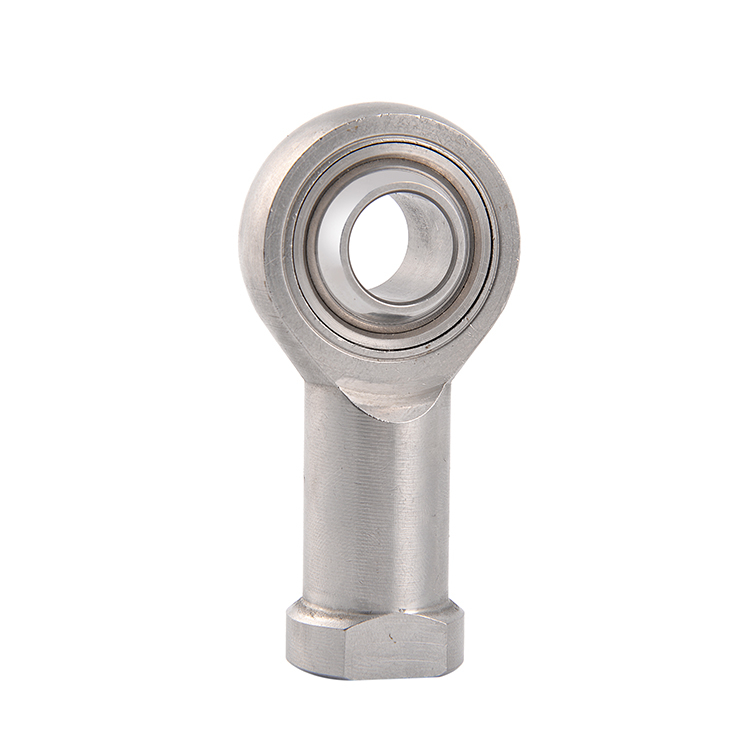
The catalog evidence is useful because it lets a buyer populate the scorecard with specific families rather than adjectives. For rod ends, the documented range includes metric and inch options, maintenance-free and re-greasable designs, stainless steel bodies and heavy-duty nylon/PTFE race options. The NCHS series, for example, is listed as a three-piece rod end with a nylon polymer race containing PTFE additive for heavy-duty load rating applications. The JF series is an inch-series three-piece rod end with a carbon steel body, GCr15 ball and alloy steel race. The SA..E(S) series covers a 5–80 mm shaft range with a mounted GE..E or GE..ES bearing and a distinction between re-greasable SA..ES and non-re-greasable SA..E.
For hydraulic rod ends, the SIR..ES family is a locking-slot type with a housing that can be clamped by socket screws, mounted with GE..ES radial spherical plain bearings and fixed by snap rings. It covers a 20–120 mm shaft diameter and is re-greasable through a grease nipple. The SIGEW..ES family extends to a 12–200 mm model range. These details matter for construction, agricultural, pneumatic and hydraulic linkage projects because the mounting method and re-lubrication route change the installation and maintenance plan.
For spherical plain bearings, the catalog evidence includes maintenance-free and sealed families. The GE..ET-2RS and GEG..ET-2RS families use PTFE fabric liners; the GEG..ET-2RS series is described as heavier-duty than the GE..ET-2RS series. The SGE..C family uses a 304 stainless steel outer ring with a PTFE composite liner and a 440 stainless steel ball, covering a 4–30 mm shaft diameter. The GE..E(S) and GEG..E(S) families cover a broad bore range, while GEZ..ES, COM and SCOM families add further options. A buyer should not treat this as a claim that every family suits every load; it is a map for matching the project to the right documented series.
How to use the scorecard for a specific application
The scorecard becomes useful when it is applied in a fixed sequence. First, define the application duty in writing: load direction and magnitude, misalignment, motion type, temperature, contamination, washdown, maintenance access and expected service interval. Second, list the exact product family and size required, including thread direction, bore, seal and liner. Third, score each candidate supplier on the six dimensions using only documented evidence. Fourth, weight the dimensions for the project. A construction equipment linkage may weight wear resistance and specification coverage heavily; a food-processing or washdown application may weight material and corrosion evidence; a distributor may weight customization and supply continuity.
- Define the duty: Record load, motion, environment and maintenance conditions. The LDK application evidence, for example, describes construction equipment as a high-dust, high-impact, 24/7 environment requiring sealing and misalignment capability. Air cylinder applications are described with low-friction and angular-misalignment requirements. Gas spring applications emphasize corrosion resistance and maintenance-free operation. These conditions should drive the weighting.
- Match the family: Use the catalog evidence to identify a documented family. A hydraulic cylinder linkage may point toward SIR..ES, SIQ..ES or SIGEW..ES. A dirty off-road linkage may point toward a sealed spherical plain bearing or a stainless steel rod end. A standard mechanical linkage may use SA..C or SA..E(S).
- Score the evidence: Give each dimension a star rating and write the evidence beside it. A high score without a document reference is not useful. The worksheet should show the source of the claim, the applicable product family and the conditions under which it applies.
- Request samples and verification: Ask for the proposed part, dimensional check, material certificate or test report where applicable. Confirm the thread, bore, liner, seal and marking. A sample review is more informative than another supplier list.
- Review commercial fit: Confirm MOQ, lead time, packaging and change-control process. The LDK capability information lists a 30–90 day lead time, a 5,000-unit MOQ for the stated OEM/ODM context and a monthly capacity of 300,000 units. These figures should be checked against the actual order, not assumed for every item.
Application checks that change the weighting
Application context should change the scorecard weights. In construction equipment, the LDK application note describes full outdoor earthmoving conditions with high dust, extreme weather from -20°C to +50°C, high humidity or mud, high load, high impact and strong vibration. For that context, a buyer should weight sealing, wear resistance and hydraulic rod end mounting evidence more heavily than a decorative brand score. In pneumatic or air cylinder applications, the note describes an indoor automation environment with moderate dust, medium load and frequent reciprocating motion, with low friction and angular misalignment as key requirements. There, the buyer may weight liner choice and maintenance-free operation more heavily.
Gas spring applications are described with a wide temperature range, long-term corrosion resistance, self-lubricating or maintenance-free operation and resistance to weak acid or alkali. A buyer scoring that project should ask for the stainless steel or coated route and the seal design. Solar tracking applications are described with UV exposure, sand and dust, rain, humidity, temperature swing and coastal salt spray. A buyer should weight corrosion resistance, self-aligning capability and maintenance-free operation. These examples show why a single top-five ranking cannot substitute for weighting the six dimensions against the project.
Limits of the scorecard
The scorecard is a decision aid, not a performance guarantee. A star rating records the strength of the available evidence for the stated application; it does not prove service life, load capacity or suitability. The buyer should keep the following limits visible. First, catalog coverage does not mean every combination is stocked or standard. Second, material and hardness data do not replace a dimensional and tolerance check for the ordered part. Third, a maintenance-free design is not automatically better than a re-greasable design; the maintenance plan and operating environment decide. Fourth, a high brand-history score does not remove the need to verify the exact family, thread, seal and certificate.
The scorecard also should not be used to make unsupported comparisons. If a buyer wants to compare two suppliers, the comparison should use the same product family, bore range, load conditions and evidence type. A hydraulic rod end should not be compared with a general-purpose spherical plain bearing on a single star score. The correct approach is to score each candidate on the same six dimensions for the same application, then mark where evidence is missing. Missing evidence is a finding, not a reason to invent a score.
FAQ
Why do ranked rod end supplier lists fail as a sourcing tool?
They usually rank visibility, not application fit. Rod ends and spherical plain bearings are selected by load, misalignment, contamination, temperature, maintenance access and mounting method. A supplier that is prominent in one product family may not have the exact hydraulic rod end, sealed spherical plain bearing, stainless steel rod end or clevis end needed for a specific project. A scorecard forces the buyer to record evidence against those conditions.
How does the six-dimension scorecard support a specific project?
The scorecard separates brand history, technical advantages, product precision, wear resistance, specification coverage and customization service. The buyer weights each dimension for the project. A construction linkage may weight wear resistance and sealing; a distributor may weight specification coverage and customization. The result is a shortlist with visible reasons, not a generic ranking.
What catalog evidence should a buyer request for specification coverage?
The buyer should request the exact family, bore range, thread direction, body material, liner, seal and available standards. For LDK, documented families include rod ends such as SA..C, SA..E(S), SCHS, NCHS, JF and CF..TY; hydraulic rod ends such as SIQ..ES, SIGEW..ES, SIR..ES, SF..ES and SK..E(S); ball joints such as SQ..RS, SQZ..RS, R..G and CS; clevis ends DIN71751 and DIN71752; and spherical plain bearings such as GE..E(S), GEG..E(S), GE..ET-2RS, GEG..ET-2RS, GEZ..ES, COM and SCOM.
How should customization service be scored for a rod end project?
Score the process, not the promise. Ask for the drawing-control route, prototype validation, NDA and IP protection, MOQ, lead time and problem-solving method. The LDK capability information lists OEM/ODM support, private labeling, custom packaging, 2D and 3D prototyping, 8D problem solving, FMEA capability, a 30–90 day lead time and a 5,000-unit MOQ for the stated OEM/ODM context. Confirm these against the actual request.
What is the next step after shortlisting high-reputation spherical plain bearing suppliers?
Move from desk scoring to verification. Send the application conditions and the proposed family to the shortlisted suppliers, request a dimensional check and available material or test evidence, and ask for a sample where the project allows it. If LDK is on the shortlist, the public catalog can be downloaded at the LDK catalog PDF, and sample or quotation questions can be directed through the contact path on the company website. A shortlist is useful only when it leads to a verified part.
Use the scorecard before the next supplier call
Write down the application duty, score the six dimensions with evidence, and request the exact catalog family. A ranked list may start the search; a verified worksheet is what makes the shortlist defensible.
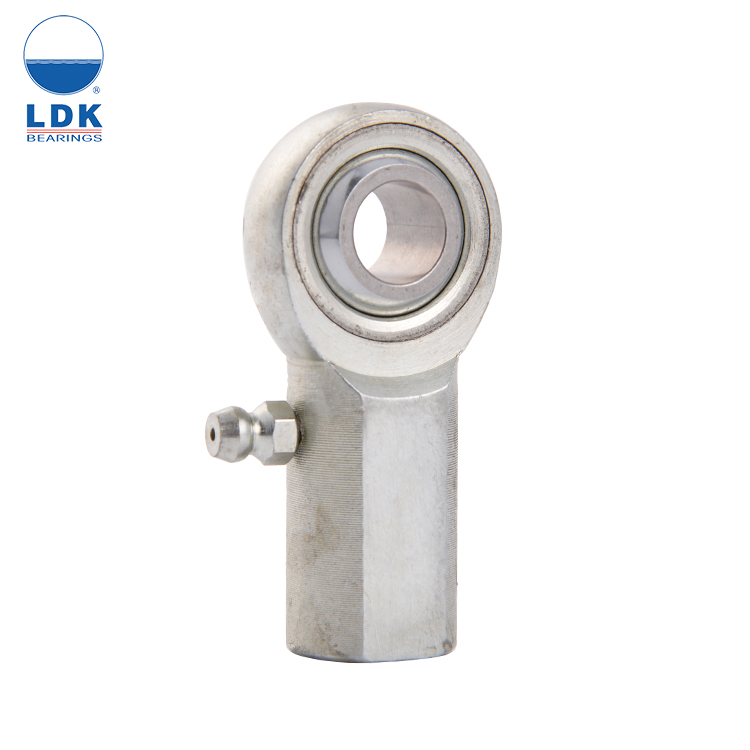
Product catalog reference: LDK product catalog PDF. Company reference: Deyuan Smart Technology (Fujian) Co., Ltd.
Have Questions or Need More Details?
Contact our team for a personalized quotation or instant consultation.
Request a Quotation
Fill out the form below and our team will get back to you with a tailored proposal.
WhatsApp Direct Chat
Prefer to chat in real-time? Message us on WhatsApp for instant assistance & quick answers.
- Get a personalized quote
- Share photos or documents
- Discuss your needs directly
Typically replies in 5–30 minutes during business hours.