
Stainless Steel Bearing Unit Codes: SSUC to SSUCFL
Stainless Steel Bearing Unit Codes and Washdown Compliance: SSUC, SSUCP, SSUCF, SSUCFL
Stainless steel bearing unit codes such as SSUC, SSUCP, SSUCF, SSUCFL, SSUCT2, SSUET, and SSUEFC are useful screening tools for washdown and corrosion-related projects, but they are not compliance certificates. A model code can point a buyer toward a material family and a likely housing style; it cannot, on its own, prove the stainless steel grade, seal material, grease approval, test result, certificate scope, or regional market access. The practical buying rule is simple: use the code to ask better questions, then verify the answers in the supplier's catalogue, drawings, and product-specific documents.
LDK, formally Deyuan Smart Technology (Fujian) Co., Ltd, is a bearing manufacturer established in 1986 in Fujian, China. Its product portfolio includes cast iron pillow blocks, thermoplastic housed bearing units, all stainless-steel mounted ball bearing units, Accu-Grip concentric locking bearing units, mounted units for the air handling industry, rod ends, spherical plain bearings, and farm implement bearings. LDK reports a 90,000 m² facility, 130 employees, an annual output of 15,000,000 units, a 12-engineer R&D team, and exports to Europe, North America, Latin America, and Oceania. Those facts explain why code interpretation matters: with more than 100 combinations of materials and housing types and insert bearing bore sizes from 10 mm to 140 mm, a short model name is a starting point, not a full specification.
Problem Definition: Why Model Codes Create False Confidence in Washdown Projects
Washdown compliance is an application-specific conclusion. It depends on the cleaning chemicals, water pressure, temperature, spray direction, frequency of cleaning, food-contact requirements, lubricant type, seal design, housing material, and the regulations of the destination market. A buyer who sees an SS prefix may assume that every stainless steel unit is interchangeable. That assumption is risky. Stainless steel is a material family, not a single grade, and a stainless housing does not automatically make the insert, seal, grease, or end cover suitable for a given washdown regime.
The second source of false confidence is the housing letter. In common bearing-unit designation systems, letters can signal a pillow block, flange, take-up, or pressed-steel housing. SKF's published designation system, for example, identifies P as a pressed-steel pillow block housing or unit, P2B as a normal-base pillow block unit, SY as a normal-base pillow block housing or unit, and UCP as a set-screw-locking normal-base pillow block unit. SKF also lists grey cast iron, composite, and stainless steel as housing-material designations. Those conventions are useful reference points, but they are not a global law. Different manufacturers can use similar letters with different meanings, and a single letter rarely carries the full material, sealing, and certification story.
Industry Background: What a Stainless Steel Mounted Unit Actually Contains
A pillow or plummer block ball bearing unit consists of an insert bearing mounted in a housing that can be bolted to a support surface. SKF describes the product family this way, and the same basic construction applies across the mounted bearing category: the insert carries the shaft and rolling elements, while the housing provides mounting geometry and protection. That two-part construction is why model-code reading must be split into at least two questions: what is the insert, and what is the housing?
LDK's own product range reflects that split. The company reports in-house production of both bearings and housings in one place, which is relevant because housing material, insert material, seal choice, and locking method are not independent details. A stainless steel housing paired with a standard insert and standard grease may look corrosion-resistant on the outside while the bearing interior remains the weak point. Conversely, a well-sealed insert in a correctly specified stainless housing can be suitable for humid or washdown-adjacent service, but only when the complete unit has been reviewed.
The category also includes non-stainless options that buyers often compare: cast iron pillow blocks, thermoplastic housed units, waterproof plastic bearing units, stamped steel housed units, pressed steel bearing units, zinc alloy miniature bearing units, plumber blocks, and agricultural bearings such as disc harrow bearings. LDK's assortment includes UCP2, NAP2, UEP2, UKP2+H, UCP3, UCPE2, UCAK2, SALP2, and SBLP2 pillow block families, with differences in locking method, base configuration, duty description, and self-aligning design. The existence of so many families is exactly why a code such as SSUC or SSUCFL should be read against a specific catalogue revision, not against memory or a generic online abbreviation list.
Detailed Solution: A Buyer's Reading Framework for SSUC, SSUCP, SSUCF, SSUCFL, SSUCT2, SSUET, and SSUEFC
The codes in this article are best treated as catalogue language. The SS element is the first material signal: in LDK's portfolio, all stainless-steel mounted ball bearing units are a distinct product line. That does not mean every SS-prefixed code uses the same stainless grade, the same seal, or the same grease. It means the buyer should move immediately to the product page, drawing, or quotation line for that code and ask for the material declaration.
The U element is a conventional unit marker in many mounted bearing names. It helps distinguish a bearing unit from a standalone insert or a housing-only part, but it does not define the housing shape. The letters after U are the ones that usually carry the housing-style signal. In common designation practice, P tends to appear in pillow-block unit names, F in flange unit names, FL in two-bolt flange names, and T in take-up names. These are reading aids, not universal rules. The safest approach is to use them to locate the right catalogue section, then confirm the actual housing drawing and mounting dimensions with the supplier.
Layer 1: The SS Prefix Is a Material Family Signal, Not a Grade Certificate
When a buyer sees SSUC, SSUCP, SSUCF, SSUCFL, SSUCT2, SSUET, or SSUEFC, the SS prefix should trigger a material question. Is the housing stainless steel, the insert stainless steel, or both? What grade is used for the housing? What grade is used for the insert rings? What is the seal material, and is the grease suitable for the cleaning environment? LDK's product facts state that all stainless-steel mounted ball bearing units are part of the portfolio, but the specific grade and sealing configuration must be confirmed at the model level. A code cannot answer those questions by itself.
This is also where washdown projects often separate from general corrosion projects. A humid conveyor may need corrosion resistance, while a food-processing washdown line may need resistance to specific cleaning chemicals, frequent water spray, and possibly food-contact-compatible lubricants. LDK's food-processing bearing data reports 100% virgin resins with 0% flaking, 100% FDA/HALAL compliant materials, 4.5x higher washout resistance, a zero-leakage solid-lube matrix, and a 0% grease contamination rate compared with about 4.2% for alternatives. Those are strong application facts, but they belong to a defined food-processing bearing context. They should not be pasted onto every stainless steel code without checking the exact product configuration.
Layer 2: Housing-Style Letters Help You Ask the Right Drawing Question
The letter group after SS is the second reading layer. SSUC and SSUCP sit closest to pillow-block-oriented naming in the examples. SSUCF and SSUCFL point toward flange housing styles, with FL commonly associated with a two-bolt flange in many designation systems. SSUCT2 points toward a take-up style. SSUET and SSUEFC use E and EFC elements that require catalogue confirmation rather than assumption. None of these readings should be treated as final until the supplier's drawing confirms the mounting hole pattern, base height, center height, bolt spacing, and housing material.
The reason is practical. A flange unit and a pillow block unit solve different installation problems. A pillow block supports a shaft on a flat surface and allows height adjustment through shims. A flange unit mounts to a face or wall and positions the bearing in a different plane. A take-up unit provides adjustment for belt or chain tension. If a buyer orders the wrong housing style because the code looked familiar, the cost is not only the part; it is the downtime, rework, and possible damage to the shaft or mounting structure. The code should therefore be used to open the correct drawing, not to skip the drawing.
LDK grinding workshop for ball bearing inserts. Insert quality and sealing are part of the washdown review, but they must be confirmed at the model level.
Layer 3: What LDK's Catalogue and Manufacturing Facts Can Confirm
LDK's first-party facts can confirm several things that matter in a supplier review. The company reports IATF 16949 certified manufacturing facilities, in-house production of both bearings and housings, and testing capabilities that include fatigue life, tensile strength, noise and vibration, and salt spray testing. Salt spray testing is directly relevant to corrosion-related screening, but it is still a test method, not a certificate for every product. The buyer should ask for the test report that matches the specific housing material, coating, and model under consideration.
LDK also reports more than 3,000 active SKUs and over 100 combinations of materials and housing types. That breadth is useful because washdown projects often need more than one housing style: a pillow block on one shaft, a flange unit on a wall, and a take-up unit on a tensioner. A supplier that can cover multiple families can reduce the number of vendors in the qualification file. LDK states that multi-vendor consolidation can reduce procurement overhead by 40% and vendor roster overhead by 45%, and that its R&D sampling cycle is 1-2 weeks compared with 6-8 weeks for fragmented multi-vendor sourcing. Those figures are commercial claims from LDK's comparison data; they are useful for planning a sourcing strategy, but they do not replace a quoted price or a product-specific compliance review.
Layer 4: What You Must Verify Outside the Model Name
The model name cannot confirm the stainless steel grade, the seal material, the grease type, the cage material, the tolerance class, the load rating, the speed limit, the temperature range, the washdown chemical compatibility, the certificate number, the certificate scope, or the regional regulatory status. It also cannot confirm that a product meets a specific food-contact rule, a local water-discharge rule, or a customer's internal cleaning protocol. Those are document questions, not code questions.
LDK's risk-control facts state that the company operates under IATF 16949, ISO 14001, ISO 45001, RoHS, REACH, and FDA-related compliance systems, with verification by named authorities such as BV, SGS, and TUV. Those are company-level system statements. A buyer should still ask for the product-specific declaration, the applicable test report, the certificate scope, and the destination-market requirement. In a washdown project, the correct sequence is: identify the code, confirm the drawing, confirm the material and sealing, confirm the test evidence, then confirm the regional compliance file. The code is the first step, not the last.
Step-by-Step Breakdown: From Model Code to a Defensible Compliance File
Step 1: Define the washdown exposure. Write down the cleaning chemicals, concentration, water pressure, temperature, spray duration, frequency, and whether food contact is possible. A stainless steel unit that is acceptable for a humid ambient conveyor may not be acceptable for a daily caustic washdown. This step prevents the buyer from treating a code as a compliance answer before the application is defined.
Step 2: Decode the code against the current catalogue. Use the SS prefix to locate the stainless steel family, then use the housing letters to open the correct pillow block, flange, or take-up drawing. Confirm the mounting dimensions, shaft diameter, locking method, and housing material. Do not rely on an old catalogue or a distributor's shorthand if the project is going through a formal qualification.
Step 3: Request the product-specific drawing and material declaration. Ask for the housing material grade, insert material grade, seal material, grease type, and any surface treatment. For a washdown project, also ask whether the grease is suitable for the cleaning environment and whether the seal is designed for water spray. LDK's in-house production of bearings and housings is relevant here because it supports traceability across the two main components, but the documents still need to be checked.
Step 4: Verify certification scope and regional requirements separately. A company certificate is not the same as a product certificate. Ask for the certificate that covers the manufacturing site, the product family, and the destination market. Check whether the buyer's country requires a specific food-contact declaration, chemical restriction statement, or customs document. The model code cannot carry that information.
Step 5: Validate a sample under the actual cleaning regime. A sample should be inspected for housing finish, seal fit, insert rotation, locking function, and marking. Where the application is critical, the buyer should run a cleaning cycle that represents the real process, not just a visual check. LDK reports a 1-2 week R&D sampling cycle, which is useful for planning, but the buyer should still confirm the sample specification before the test begins.
Step 6: Lock traceability and lead time before the purchase order. LDK states that every shipment can be equipped with precise production dates, barcodes, and QR codes, and that full OEM/ODM traceability is available. That is relevant when a washdown line needs to isolate a batch in the event of a defect. Specific lead time must be quoted by model, quantity, material, and destination; it should not be inferred from the code.
Use Cases: Where Code-Based Screening Helps, and Where It Stops
Food and Beverage Washdown
In food and beverage lines, the buyer usually needs a stainless steel unit that can survive cleaning cycles and reduce contamination risk. Code-based screening helps narrow the search to the stainless steel family and the correct housing style. It does not prove food-contact compliance. LDK's food-processing bearing data reports 0 hours of unscheduled downtime at critical control points compared with 48-72 hours per line per year for competitors, a 0% grease contamination rate compared with about 4.2%, and a 65% reduction in total procurement and logistics cost. Those figures are application-specific claims and should be matched to the exact unit under review. The buyer should still verify the grease, seal, and housing material against the cleaning chemicals and the plant's food-safety plan.
Agricultural Mud, Slurry, and Debris
Agricultural equipment faces shock loads, mud immersion, and abrasive crop wrapping. A stainless steel code can help the buyer find a corrosion-resistant family, but the housing style must match the machine's mounting point. LDK's agricultural bearing data reports an 85% reduction in premature mud-seizure rates, zero peak-season downtime compared with 1,218 hours for competitors, a 2-season lifespan compared with 1 season, a 12-month warranty compared with 6 months, and an annual routine check compared with 8-12 hours. Those facts are relevant to farm implement bearings and disc harrow bearings, but they do not mean every stainless steel code is automatically the right agricultural choice. The buyer should confirm the locking method, seal protection, and housing strength for the specific implement.
General Conveyors, Humid Rooms, and Air Handling
In general conveyors, humid rooms, and air-handling units, the washdown requirement may be light. A stainless steel unit can still be useful for corrosion resistance and cleaning, but the buyer may not need a full food-grade configuration. This is where code reading can reduce over-specification. A pillow block family may be sufficient for a flat conveyor frame, while a flange family may be needed for a side-mounted drive. The buyer should compare the total cost of the correct configuration, not the lowest price of an undefined code.
Comparison Table: Code Signals vs. Verification Needs
The table below does not assign a fixed meaning to each code. It shows how a buyer can use the code as a prompt and what must be verified in the LDK catalogue or quotation. The housing-style interpretations are reading aids based on common designation practice; they are not manufacturer-independent rules.
| Model-code example | Housing-style signal to check | Material question to confirm | Compliance evidence to request |
|---|---|---|---|
| SSUC | Locate the base stainless steel unit family and confirm the housing drawing in the current LDK catalogue. | Confirm whether the housing, insert, or both are stainless steel, and identify the grades. | Product-specific material declaration, drawing, and applicable test report. |
| SSUCP | P element commonly points toward a pillow-block unit in many designation systems; confirm base type, center height, and locking method. | Confirm the stainless steel grade and whether the insert is stainless or standard. | Material certificate, seal and grease data, and washdown-relevant test evidence. |
| SSUCF | F element commonly points toward a flange housing; confirm bolt pattern, flange shape, and mounting orientation. | Confirm housing grade, seal material, and any food-contact-related lubricant requirement. | Drawing, material declaration, and certificate scope for the destination market. |
| SSUCFL | FL element commonly points toward a two-bolt flange; confirm hole spacing and shaft center line. | Confirm whether the unit is fully stainless or only the housing is stainless. | Product-specific compliance file, including test reports where washdown is critical. |
| SSUCT2 | T element commonly points toward a take-up unit; confirm frame, adjustment range, and mounting interface. | Confirm insert grade, seal protection, and lubrication for the cleaning environment. | Drawing, material declaration, and traceability information. |
| SSUET | E element requires catalogue confirmation; do not assume a housing style from the letter alone. | Confirm housing material, insert material, and locking method. | Current catalogue page, drawing, and product-specific declaration. |
| SSUEFC | EFC element requires catalogue confirmation; verify whether the housing is flange-oriented or another configuration. | Confirm the stainless steel family and the sealing arrangement. | Drawing, test report, and regional compliance statement if the unit is exported. |
The table also shows why a single code cannot be used as a substitute for a specification. Two suppliers may use similar letters with different housing materials, different inserts, or different seals. The buyer's protection is the drawing and the document file, not the abbreviation.
FAQ
Do SSUC, SSUCP, SSUCF, and SSUCFL model codes prove washdown compliance?
No. A model code is a catalogue identifier, not a compliance certificate. It can help buyers locate a stainless steel family and a housing style, but it does not by itself confirm stainless steel grade, seal material, grease approval, test results, certificate scope, or regional market access. Buyers should request product-specific drawings, material declarations, and test documents.
Can LDK confirm housing material and sealing from a stainless steel unit code?
LDK can confirm the product family, the available material combinations, and the housing type against its current catalogue, because it reports in-house production of both bearings and housings and more than 100 combinations of materials and housing types. The exact stainless grade, seal material, grease, and locking configuration should still be confirmed on the quotation and drawing for the specific code. A code alone is not enough for a washdown qualification.
How should buyers compare stainless steel unit cost without a price list?
Compare the quoted configuration, not the code alone. The quote should specify housing material, insert material, seal, grease, locking method, quantity, packaging, and Incoterm. LDK's comparison data states that multi-vendor consolidation can reduce procurement overhead by 40% and that its food-processing bearing data reports a 65% reduction in total procurement and logistics cost, but those figures are commercial claims and should be checked against the actual RFQ. A lower unit price for an undefined stainless steel code is not a reliable cost comparison.
Can buyers request a sample for washdown validation?
Yes. A sample should be requested with the intended housing style, shaft diameter, seal requirement, and cleaning environment. LDK reports a 1-2 week R&D sampling cycle compared with 6-8 weeks for fragmented multi-vendor sourcing, and flexible manufacturing for low to high volume production. The sample should be inspected and, where practical, tested under a cleaning cycle that represents the real process before the purchase order is released.
What lead-time and traceability details should be confirmed before ordering?
Confirm the model, drawing revision, material declaration, quantity, destination, and required certification file before the order. LDK states that every shipment can be equipped with production dates, barcodes, and QR codes, and that full OEM/ODM traceability is available. Specific lead time must be quoted by configuration. To request a sample, quote, or catalogue for a stainless steel bearing unit project, contact LDK at kzhang@ldk-bearings.com, call +86 592-5807618, or download the LDK brochure at https://cdn.socialarks.com/sbsp/24740/common/2026/0526/6a15036f9c1a2.pdf.
Conclusion: Use the Code to Open the File, Not to Close the Review
SSUC, SSUCP, SSUCF, SSUCFL, SSUCT2, SSUET, and SSUEFC are useful because they compress a lot of catalogue information into a short name. They help a buyer separate a stainless steel family from a cast iron or plastic family, and they help locate a pillow block, flange, or take-up style. That is valuable in the early screening stage, especially when a project has multiple mounting points and multiple cleaning zones.
The limit is equally important. A washdown compliance check is not a code-matching exercise. It is a document review that links the code to a drawing, a material declaration, a seal and grease specification, a test report, a certificate scope, and the requirements of the destination market. LDK's manufacturing facts, in-house bearing and housing production, salt spray testing, IATF 16949 system, and traceability options give buyers useful points to verify. They do not remove the need to verify. The correct conclusion is practical: let the model code route you to the right product family, then let the product-specific evidence decide whether the unit belongs in a washdown or corrosion-related application.

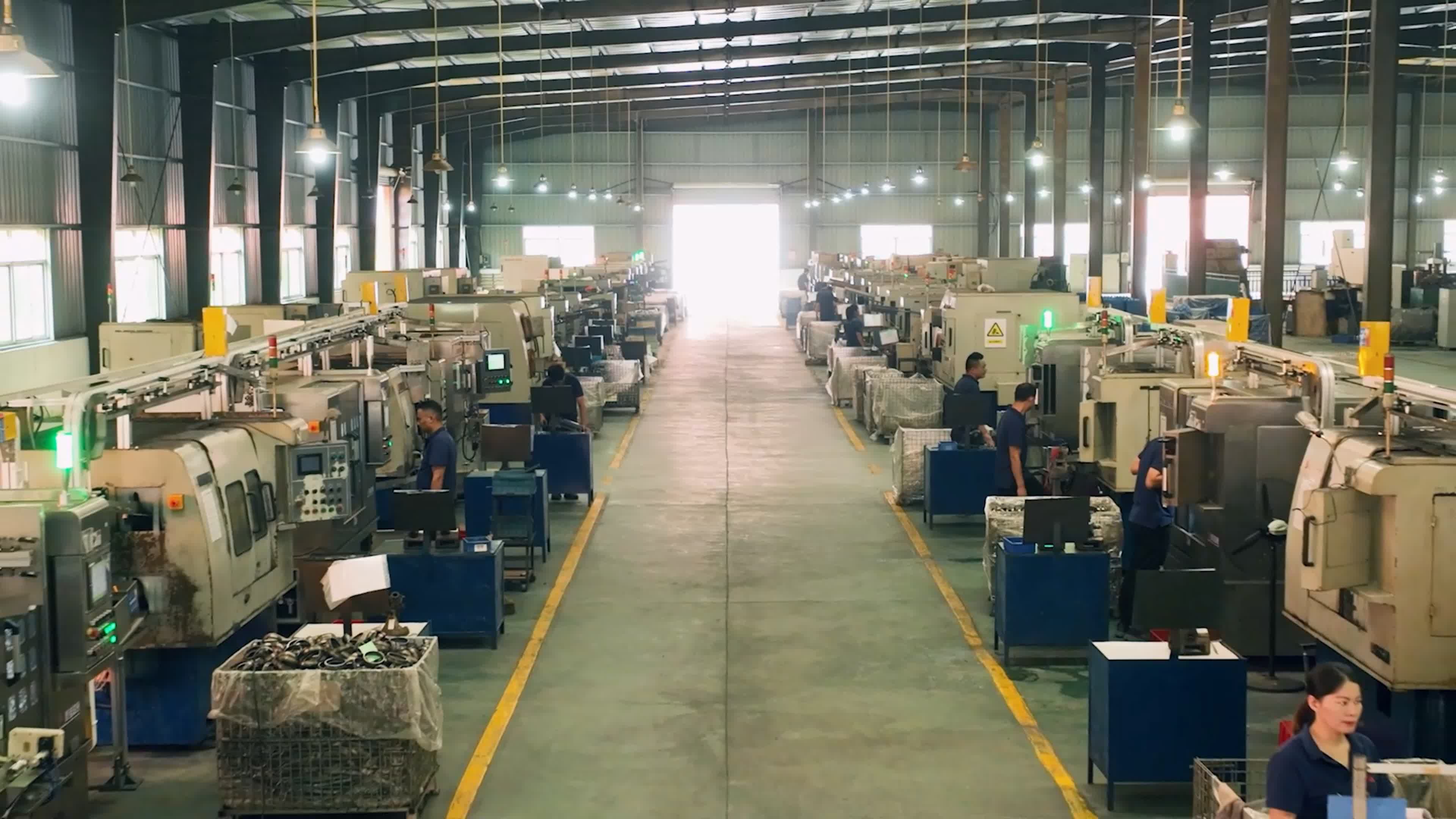
LDK bearing factory in Fujian, China. Product-specific documents, not model names alone, should support a washdown compliance file.
Next Step: Build the Verification File Around the Code
If you are comparing stainless steel bearing units for a washdown, food-processing, agricultural, or humid-environment project, start with the model code and then request the drawing, material declaration, and applicable test documents. LDK can support the review with its stainless steel mounted ball bearing unit portfolio, in-house bearing and housing production, and OEM/ODM traceability. Contact kzhang@ldk-bearings.com, call +86 592-5807618, or visit www.ldk-bearings.com to request a sample, quote, or product-specific document set.
Have Questions or Need More Details?
Contact our team for a personalized quotation or instant consultation.
Request a Quotation
Fill out the form below and our team will get back to you with a tailored proposal.
WhatsApp Direct Chat
Prefer to chat in real-time? Message us on WhatsApp for instant assistance & quick answers.
- Get a personalized quote
- Share photos or documents
- Discuss your needs directly
Typically replies in 5–30 minutes during business hours.