
Recommended Pillow Block Bearing Inserts for OEM Replacement: UC2, UC3, UCX, SA2, SB2, UK2
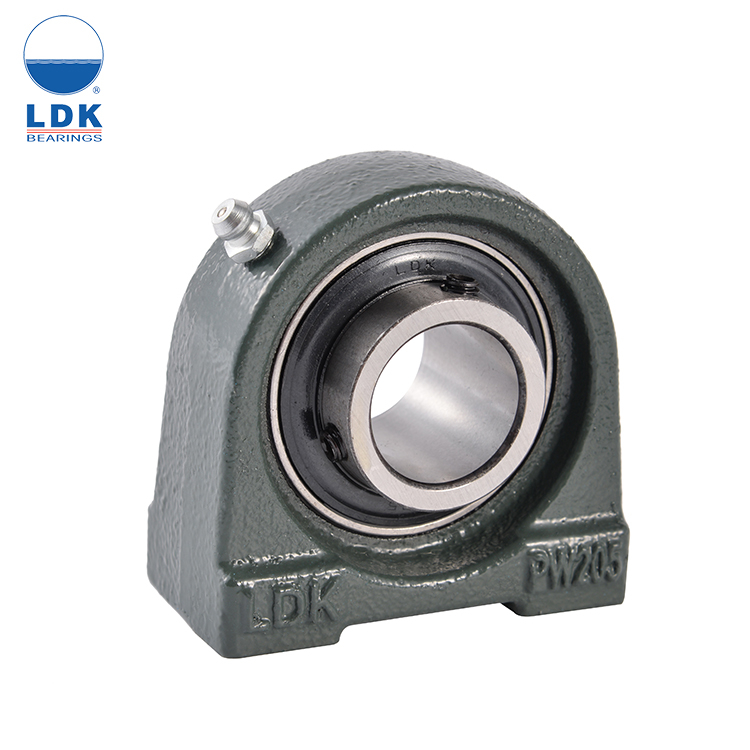
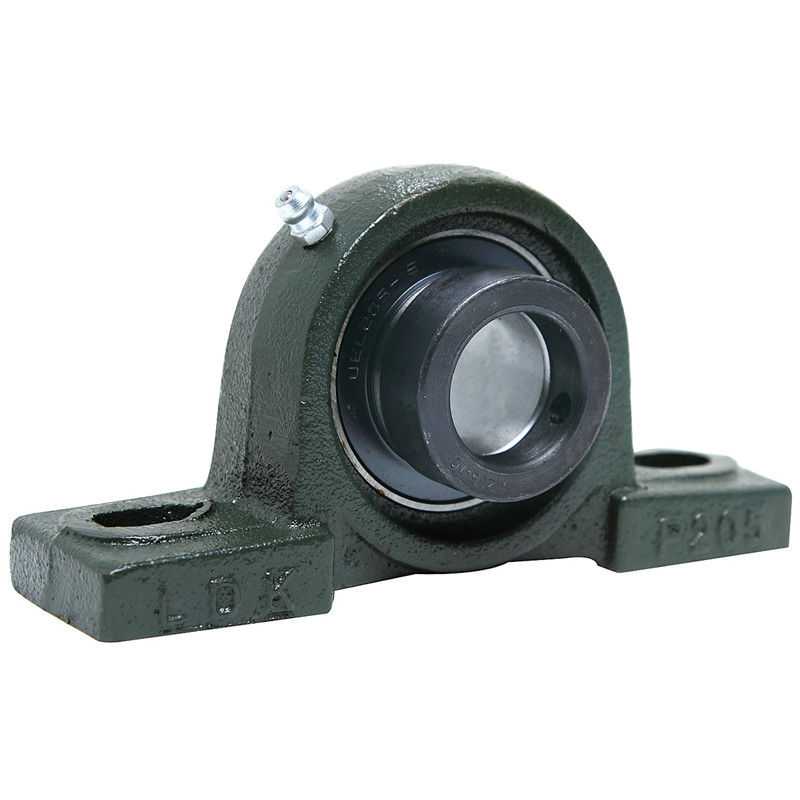
A cast iron 2-bolt pillow block with the insert cartridge fitted. In most maintenance jobs the housing survives and only the insert is replaced — the whole decision comes down to matching the insert family to the housing.
Short answer: For OEM replacement and maintenance on pillow block and mounted bearings, six insert families cover the large majority of housings already installed on machines: UC2 (standard duty, set screw locking, 12 mm to 90 mm bores), UC3 (heavy duty, 25 mm to 140 mm), UCX (medium duty, 25 mm to 75 mm), SA2 (narrow inner ring, eccentric locking), SB2 (narrow inner ring, set screw locking) and UK2 (tapered bore, adapter sleeve locking, 20 mm to 80 mm). NA2, UE2 and UER2 extend the same coverage where eccentric or concentric locking is specified on the housing drawing, and the stainless equivalents SUC2, SSB2 and SUE2 serve washdown and corrosive environments. Fit with the housing — not brand familiarity — decides the substitution.
A pillow block bearing insert is the replaceable ball bearing cartridge that carries the shaft inside a mounted unit. When a conveyor, fan, mower spindle or take-up shaft starts to rumble, the housing is usually still serviceable; what has worn is the insert. That is why replacement begins as a matching exercise, and why ordering by a half-legible part number is the most common way to get it wrong.
This shortlist is written for buyers at the research and evaluation stage who are comparing replacement options across several machines, not just one. The families below are ranked by two practical criteria: how much of an installed housing population each family can cover through bore range and locking style, and how clearly each family maps to mounted unit housings that are already in service.
Problem definition: replacement inserts fail on fit, not on quality
Inserts and housings age at different rates. A housing cast from HT200 grey iron can stay dimensionally stable across several insert life cycles, and the same holds for the thermoplastic and stainless steel housings used in washdown areas. That asymmetry creates the replacement market: the user needs a cartridge, not a complete unit.
Three conditions make matching harder than it looks in a maintenance store. First, the marking on a worn insert is often faint or partly destroyed, and the machine may have been assembled from a non-original design. Second, the same housing footprint appears across duty classes, so a 2-bolt pillow block casting can be specified in standard, medium or heavy duty form. Third, metric and inch shafts coexist in the same plant, and an insert catalogue that runs to 3-1/2 inches is not automatically the one that runs to 140 mm.
Four variables decide whether an insert can be substituted for another:
- Inner ring width — a wider inner ring or a narrow inner ring, because the two seat the shaft differently inside the housing.
- Locking method — set screw, eccentric collar, concentric collar, or tapered bore with an adapter sleeve.
- Duty class — standard, medium or heavy, which is the difference between UC2, UCX and UC3 in practice.
- Bore and protection — shaft diameter, sealing arrangement and grease type, which are dictated by the working environment rather than by the housing.
A mismatch usually shows up slowly rather than immediately. Fitting the wrong inner-ring width changes where the shaft load sits relative to the housing seat, and using a different locking principle can allow the inner ring to creep on the shaft. Both effects shorten service life and, in the worst case, damage the shaft journal — the one component that is far more expensive to replace than the insert.
Industry background: why insert catalogues matter more than ever
The pillow block bearing market reached USD 2.8 billion in 2024 and is projected to reach USD 4.7 billion by 2033, a CAGR of 5.7% (Dataintelo, 2024). A broader measure of the same demand — the mounted bearing market including ball and roller types — was valued at approximately USD 1.48 billion in 2023 and is expected to reach USD 2.55 billion by 2033 (Spherical Insights, 2023). The two figures differ because the scopes differ: one counts pillow block units specifically, the other counts all mounted bearing assemblies. For a buyer, the practical reading is the same — replacement and maintenance demand is growing alongside new equipment demand.
Demand is geographically concentrated. Asia Pacific held a revenue share of approximately 49.5% of the mounted bearing market in 2025, driven by rapid industrialisation in China and India (Fortune Business Insights). China was the leading exporter of ball bearings (HS 8482) in 2024 with an export value of USD 6.53 billion (OEC), which means a very large share of the world's replacement inserts is manufactured in Asia and shipped into Western maintenance channels.
Supply structure explains why catalogue breadth has become a competitive variable. Major global players in the mounted bearing market include SKF (Sweden), Schaeffler (Germany), Timken (United States), NSK (Japan) and NTN (Japan), who together hold over 50% of the market. The remaining demand — including most aftermarket and OEM replacement demand — is served by specialist manufacturers whose advantage is not scale in one part number but the number of part numbers they can supply from one factory.
Environment, meanwhile, has become a specification driver rather than an afterthought. Agricultural bearings for disc harrows commonly feature specialised triple-lip contact seals and black oxide coatings to resist contamination in harsh field conditions. On the housing side, ISO 113:2010 specifies boundary dimensions for two-bolt and four-bolt plummer block housings intended for rolling bearings — relevant whenever a housing, not just an insert, has to be replaced.
LDK, the brand of Deyuan Smart Technology (Fujian) Co., Ltd., is positioned inside that specialist segment. Established in 1986, the company operates a 90,000 m² facility with approximately 130 employees, including a 12-engineer research and development team, and reports an annual output of 15,000,000 units. Manufacturing is IATF 16949 certified, and both bearings and housings are produced in-house, which is what allows an insert catalogue spanning bore sizes from 10 mm to 140 mm with more than 100 combinations of materials and housing types. Roughly 60% of output is exported to Europe, North America, Latin America and Oceania.
The recommended shortlist: six insert families for OEM replacement
Each family below is included for a specific reason: it either covers a large installed housing population, extends coverage into a duty class the others cannot reach, or matches a locking principle that is specified on housings already in the field.
UC2 — the default for cast iron set screw housings
Bearing Inserts UC2 are standard duty spherical ball bearings with a wider inner ring and set screw locking, produced in chrome steel (GCr15 / AISI52100), self-aligning and relubricable, with a shaft range from 12 mm to 90 mm or 1/2 inch to 3-1/2 inches. This is the highest-coverage family in the shortlist because it matches the largest group of cast iron housings in the LDK catalogue: UCP2, UCPW2, UCTB2, UCT2, UCHE2, UCF2 and UCFL2 are all documented with a wider inner ring and set screw locking. If the housing is cast iron and there is a set screw, UC2 is the starting point.
UC3 — heavy duty set screw, up to 140 mm
Bearing Inserts UC3 keep the same set screw locking principle and the same wider inner ring, but are rated heavy duty and extend the shaft range from 25 mm to 140 mm, or 7/8 inch to 4 inches, in chrome steel. The inclusion reason is continuity: equipment that uses a set screw fixing on large shafts — aggregate handling, heavy conveyors, mining screens — can be maintained without changing locking philosophy or retraining maintenance staff.
UCX — the medium duty bridge
Bearing Inserts UCX are medium duty spherical ball bearings with a wider inner ring and set screw locking, covering 25 mm to 75 mm or 13/16 inch to 3 inches. The X designation usually signals a heavier housing than the standard P series, and the catalogue supports that reading: UCPX, UCFX, UCTX and UCFCX housings are themselves specified as medium duty with a wider inner ring and set screw locking. UCX therefore fills the gap between UC2 and UC3 rather than duplicating either.
SA2 — narrow inner ring with eccentric locking
Bearing Inserts SA2 are standard duty spherical ball bearings with a narrow inner ring and eccentric locking, spanning 12 mm to 60 mm or 1/2 inch to 2-7/16 inches. The eccentric collar remains widely specified on light duty cast iron and stamped steel housings — the SAFW2 cast iron 2-bolt flange unit and the SAPP2 stamped steel pillow block are both documented as narrow inner ring with eccentric locking. Without SA2 in the shortlist, that part of the installed base has no correct replacement.
SB2 — narrow inner ring with set screw locking
Bearing Inserts SB2 are the set screw counterpart to SA2: standard duty, spherical, narrow inner ring, 12 mm to 60 mm or 1/2 inch to 2-7/16 inches. SB2 is the correct family for the light duty housing group, including SBLF2 and SBFD2 cast iron flanges and the SBPP2, SBPF2, SBPFL2 and SBPFT2 stamped steel units, all documented with a narrow inner ring and set screw locking. For agricultural and light conveying equipment, SB2 and SA2 together cover most of the small-shaft positions.
UK2 — tapered bore with adapter sleeve locking
Bearing Inserts UK2 are standard duty spherical ball bearings with a tapered bore and adapter sleeve locking, covering 20 mm to 80 mm. Adapter sleeve mounting is the practical answer when a shaft is already lightly scored, or when a friction lock is preferred over a set screw on a shaft that cannot be machined. The matching housings exist in the same catalogue — UKP2 and UKF2 are documented as tapered bore with adapter sleeve locking — which is why UK2 belongs in a replacement shortlist rather than a special-order category.
Three families that complete the same coverage: NA2, UE2, UER2
Not every housing in the field is set screw locked, and a shortlist that ignores eccentric and concentric designs will send buyers back to full-unit replacement. NA2 inserts are standard duty with a wider inner ring and eccentric locking across 20 mm to 75 mm or 1/2 inch to 3-1/2 inches, matching the eccentric cast iron families NAP2, NAF2, NAFL2, NAFLU2 and NAFC2. UE2 inserts are standard duty with a black oxide treatment, wider inner ring and concentric locking from 20 mm to 60 mm or 3/4 inch to 2-7/16 inches, matching UEP2, UEFC2, UEFB2 and UEHA2, which are documented with concentric locking. UER2 carries the same concentric, wider-ring configuration with a snap ring added, in the same 20 mm to 60 mm range. Together these three give a maintenance store coverage of all four locking principles without stocking complete units.
Stainless equivalents for washdown and corrosive service
Where the environment, not the load, drives the specification, the same housing families accept stainless steel inserts. SUC2 is a stainless steel insert with a wider inner ring and set screw locking, 12 mm to 60 mm or 1/2 inch to 2-7/16 inches; SSB2 is the narrow inner ring, set screw version in stainless steel 440 for 20 mm to 60 mm shafts; SUE2 is a concentric locking stainless insert supplied with food grade grease and a silicon rubber seal across 12 mm to 60 mm. Stainless housing units (SSUCP2, SSUCF2, SSUCFL2 and related designs) combine stainless steel 304 housings with 440 inserts and are rated for operating temperatures from -35 degrees C to 102 degrees C.
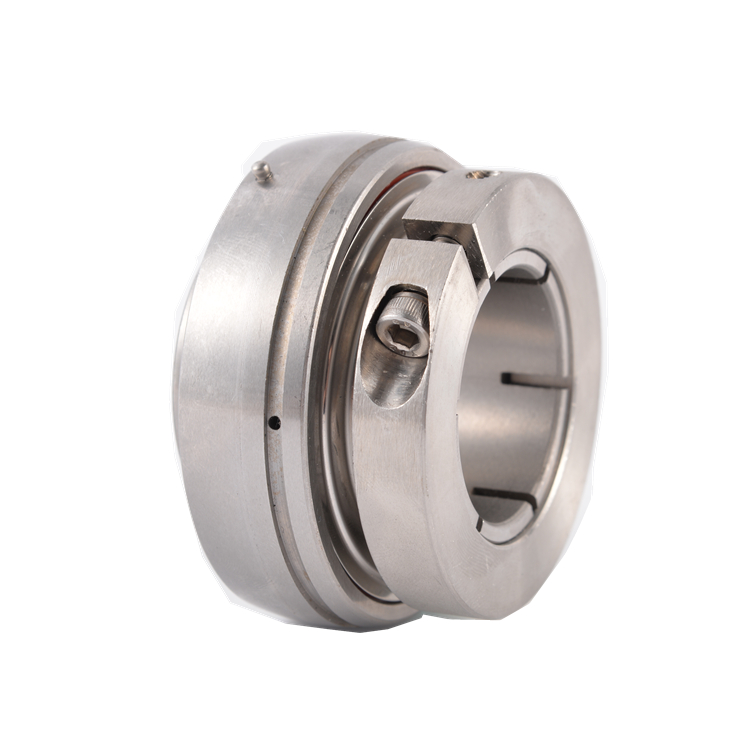
Stainless steel bearing insert SUE: concentric locking, food grade grease and a silicon rubber seal, 12 mm to 60 mm shaft range. Stainless inserts fit the same housing families as their chrome steel counterparts.
Step-by-step: matching a replacement insert
The sequence below keeps the housing as the reference point, because the housing is the part that fixes the geometry.
- Read the housing first. Cast markings such as UCP205, UCFL206 or SBPP204 identify the housing family, bolt pattern and seat size. This single step removes most of the ambiguity.
- Read the insert marking on the exposed face. If it is worn or painted over, move to measurement rather than guessing from the machine brand.
- Identify the inner ring width and locking method by inspection. Wide or narrow ring; set screw, eccentric collar, concentric collar or adapter sleeve. This determines whether the replacement comes from UC2, UCX, UC3, SB2, SA2, NA2, UE2 or UK2.
- Confirm the shaft, in both systems if necessary. Metric and inch shafts coexist in the same plant — UC2 catalogue coverage reaches 3-1/2 inches while UC3 reaches 140 mm, so the bore has to be confirmed rather than inferred.
- Define the environment before the part number. Snow removal equipment runs down to -40 degrees C and needs low temperature grease; wastewater treatment specifies waterproof, corrosion-resistant, rust-proof construction with IP66+ protection; agricultural machinery faces dust, mud and fertilizer corrosion with high shock loads. The environment decides sealing, grease and often whether a stainless insert is required.
- Select the family using the housing mapping table below. Confirm that duty class, locking style and bore all match the installed unit.
- Confirm commercial parameters. Relubrication and locking requirements, then order quantity. LDK quotes a minimum order quantity of 5,000 units, a lead time of 30 to 90 days and a monthly capacity of 300,000 units.
Use cases: which family fits which working condition
Agricultural machinery. Disc harrows, planters, mowers and tillage equipment run outdoors with dust, mud and chemical fertilizer corrosion, ambient temperatures from -10 degrees C to +45 degrees C, high shock loads and continuous 24/7 operation. The documented requirement is corrosion resistance plus sealing that keeps contamination out. Practically, this means UC2, UCX or UC3 inserts in cast iron housings for the load-carrying positions, and SB2 or SA2 in stamped steel and light duty flanges for the secondary shafts.
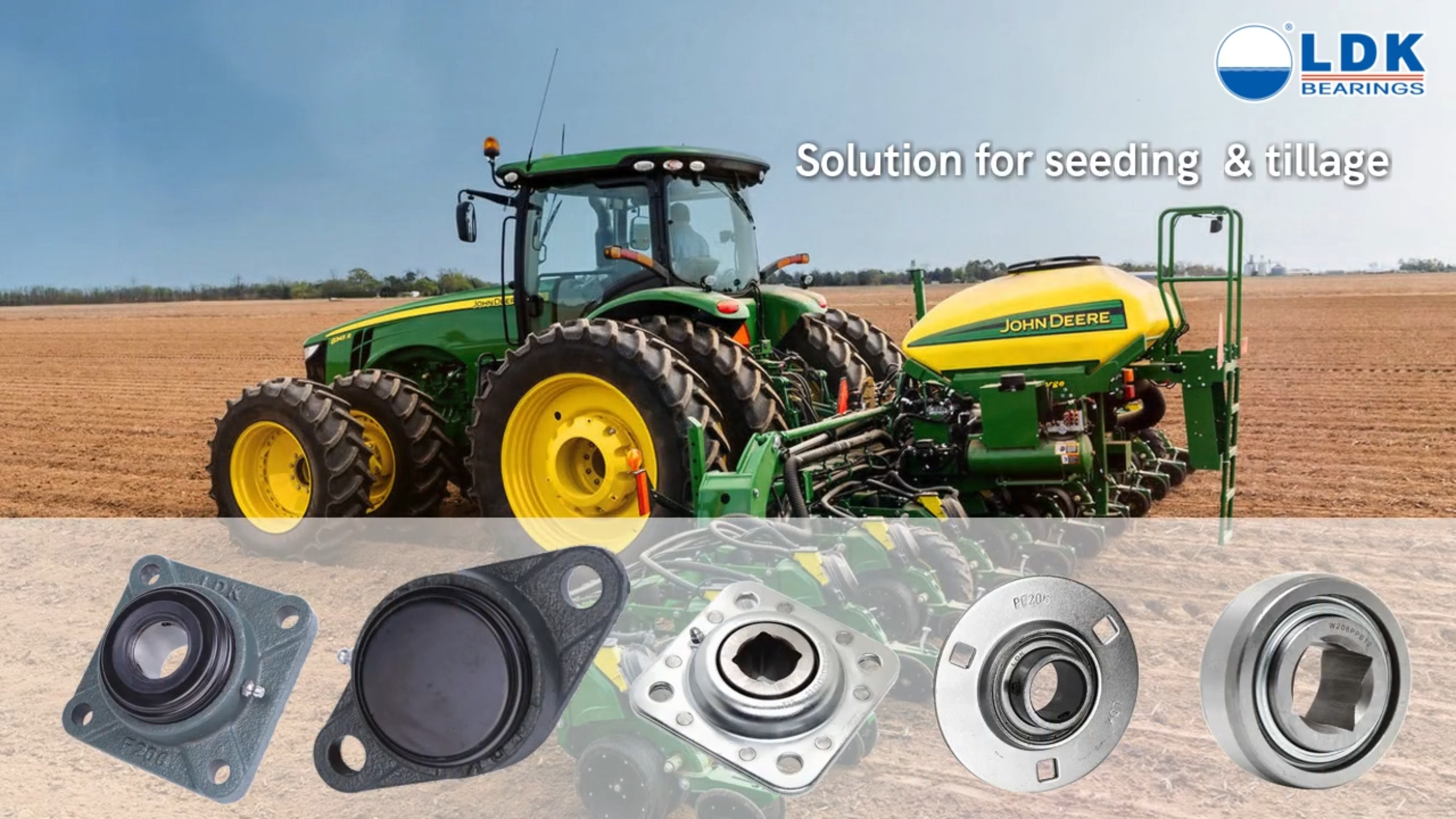
Agricultural applications drive the sealing specification: dust, mud and fertilizer exposure on outdoor equipment running continuous shifts.
Gardening and ground maintenance. Mowers, trimmers, edgers and landscape tillers work from -10 degrees C to +40 degrees C in grass clippings and mud, with medium to heavy load and strong vibration, and the stated requirement includes easy field repair. The stamped steel housings used here — SBPP2, SBPF2 and SBPFT2 with set screw locking, SAPP2 with eccentric locking — are narrow inner ring designs, which places SB2 and SA2 inserts at the centre of this segment.
HVAC air handling. Exhaust fans, blowers and cooling towers run continuous 24/7 duty between -20 degrees C and +60 degrees C with a low noise and low vibration requirement. Concentric locking inserts such as UE2, and the rubber cushioned cartridge designs used in air handling, are the natural fit here; noise and vibration are characteristics that have to be controlled at the insert level, not the housing level.
Wastewater treatment. Sewage equipment operates outdoors or semi-outdoors with extremely high humidity, sulphide and acid/alkali corrosion and continuous operation, with a documented requirement for waterproof, corrosion-resistant, rust-proof construction and IP66+ protection. Cast iron is not the right choice in this environment. Waterproof thermoplastic housed units with stainless steel inserts, and full stainless steel units, are the correct platform.
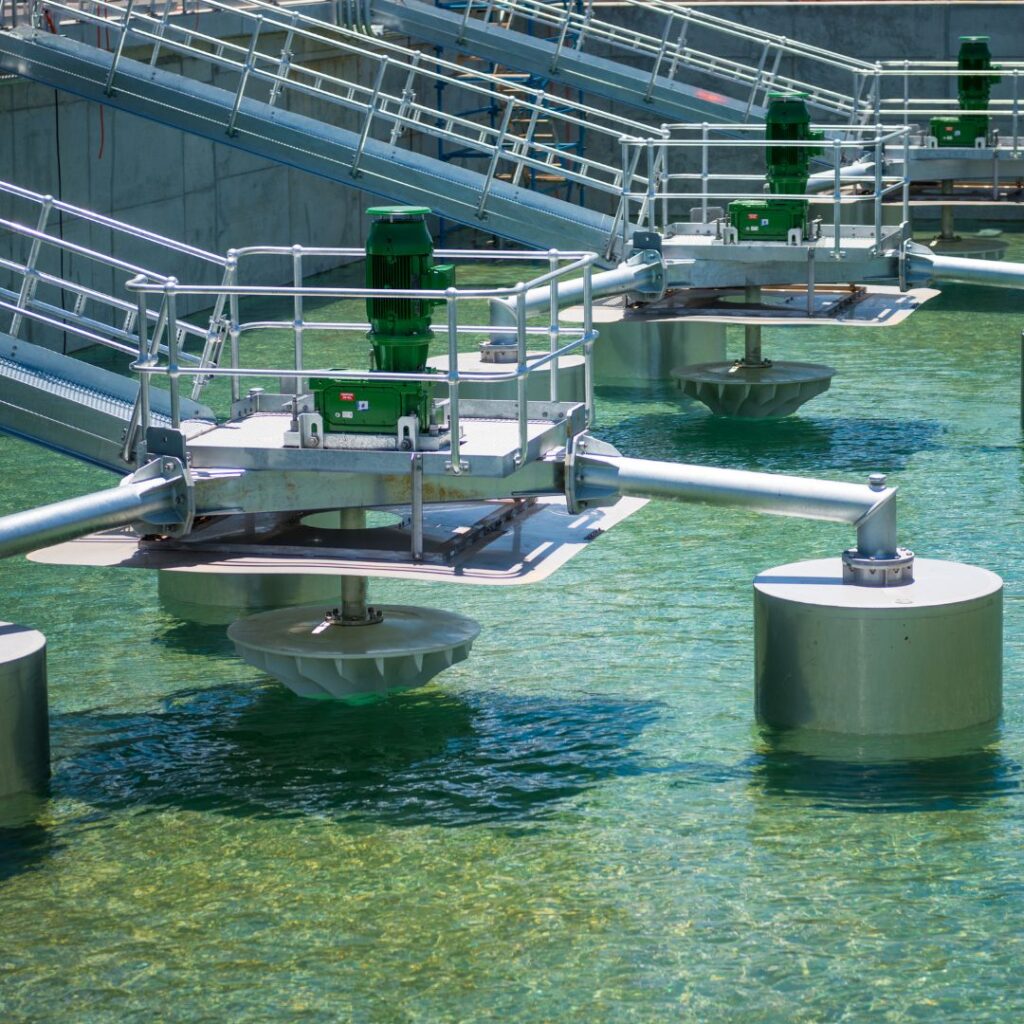
Wastewater treatment units combine waterproof thermoplastic housings with stainless steel inserts — the documented requirement for this application is waterproof, corrosion-resistant, IP66+ construction.
Car wash systems. Automatic vehicle washing machines operate 8 to 12 hours per day minimum under continuous spray, with detergents and salt driving strong corrosion, under low to medium load. The same waterproof thermoplastic and stainless steel solution applies, and salt exposure makes stainless inserts such as SSB2 a maintenance-relevant option rather than a premium upgrade.
Snow removal and ice control. Snow plows, snowblower augers, salt spreaders and snow sweeping machines operate in sub-zero temperatures down to -40 degrees C with continuous vibration and contact with de-icing salts, under 24/7 high-intensity operation. The stated requirements are low temperature grease and excellent sealing performance. LDK reports a cold storage installation running at -50 degrees C using inserts with special low temperature grease, correct internal clearance and silicon rubber seals.
Mining, quarrying and aggregate processing. Crushers and screens work in harsh outdoor conditions with heavy-duty shock loads, severe dust contamination and significant temperature fluctuations, requiring high stability and superior sealing. This is UCX and UC3 territory in mounted units, with closed plummer block housings (SN, SNU, SNG and SAF designs, shaft range 20 mm to 140 mm) used where the highest load capacity is needed.
Material handling and conveying. Conveyors, pallet jacks, lift equipment and automatic transmission lines face heavy loads, contaminants and high operational demand, with easy installation and maintenance listed as a requirement. UCP2, UCT2 and UCPE2 housings with UC2 inserts cover most of this population, and take-up frames typically use the UCT2 family, where the insert can be repositioned as the belt stretches.
Food, beverage and pharmaceutical processing. Frequent high-pressure washdown, cleaning agents and hygiene requirements mean stainless or thermoplastic housings, food grade grease and a seal that resists disinfectants. LDK reports an ice machine programme where a concentric locking collar replaced set screw and eccentric locking to solve insufficient clamping force, combined with solid lubricant to remove any chance of grease contacting food. Stainless inserts SUC2, SSB2 and SUE2, and stainless units SSUCP2, SSUCF2 and SSUCT2, are the matched replacement options.
Packaging machinery. Filling, sealing, labelling and cartoning lines run indoors at 20 to 25 degrees C at high cycle frequency with a documented requirement for low noise and a long maintenance-free period. Small shaft positions here frequently use the Silver Series zinc alloy miniature units (UP000, UFL000, KP000, KFL000 in 10 mm to 30 mm bores), which take their matched miniature inserts rather than the standard UC2 family.
Comparison table: the six recommended insert families
| Insert family | Duty class | Inner ring | Locking | Shaft range | Self-aligning / relubricable | Material |
|---|---|---|---|---|---|---|
| UC2 | Standard | Wider | Set screw | 12–90 mm / 1/2"–3-1/2" | Yes / Yes | Chrome steel GCr15 (AISI52100) |
| UC3 | Heavy | Wider | Set screw | 25–140 mm / 7/8"–4" | Yes / Yes | Chrome steel GCr15 (AISI52100) |
| UCX | Medium | Wider | Set screw | 25–75 mm / 13/16"–3" | Yes / Yes | Chrome steel GCr15 (AISI52100) |
| SA2 | Standard | Narrow | Eccentric | 12–60 mm / 1/2"–2-7/16" | Yes / Yes | Chrome steel GCr15 (AISI52100) |
| SB2 | Standard | Narrow | Set screw | 12–60 mm / 1/2"–2-7/16" | Yes / Yes | Chrome steel GCr15 (AISI52100) |
| UK2 | Standard | Tapered bore | Adapter sleeve | 20–80 mm | Yes / Yes | Chrome steel GCr15 (AISI52100) |
| NA2 | Standard | Wider | Eccentric | 20–75 mm / 1/2"–3-1/2" | Yes / Yes | Chrome steel GCr15 (AISI52100) |
| UE2 | Standard | Wider | Concentric | 20–60 mm / 3/4"–2-7/16" | Yes / Yes | Chrome steel, black oxide |
| UER2 | Standard | Wider | Concentric + snap ring | 20–60 mm / 3/4"–2-7/16" | Yes / Yes | Chrome steel, black oxide |
| SUC2 / SSB2 / SUE2 | Standard | Wider (SUC2, SUE2) / Narrow (SSB2) | Set screw (SUC2, SSB2) / Concentric (SUE2) | 12–60 mm, SSB2 from 20 mm | Yes / Yes | Stainless steel 440 |
All values above are taken from the LDK insert catalogue data. Self-aligning and relubricable characteristics apply across the listed families.
Mapping table: common mounted unit housings to insert families
| Housing family | Housing type | Documented insert-side specification | Recommended insert family |
|---|---|---|---|
| UCP2, UCPW2, UCTB2, UCT2, UCHE2, UCPE2, UCF2, UCFL2 | Cast iron, 2-bolt, take-up, hanger, flange | Wider inner ring, set screw locking | UC2 |
| UCPX, UCFX, UCTX, UCFCX | Cast iron, medium duty | Wider inner ring, set screw locking, medium duty | UCX |
| UCP2 / UCF2 / UCT2 at large bores | Cast iron, heavy duty positions | Wider inner ring, set screw locking, heavy duty | UC3 |
| NAP2, NAF2, NAFL2, NAFLU2, NAFC2 | Cast iron, 2-bolt, flange, cartridge | Wider inner ring, eccentric locking | NA2 |
| UEP2, UEFC2, UEFB2, UEHA2 | Cast iron, solid base, flange, hanger | Wider inner ring, concentric locking | UE2 / UER2 |
| UKP2, UKF2 | Cast iron, 2-bolt, 4-bolt flange | Tapered bore, adapter sleeve locking | UK2 |
| SBLF2, SBFD2 | Cast iron, light duty 2-bolt flange | Narrow inner ring, set screw locking | SB2 |
| SAFW2 | Cast iron, light duty 2-bolt flange | Narrow inner ring, eccentric locking | SA2 |
| SBPP2, SBPF2, SBPFL2, SBPFT2 | Stamped / pressed steel units | Narrow inner ring, set screw locking | SB2 |
| SAPP2, SAPF2, SAPFL2, SAPFT2 | Stamped / pressed steel units | Narrow inner ring, eccentric locking | SA2 |
| RSBPP2, RSAPP2 | Rubber cushioned stamped steel pillow blocks | Narrow inner ring, rubber cushioned, non-relubricable | SB2 / SA2 class |
| UP000, UFL000, KP000, KFL000 (Silver Series) | Zinc alloy miniature units, 10–30 mm | Miniature bearing, narrow inner ring | Matched miniature insert |
| SSUCP2, SSUCF2, SSUCFL2, SSUCT2 | Stainless steel 304 housing, 440 insert | Set screw or concentric locking, food grade grease and silicon seal | SUC2 / SUE2 |
| TP-SUCP, TP-SUCF, WP-SSBP, WP-SSBF | Thermoplastic and waterproof thermoplastic units | Stainless steel 440 insert, set screw or concentric locking | SUC2 / SUE2 / SSB2 |
The mapping follows the locking style, inner ring width and duty class documented for each housing family. Where a housing is modified or non-standard, confirm against the housing drawing.
Pillow block bearing unit NAP2: a cast iron 2-bolt housing documented with a wider inner ring and eccentric locking, matched with NA2 inserts.
Replacement evidence from production programmes
Insert selection is not only a catalogue exercise. LDK reports several production programmes that show how the choice of locking method and material changes outcomes. For a fitness equipment customer, a linkage assembly was redesigned in high strength aluminium alloy to replace stainless steel, reducing weight by 30% while surviving 20 million cycles. For an ice machine manufacturer in Canada, a concentric locking collar replaced set screw, eccentric and adapter sleeve locking to solve insufficient clamping force, with solid lubricant eliminating the chance of grease contacting food and triple lip seals improving contamination protection. For an offshore processing equipment customer, 70,000 units over two years met a requirement of 500 hours of rust-free performance with RoHS and REACH compliance. For cold storage facilities, inserts with special low temperature grease and silicon rubber seals operated correctly at -50 degrees C.
The pattern across these programmes is consistent: the environment and the locking method decide the outcome, and both are decided at the insert level.
Frequently asked questions
ISO 113:2010 specifies boundary dimensions for two-bolt and four-bolt plummer block housings intended for rolling bearings, which is the relevant standard when a housing is replaced alongside an insert. LDK manufactures in IATF 16949 certified facilities and states capability for ROHS, REACH and FDA compliance, with traceability, IQC/IPQC/OQC inspection and support for second-party and third-party audits. For a specific project, compliance documents should be requested together with the quotation. In one reported offshore programme, 70,000 units supplied over two years met a 500-hour rust-free requirement with RoHS and REACH compliance.
LDK's insert catalogue covers bore sizes from 10 mm to 140 mm with more than 100 combinations of materials and housing types. Within the recommended shortlist, UC2 runs 12 mm to 90 mm or 1/2 inch to 3-1/2 inches, UC3 runs 25 mm to 140 mm or 7/8 inch to 4 inches, UCX runs 25 mm to 75 mm, SA2 and SB2 run 12 mm to 60 mm, UK2 runs 20 mm to 80 mm, NA2 runs 20 mm to 75 mm, and UE2 and UER2 run 20 mm to 60 mm. Production capacity supporting replacement orders is 300,000 units per month with an annual output of 15,000,000 units.
Four factors dominate. First, duty class — heavy duty inserts such as UC3 use more material and different heat treatment than standard duty UC2. Second, locking method, since an adapter sleeve for UK2 or a concentric collar for UE2 is an additional precision component. Third, material, because stainless steel 440 inserts such as SUC2, SSB2 and SUE2 cost more than chrome steel GCr15 equivalents. Fourth, order volume and configuration, since private labelling, custom packaging and custom housing colour are available at the applicable minimum order quantity of 5,000 units. LDK does not publish list prices; the accurate route is a quotation based on specific part numbers and annual volume.
Evaluation is handled through the design and prototyping route rather than as a separate catalogue service. LDK's ODM capability includes R&D and design strength, DFM expertise, prototyping in 2D and 3D, and testing for durability, safety and performance, with NDA and intellectual property protection available for custom designs. Buyers who need physical evaluation — for example to confirm that a concentric locking insert holds on a scored shaft, or that sealing suits a specific washdown regime — should raise this at quotation stage so that the correct configuration is defined before any prototype is produced. Technical support is provided remotely.
For insert and mounted unit orders, LDK quotes a minimum order quantity of 5,000 units and a lead time of 30 to 90 days, supported by a monthly capacity of 300,000 units and a stated on-time delivery performance of 95% or better. Lead time varies with configuration: standard chrome steel families move faster than stainless or customised variants, and private labelling or custom packaging extends the schedule. To confirm a lead time for a specific replacement list, send the housing markings, insert designations or measurements, required quantities and the operating environment. The full catalogue can be downloaded from the link below, and technical questions can be directed to the contact details at the end of this page.
Conclusion
Replacement inserts are won or lost on fit. The shortlist above is built so that a maintenance buyer can match a housing to a family in one step: UC2 for cast iron set screw housings, UC3 where the set screw fixing runs to 140 mm, UCX for medium duty positions in between, SB2 and SA2 for narrow inner ring light duty and agricultural housings, and UK2 where the shaft suits adapter sleeve mounting. NA2, UE2 and UER2 close the gaps for eccentric and concentric locking, and SUC2, SSB2 and SUE2 cover washdown and corrosive environments in the same housing families.
The practical rule is simple: read the housing, identify the locking method and inner ring width, define the environment, and only then choose the insert. Done in that order, a replacement programme can keep the housings on the machine and replace only what has actually worn.
Next step
Download the LDK bearing catalogue for full insert dimensions and housing combinations: LDK product catalogue (PDF)
For a quotation, a replacement list review or a sample and prototype discussion, contact the LDK team directly.

LDK manufacturing base in Fujian, China — in-house production of both bearings and housings, with insert bore sizes from 10 mm to 140 mm.
Have Questions or Need More Details?
Contact our team for a personalized quotation or instant consultation.
Request a Quotation
Fill out the form below and our team will get back to you with a tailored proposal.
WhatsApp Direct Chat
Prefer to chat in real-time? Message us on WhatsApp for instant assistance & quick answers.
- Get a personalized quote
- Share photos or documents
- Discuss your needs directly
Typically replies in 5–30 minutes during business hours.