Pillow Block Bearing Certification & Spec Compliance: A Buyer's Checklist
↵
Pillow Block Bearing Certification & Spec Compliance: A Buyer's Checklist
The global pillow block bearings market reached USD 2.8 billion in 2024 and is projected to reach USD 4.7 billion by 2033, growing at a CAGR of 5.7% (Dataintelo). That growth has pulled in a wider field of suppliers. Not all of them can meet the certification and specification constraints that regulated industries require.
For procurement teams, the question is rarely "can we source pillow block bearings?" It is "can we source them with the right documents, the right material grade, and a specification that survives an audit?"
This article covers the constraint side: which certifications matter, how to verify them against your actual order models, where specification mismatches cause failures, and what a practical compliance check looks like before purchase orders are released.
Problem Definition: Three Sources of Compliance Rework
Most pillow block bearing compliance problems trace back to three root causes. Each is preventable, but only if the constraint logic is made explicit during sourcing.
1. Certification scope mismatch. A supplier may hold a quality certificate, but that certificate may not cover the specific product category referenced in your order, or the specific market where the equipment will be installed. A certificate number alone tells you very little without its scope statement.
2. Specification deviation. A bearing unit rated from -35°C to 102°C may be acceptable for a cold storage conveyor, but if the grease grade or the locking method is chosen incorrectly, the unit can lose clamping force under sustained vibration.
3. Documentation traceability gaps. When an auditor requests a test report, a material declaration, or a RoHS verification linked to a specific model, the supplier cannot produce it.
These are not theoretical concerns. They are the failure modes that push a project into rework after the first shipment arrives.
Industry Background: Why Certification Constraints Are Tightening
Several forces are raising the compliance baseline for mounted bearing purchases:
- RoHS enforcement. EU RoHS Directive (EU) 2015/863 amending 2011/65/EU restricts hazardous substances across the electrical and electronic equipment supply chain, and bearings sit inside that chain. SGS verification reports are the common evidence format.
- IATF 16949 adoption beyond automotive. Originally automotive-focused, IATF 16949 is now used by industrial buyers who want a documented, auditable quality system rather than a verbal assurance.
- FDA requirements for food contact. Thermoplastic housings used in food and beverage processing must comply with U.S. FDA Code of Federal Regulations Title 21. TÜV Rheinland test reports are one accepted path.
- Boundary dimension standards. ISO 113:2010 specifies boundary dimensions for two-bolt and four-bolt plummer block housings intended for rolling bearings, giving buyers a reference point for interchangeability.
- Market structure. Major global players — SKF, Schaeffler, Timken, NSK and NTN — collectively hold over 50% of the mounted bearing market, and they have trained buyers to expect documentation as standard.
Asia Pacific accounted for roughly 49.5% of mounted bearing market revenue in 2025, and China was the leading exporter of ball bearings (HS 8482) in 2024 with an export value of USD 6.53 billion (OEC). Supply is abundant. Quality is not uniform — which is exactly why verification matters.
Detailed Solution: How LDK Addresses Certification and Spec Constraints
Deyuan Smart Technology (Fujian) Co., Ltd., operating under the LDK Bearings brand, was established in 1986. The company now runs a 90,000 m² manufacturing facility in Fujian, China, with approximately 130 employees, a 12-engineer R&D team, and an annual output of 15,000,000 units. Annual sales are around USD 15 million, with an export ratio of 60% across Europe, North America, Latin America and Oceania.
System-level certifications
LDK holds three system certifications that apply to the production and relevant management activities of ball bearing units, bearing housings and spherical plain bearings:
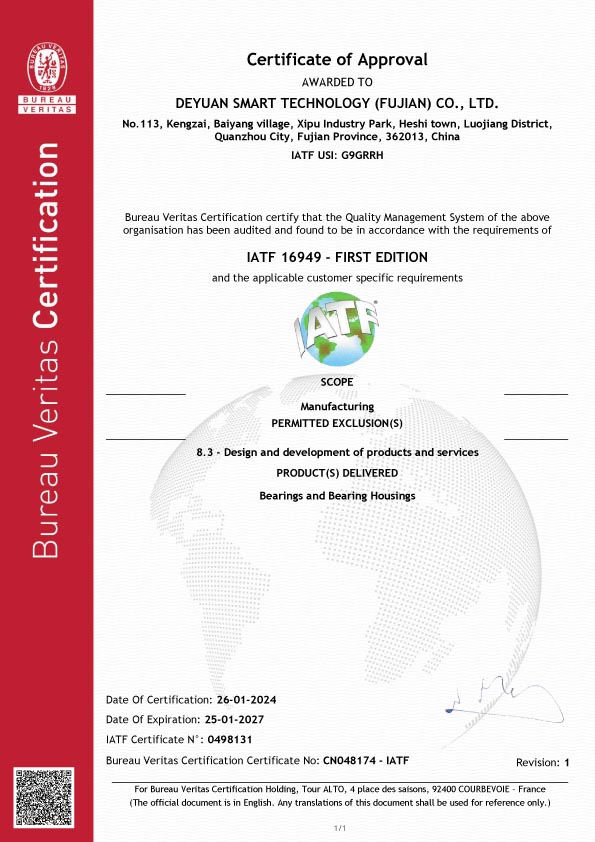
- IATF 16949:2016 — issued by BV, certificate number IATF 16949 - FIRST EDITION. Global market applicability.
- ISO 45001:2018 — issued by CQM, certificate number CN-00225S23739R3M. Global market applicability.
- ISO 14001:2015 — issued by CQM, certificate number CN-00225E33951R3M. Global market applicability.
Product-level compliance
Beyond system certifications, LDK holds product-scope verification documents that matter for market access:
- SGS RoHS Verification Reports covering multiple series, including UCP3 (report XMNEC25002179201_1), UCF207 L3 (XMNEC25002179101_1), UC206 L3 (XMNEC25002179102), SB205 (XMNEC2500217900_1), SBPF2 (XMNEC25002180202), UFL002 Silver Series (XMNEC25002178701_1), and PF205 (XMNEC25002180202). All applicable to the EU market.
- TÜV Rheinland Food Contact Material Safety Test Report for thermoplastic bearing housings — certificate number 168263398a 001, under U.S. FDA Code of Federal Regulations Title 21. Applicable to the USA market.
Single-site bearing and housing production
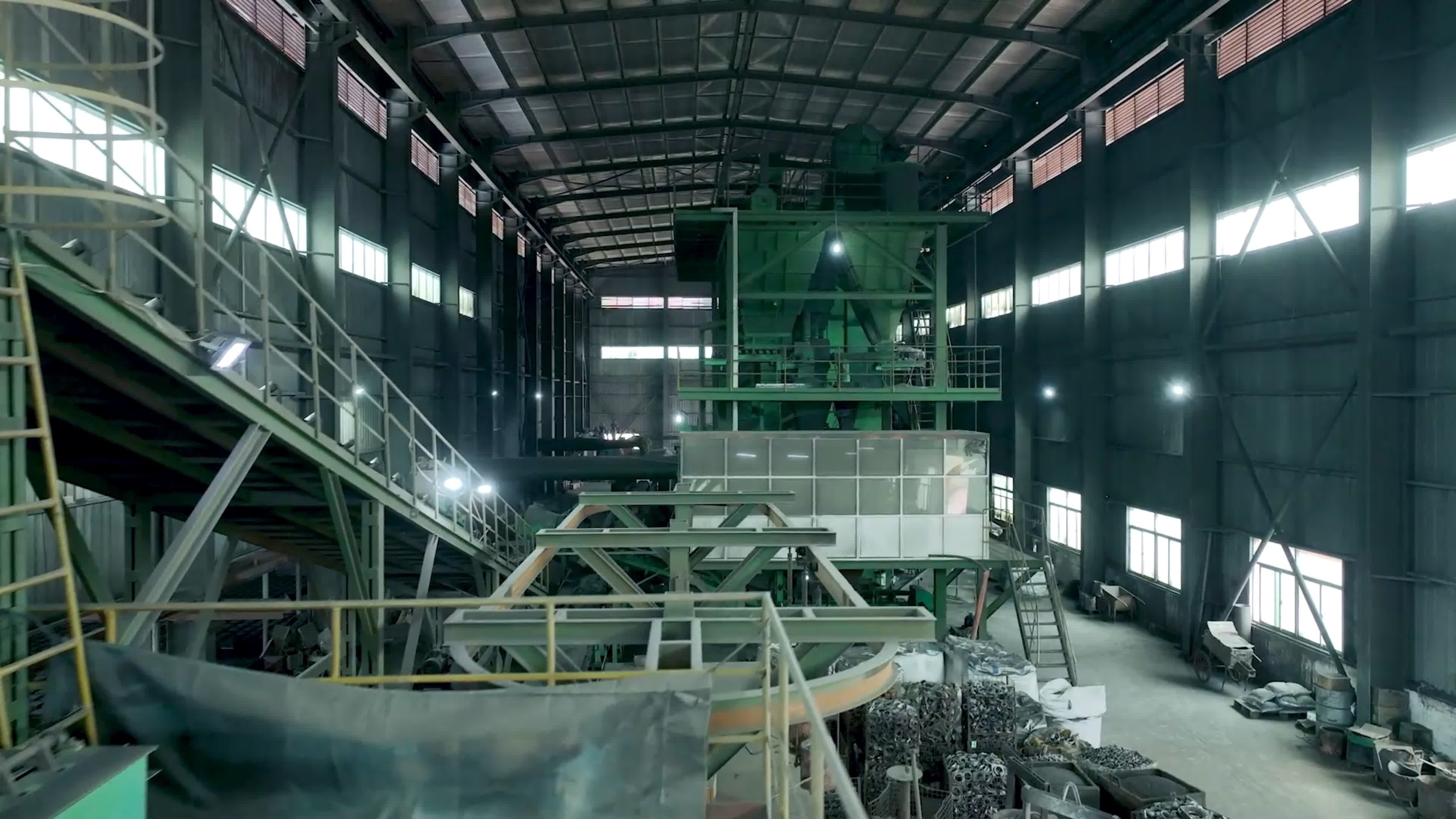
LDK produces both bearings and housings in-house, in one place. This removes one of the most persistent documentation risks in mounted bearing sourcing: buying the housing from one supplier and the insert from another, then discovering that the material certificates, tolerances, and heat treatment records do not reconcile.
Testing capability behind the certificates
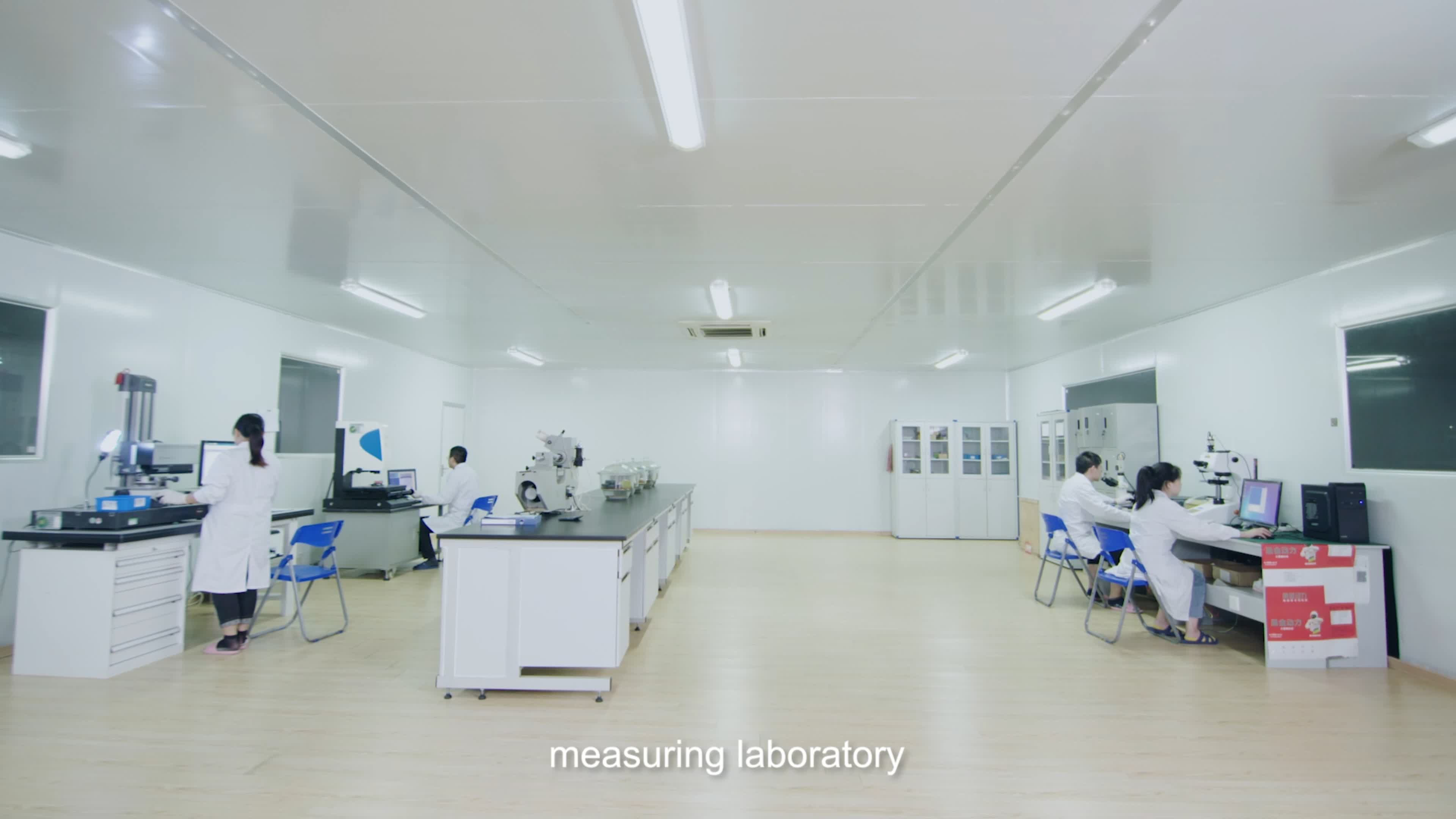
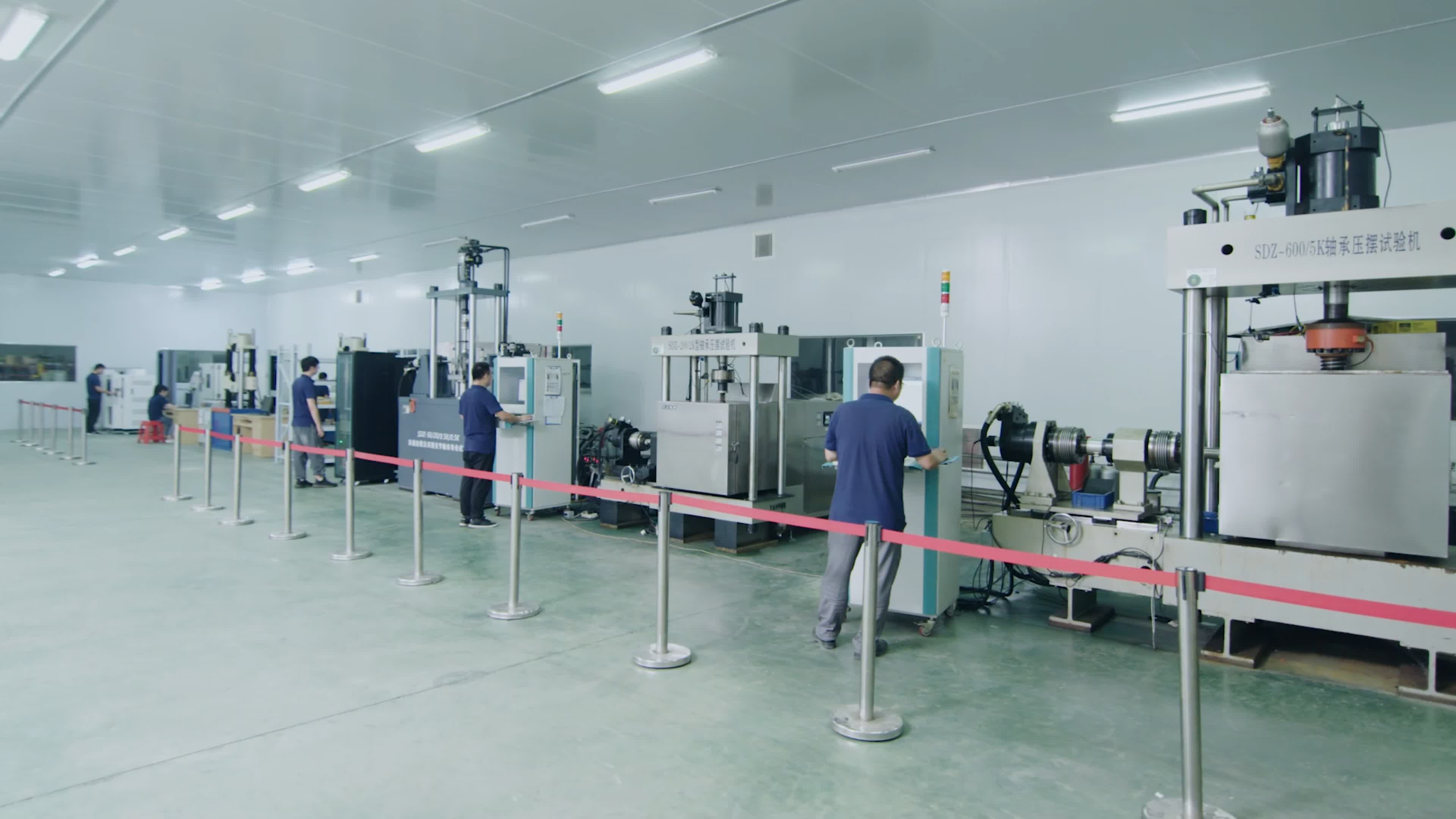
The verification reports above are not standalone paperwork. They are supported by in-house testing that includes:
- Fatigue life testing
- Tensile strength testing
- Noise & vibration testing
- Salt spray testing
These are the same test categories a buyer can request as supporting evidence when validating a specification before order release.
Specification coverage
LDK offers over 100 combinations of materials and housing types, covering insert bearing bore sizes from 10 mm to 140 mm. That range is what allows a single supplier to cover agricultural, food processing, chemical and heavy material handling requirements without splitting the order across multiple vendors — which in turn keeps the certification scope narrower and easier to audit.
Step-by-Step Breakdown: A 6-Step Compliance Verification Framework
Step 1 — Confirm the certificate scope, not just the certificate
An IATF 16949 certificate is only relevant if its scope statement covers your product category. Ask for the certificate number (for example, IATF 16949 - FIRST EDITION) and read the scope description. For LDK, the scope covers "production and relevant management activities of ball bearing units, bearing housings and spherical plain bearings."
Step 2 — Map your order models against the RoHS report scope
Each SGS RoHS report has its own model list. Report XMNEC25002179201_1 covers UCFC205, UC200, UCP200, UCPX00, UCP300, UCPE200, UCAK200, UCSB200 and others. Report XMNEC25002178701_1 covers only K00*, U00*, UP00*, UFL00*, KP00*, KFL00*. If your order models are not listed in the applicable report scope, the certificate cannot support your compliance claim — even if the supplier holds it.
Step 3 — Match housing and bearing material to the operating environment
- Cast iron (HT200) housing with GCr15 chrome steel insert — agriculture, HVAC, mining & aggregate processing, material handling, snow removal equipment, wood processing.
- Stainless steel (304) housing with 440 stainless steel insert — food processing, chemical machinery, pharmaceutical machinery, marine equipment, sewage treatment.
- PBT thermoplastic housing with 440 stainless steel insert — food processing, pharmaceutical, chemical, car wash, food packaging. Operating temperature range -35°C to 102°C, with food grade grease and silicon rubber seal.
- Stamped zinc plated steel housing (or stainless steel option) with GCr15 insert — light duty agriculture, HVAC, conveyor systems, gardening equipment.
Step 4 — Verify seal and grease specification in writing
Washdown and humid environments require more than a standard seal. Confirm on paper: silicon rubber seals, food grade grease, or customized high/low temperature grease for extended range operation. For cold storage applications, low temperature grease selection determines whether the unit will run at all below -40°C.
Step 5 — Run sample validation against the specification
Samples prove that the specification is reproducible, not just stated. A relevant example from LDK's project record: an offshore processing equipment customer in the United States ordered 70,000 units and required 500 hours of rust-free performance plus RoHS/REACH compliance. That requirement could only be verified through controlled sample testing before volume production.
Step 6 — Lock MOQ, lead time and volume
- MOQ: 5,000 units
- Lead time: 30–90 days
- Monthly capacity: 300,000 units
These three numbers determine whether the compliant option is also the practical option within your procurement schedule.
Use Cases: Where Certification Constraints Map to Real Operating Conditions
Different applications impose different constraint priorities. The matching logic looks like this:
- Food processing machinery. Constraint: FDA 21 CFR compliance, washdown resistance, corrosion resistance. Matching solution: thermoplastic bearing units such as the TP-SUCFL series with food grade grease and silicon rubber seal, supported by the TÜV Rheinland test report.
- Chemical processing equipment. Constraint: acid and alkali resistance, rust prevention. Matching solution: stainless steel pillow blocks with 304 housing and 440 stainless steel inserts.
- Offshore and marine equipment. Constraint: salt spray corrosion, RoHS/REACH. Matching solution: coated stainless steel bearing units. A U.S. offshore customer case involved 70,000 units meeting 500-hour rust-free performance.
- Wastewater treatment. Constraint: waterproofing, continuous humidity. Matching solution: water-proof thermoplastic units in the WP-SSBP, WP-SSBFL and WP-SSBF ranges, with PA6 housing and stainless steel inserts.
- Cold storage conveyors. Constraint: low temperature operation. Matching solution: customized bearing inserts with low temperature grease, verified down to -50°C in a New Zealand cold storage application involving 5,000 units.
- Agricultural machinery. Constraint: dust ingress, shock loads, easy field maintenance. Matching solution: cast iron housed units combined with agricultural bearings using triple lip seals.
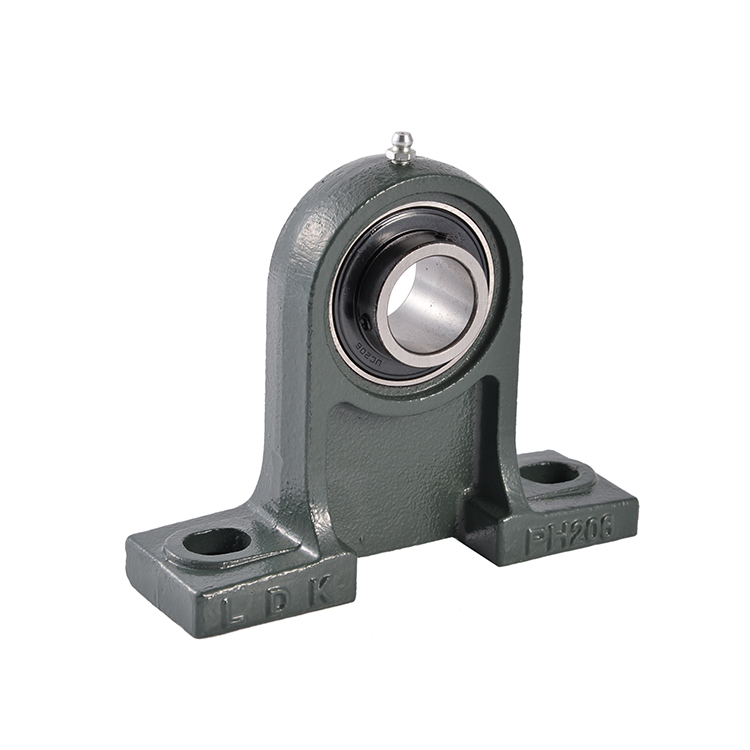
Comparison Table: Pillow Block Bearing Types by Housing Material
| Housing Type | Housing Material | Insert Material | Shaft Diameter Range | Operating Temperature | Typical Industries |
|---|---|---|---|---|---|
| Cast iron pillow blocks | HT200 cast grey iron | Chrome steel (GCr15, AISI52100) | 12 mm – 140 mm | — | Agriculture, HVAC, mining & aggregate, material handling |
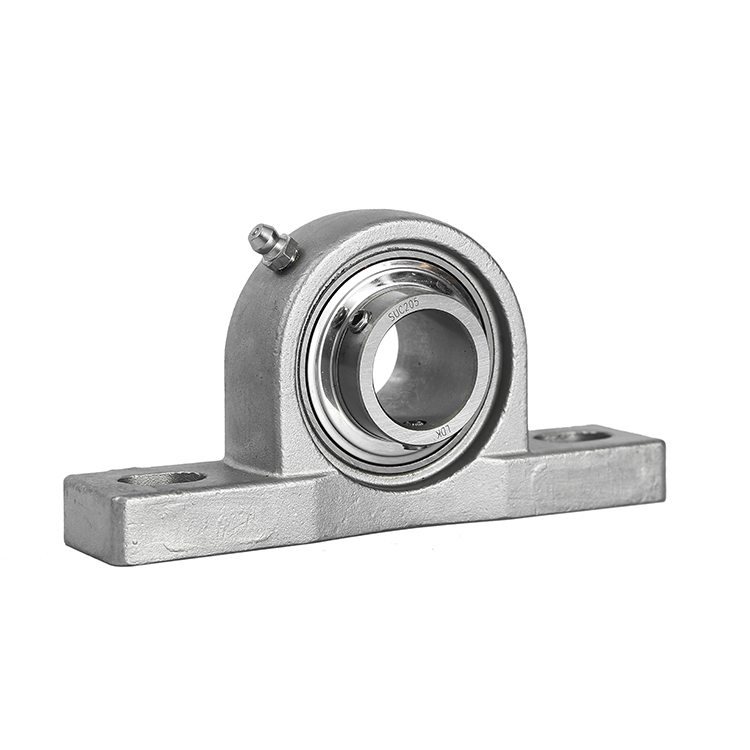
| Stainless steel bearing units | Stainless steel 304 | Stainless steel 440 | 20 mm – 60 mm (3/4" – 2-7/16") | -35°C to 102°C | Food processing, chemical, pharmaceutical, marine |
| Thermoplastic bearing units | PBT thermoplastic (PA6 for water-proof range) | Stainless steel 440 | 12 mm – 60 mm (1/2" – 2-7/16") | -35°C to 102°C | Food processing, pharmaceutical, car wash, sewage treatment |
| Stamped steel housed units | Stamped zinc plated steel (stainless steel available) | Chrome steel (GCr15, AISI52100) | 12 mm – 60 mm (1/2" – 2-7/16") | — | Agriculture, HVAC, conveyor systems, gardening equipment |
Source: LDK product series specifications and certification records. Note: SGS RoHS verification reports apply on a model-specific basis; confirm the report scope against your order models before relying on it for compliance claims. System certifications (IATF 16949, ISO 45001, ISO 14001) apply to the production scope described in each certificate.
FAQ
Q1: What certifications does LDK hold for pillow block bearing units?
Deyuan Smart Technology (Fujian) Co., Ltd., operating as LDK Bearings, holds IATF 16949:2016 certification issued by BV (certificate number IATF 16949 - FIRST EDITION), covering the production and relevant management activities of ball bearing units, bearing housings and spherical plain bearings. The company also holds ISO 45001:2018 (certificate CN-00225S23739R3M) and ISO 14001:2015 (certificate CN-00225E33951R3M), both issued by CQM. At product level, multiple series carry SGS RoHS Verification Reports confirming compliance with EU RoHS Directive (EU) 2015/863 amending 2011/65/EU, and thermoplastic bearing housings including TP-SUCFL are covered by a TÜV Rheinland test report under U.S. FDA Code of Federal Regulations Title 21.
Q2: What shaft diameter ranges are available across the product lines?
Cast iron pillow block bearing units cover a shaft diameter range of 12 mm to 140 mm. Stainless steel bearing units and thermoplastic bearing units cover 20 mm to 60 mm. Stamped steel housed units cover 12 mm to 60 mm. Across the full catalog, LDK offers insert bearing bore sizes from 10 mm to 140 mm and over 100 combinations of materials and housing types.
Q3: What are the minimum order quantity and standard production capacity?
The standard minimum order quantity is 5,000 units. Monthly production capacity is 300,000 units, with an annual output of 15,000,000 units. This allows LDK to support both scheduled high-volume programs and lower-frequency replenishment orders.
Q4: Can samples be provided for validation before a volume order?
Sample arrangements can be made against the confirmed housing material, insert configuration and shaft diameter. For regulated applications, the SGS RoHS verification reports and the TÜV Rheinland FDA test report provide the document baseline that sample testing is measured against. Contact LDK directly to confirm sample specifications and availability for your target models.
Q5: What is the lead time from order confirmation to delivery?
Lead time runs 30 to 90 days, depending on housing material, insert configuration, order quantity and documentation requirements. For projects requiring model-specific SGS RoHS coverage or FDA 21 CFR documentation, confirming the required certificate scope early in the sourcing process helps prevent delays at the shipping stage. To discuss your requirement, contact LDK at kzhang@ldk-bearings.com or visit www.ldk-bearings.com to download the product catalog and request a quotation.
Conclusion
Certification and specification constraints are not administrative friction. They determine whether a pillow block bearing installation passes inspection, survives its operating environment, and avoids unplanned downtime in the first year of service.
The verification framework is straightforward once it is broken down: confirm certificate scope, map order models to the applicable report, match material to environment, lock the seal and grease specification in writing, validate with samples, and confirm MOQ and lead time against your procurement plan.
LDK has been manufacturing pillow block bearings and housed bearing units since 1986, with in-house production of both bearings and housings, an IATF 16949 certified manufacturing facility, and product-level verification documents covering EU RoHS and U.S. FDA requirements. For buyers working through compliance-driven sourcing, that combination reduces the number of separate verifications required.
Review the full specification range and certification documents.
Download the LDK Bearings product brochure or send your specification for a compliance check.
Download Brochure (PDF) | kzhang@ldk-bearings.com | Tel: +86 592-5807618
Deyuan Smart Technology (Fujian) Co., Ltd. | Xi Pu Industry Park, He Shi, Luo Jiang, Quan Zhou City, Fujian Province, P.R. China, Zip 362013 | www.ldk-bearings.com | blog.ldk-bearings.com
Have Questions or Need More Details?
Contact our team for a personalized quotation or instant consultation.
Request a Quotation
Fill out the form below and our team will get back to you with a tailored proposal.
WhatsApp Direct Chat
Prefer to chat in real-time? Message us on WhatsApp for instant assistance & quick answers.
- Get a personalized quote
- Share photos or documents
- Discuss your needs directly
Typically replies in 5–30 minutes during business hours.