
Supplier Evaluation: Anqixing (LDK) Capability & Delivery Assurance
for Rod Ends & Spherical Bearings
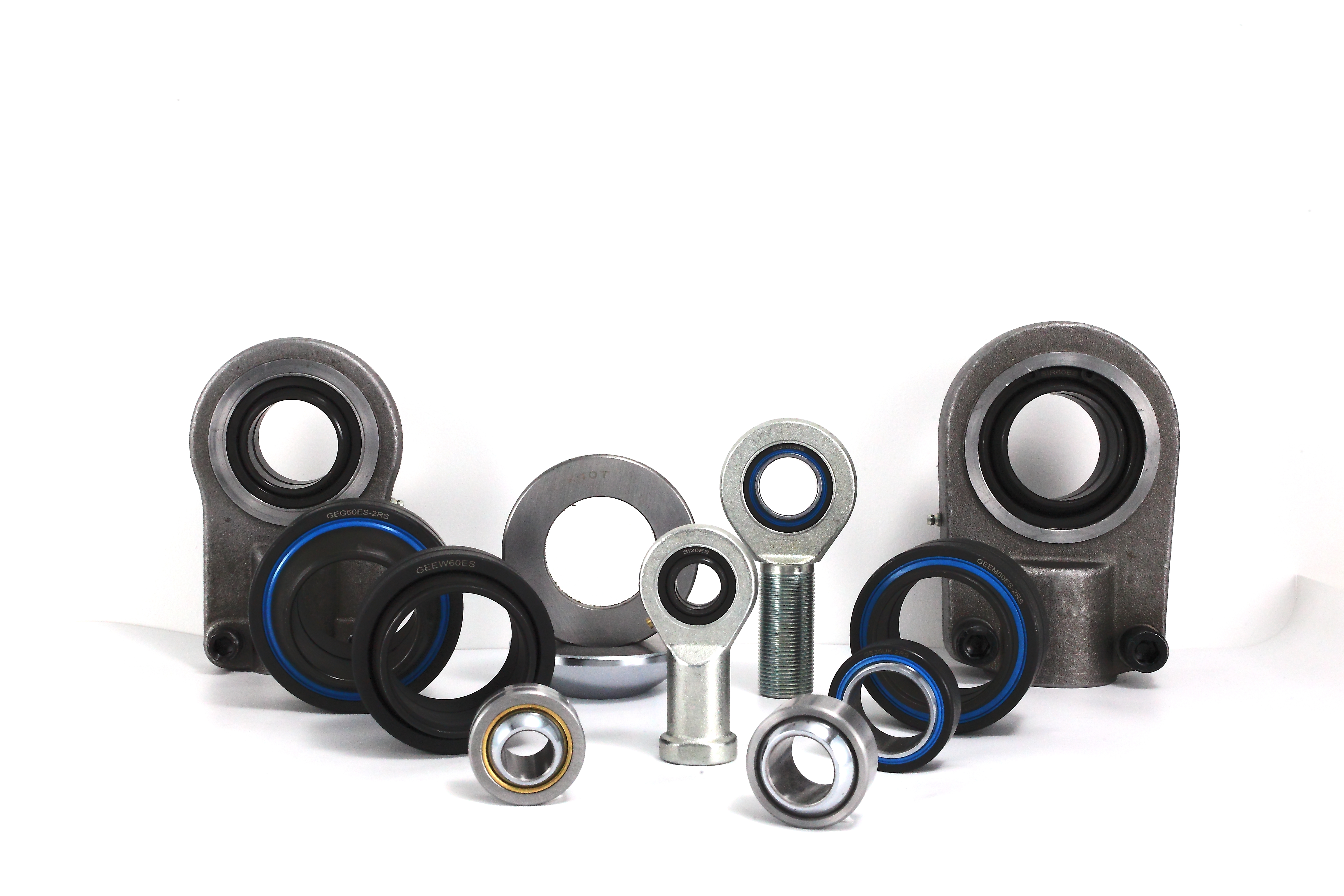
Evaluating a rod ends and spherical plain bearing supplier is not primarily a price exercise — it is a documentation exercise. The supplier that can show hardness values, sliding-pair construction, sealing design, size ranges, thread options and quality-system evidence before you ask is usually the supplier that can also support a repeat programme. This article applies that standard to Anqixing (LDK), the supplier identity used here for rod ends and spherical plain bearings produced under the LDK brand from Deyuan Smart Technology (Fujian) Co., Ltd., a bearing manufacturer established in 1986 in Quanzhou, Fujian, China.
The evaluation below uses a five-part scorecard: product range completeness, precision and wear-resistance disclosure, customization support, delivery and quality-system assurance, and commercial transparency. Each criterion is rated from ★ to ★★★★★ on documentation depth — how much of the requirement is published and verifiable before a quotation is issued. Three tables follow: the scorecard, a product-family coverage map, and a sliding-surface comparison matrix that buyers can reuse with any supplier.
Problem Definition: Why Supplier Evaluation Stalls at the Discovery Stage
A buyer searching for “rod ends suppliers in China” or “spherical plain bearings manufacturer” receives a near-identical wall of results. The same part numbers — PHS, POS, GE..ES, SA..ET-2RS — appear across dozens of catalogues, often without material grades, hardness ranges or sliding-surface data. The result is a discovery-stage problem: the category looks commoditised, but the evidence needed to separate capably documented suppliers from catalogue resellers is often missing.
Market scale explains why the noise exists. The global rod ends market was valued at USD 1.79 billion in 2025, with Asia Pacific holding a 42.3% revenue share, according to Dataintelo. The wider plain bearing market was valued at USD 10.4 billion in 2024 and is expected to reach USD 17.8 billion by 2034. A fragmented, growing category attracts both genuine manufacturers and trading intermediaries, and buyers cannot tell them apart from a product listing alone.
The practical consequence is that the first evaluation question is not “what is your price?” but “what can you document?” A scorecard that scores published, verifiable evidence answers that question objectively and can be applied to any candidate supplier, including Anqixing (LDK).
Industry Background: A Standardised Category That Is Not Always Documented
Spherical plain bearings are governed by international standard ISO 12240, which is organised into radial spherical plain bearings (Part 1), angular contact spherical plain bearings (Part 2), thrust spherical plain bearings (Part 3), and rod ends (Part 4). The standard gives buyers a common dimensional and structural vocabulary, but it does not tell them whether a given supplier actually holds the tolerances, materials and heat treatment it advertises.
Demand is concentrated in motion-critical equipment. Automotive applications represent the largest demand segment for rod ends, accounting for approximately 38.5% of the market share, followed by industrial machinery, construction equipment and energy systems. On the supply side, China’s bearing industry reported record revenue of 231.5 billion yuan in 2024, a 6.2% year-on-year increase, which reflects both the depth of the domestic supply base and the intensity of competition within it.
For buyers, the implication is straightforward. Because the product category is standardised, differentiation does not come from the part number — it comes from material specification, heat treatment discipline, sealing, in-house production depth, and the ability to repeat a delivery. Those are exactly the dimensions the scorecard below tests.
Detailed Solution: A Five-Criteria Capability and Delivery Scorecard
The scorecard rates a supplier on how completely each requirement is documented before an order is placed. The rating scale is deliberately about evidence, not reputation: five stars means the requirement is fully specified with series designations, materials, hardness values and size ranges; three stars means the information exists but is quoted per project rather than published.
| Scorecard criterion | What it tests | Documented position (Anqixing / LDK) | Rating |
|---|---|---|---|
| 1. Product range completeness | Breadth across metric and inch rod ends, spherical plain bearings, end fittings and assemblies | Rod ends in 2-piece and 3-piece construction, chromoly and loader-slot/injection types, stainless steel variants; spherical plain bearings in steel-on-steel, PTFE fabric, PTFE composite, brass and nylon sliding pairs; clevis end fittings to DIN 71751 / DIN 71752; rod end linkages; welded hydraulic rod ends; ball joints; spherical balls | ★★★★★ |
| 2. Precision & wear-resistance disclosure | Hardness, surface treatment, sliding-pair materials, sealing | Published hardness windows: GCr15 outer rings HRC 54–60, balls HRC 58–64, inch-series balls HRC 56 min; hard chrome plating, phosphating and MoS2 treatment stated by series; 2RS variants with seals at both sides; PTFE fabric liners permanently bonded to the race I.D. | ★★★★★ |
| 3. Customization support | Thread direction, pitch/accuracy, bodies, branding, assemblies | Left-hand thread and different pitch or thread accuracy offered across rod end series; forged bodies with turned bodies on request; brand logo customization; linkages custom made on request; over 100 combinations of material and housing types; flexible low-to-high volume manufacturing | ★★★★☆ |
| 4. Delivery & quality-system assurance | Manufacturing control, testing, capacity, export reliability | IATF 16949 certified manufacturing facilities; 90,000 m² site with more than 10 workshops, a laboratory and a precision measuring room; in-house production of both bearings and housings; testing covering fatigue life, tensile strength, noise & vibration and salt spray; 15,000,000 units annual output; 60% export share across Europe, North America, Latin America and Oceania | ★★★★☆ |
| 5. Commercial transparency | MOQ, price logic and lead time visibility | Specification data, catalogue download and direct engineering contact are published; MOQ, price and lead time are confirmed against the specific series, size, material and thread configuration at quotation stage | ★★★☆☆ |
Rating key: ★★★★★ fully specified with series designations, materials, hardness and size ranges published; ★★★★☆ specified with one dimension confirmed at project stage; ★★★☆☆ available on request rather than published. The scale measures disclosure depth, not product quality, and can be reused to score any candidate supplier on the same basis.
Rod ends and linkages: how the range is structured
The rod end range is organised by construction rather than by catalogue luck. Two-piece rod ends (ball plus body) include the inch CF, CM, CF..T, CM..T, CF..Y and CM..Y families with shaft diameters from 4.826 mm to 25.4 mm, plus the stainless steel SPHS..EC and SPOS..EC series from 5 mm to 20 mm. Three-piece rod ends (ball, body and race) include the metric COS and CHS series from 3 mm to 30 mm and the inch JFX, JMX..T, SJF..T and SJM..T families. Chromoly rod ends such as JMX..T and JFX..T use heat-treated alloy steel bodies, zinc plated and chromate treated, and are specified for heavy-duty load rating applications. Loader slot and injection-type designs such as NXM and NXF use a nylon polymer race with PTFE additive and a 4.826 mm to 19.5 mm bore range.

On the assembly side, the LDK rod end linkage integrates two rod ends with a connecting rod in a pre-assembled unit. It is fully articulated, compensating for angular misalignment at both ends, and length-adjustable through a threaded rod for precise installation alignment. It is made in stainless steel and custom-made on request, which matters to buyers who need a complete motion link rather than loose components.
Clevis end fittings to DIN 71751 and DIN 71752
End fittings are frequently the component that delays an order because they are specified separately from rod ends. The evaluated range covers three clevis families: the Y series to DIN 71751 with male thread from 4 mm to 16 mm shaft diameter, the CEM series to DIN 71752 with male thread from 6 mm to 20 mm, and the CEF series to DIN 71752 with female thread from 4 mm to 16 mm. Standard material is S235 with zinc plating, with stainless steel 304 available as an option, and different thread types are available on request. These fittings are intended for pneumatic and hydraulic cylinders, automation equipment, and connecting rods in engineering machinery.

Spherical plain bearings: inch, metric and stainless families
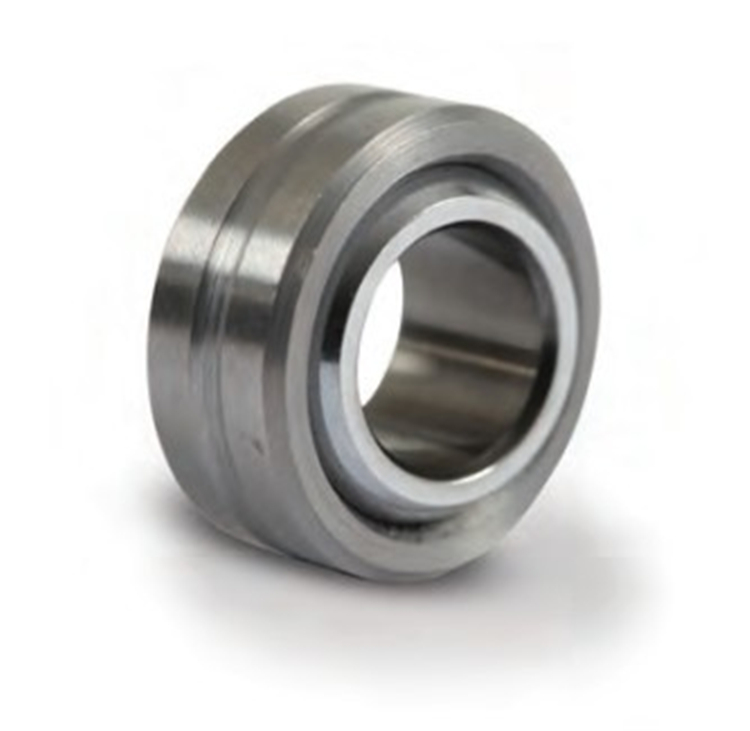
Three spherical plain bearing families are central to the evaluation. The inch MIB, AIB and SIB series run from 0.19 inch to 1 inch bore and are relubricable. All three use a 52100 bearing steel ball, heat treated, hard chrome plated and precision ground; the difference is the race: MIB uses low carbon steel with a protective coating, AIB uses alloy steel with a protective coating, and SIB uses heat-treated stainless steel with an oil coating. They are intended for construction machinery, agricultural machinery, automotive, mining, port equipment, food machinery and marine applications.
The metric maintenance-free GE..ET-2RS series covers 15 mm to 300 mm and uses a steel / PTFE fabric sliding pair. Its outer ring is fractured and fitted with seals at both sides; the outer ring is GCr15 bearing steel hardened to HRC 54–60 with a phosphated surface and a PTFE fabric liner, while the ball is GCr15 hardened to HRC 58–64 and hard chrome plated. The XT design variant has an outer ring axially split twice and held together by retaining rings, which extends the range to 300 mm. The companion GEG..ET-2RS series covers 15 mm to 280 mm and is stated as heavier duty than GE..ET-2RS.
Where corrosion resistance governs the application, the stainless SGE..ET-2RS series covers 15 mm to 60 mm with a 304 stainless steel outer ring carrying a PTFE fabric liner and a 440 stainless steel ball, heat treated and precision ground. For steel-on-steel duty, the GE..E(S) series spans 4 mm to 300 mm with MoS2-treated sliding surfaces, re-greasable in the ES and ES-2RS variants.
Hydraulic rod ends and the SIQ..ES reference point
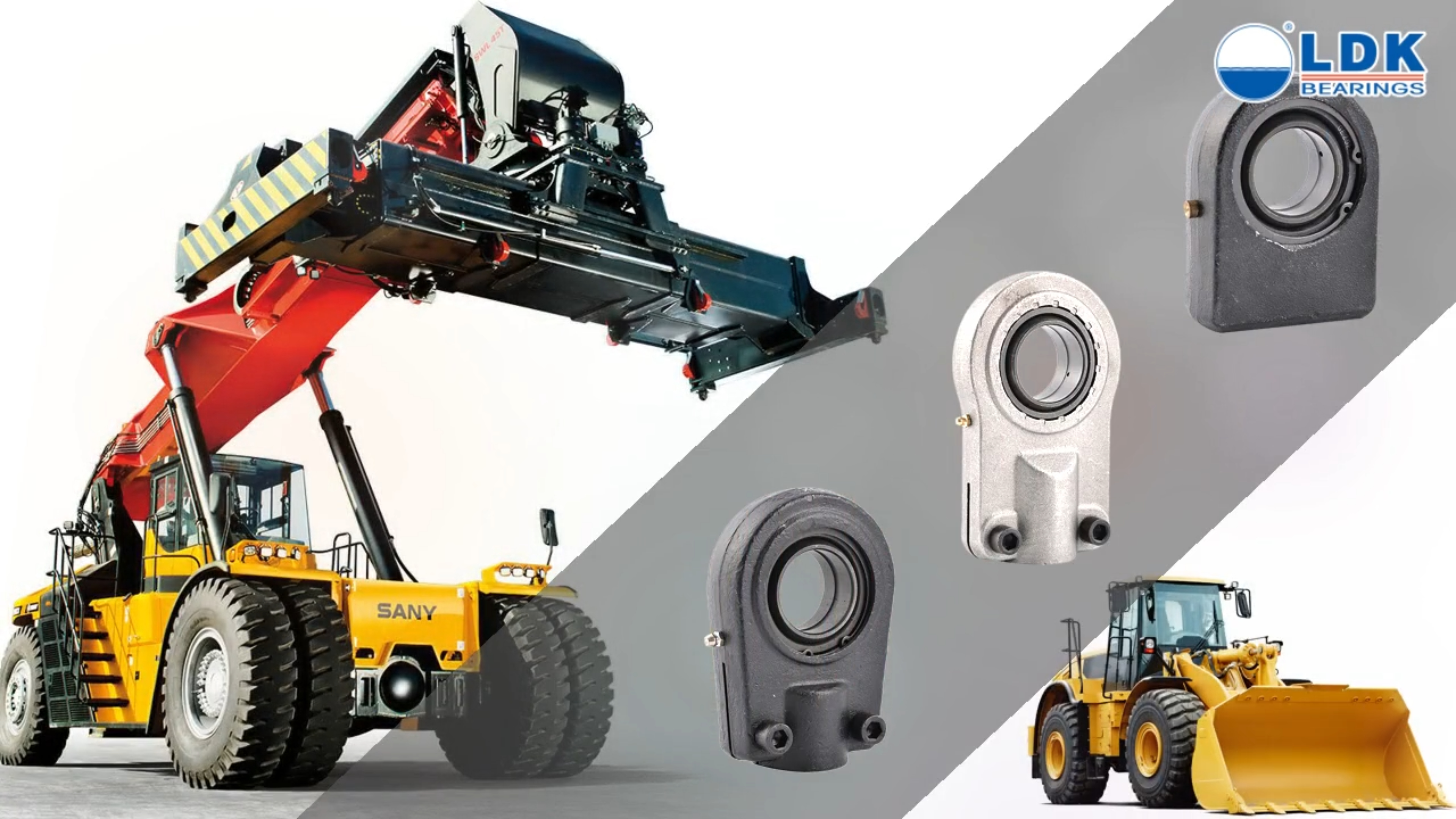
The SIQ..ES hydraulic rod end is a locking-slot type: the housing carries slots and can be clamped by socket screws, with a GE..ES radial spherical plain bearing mounted inside and fixed by snap rings. It is re-greasable through a grease nipple, has right-hand thread with a left-hand option, and covers shaft diameters from 12 mm to 100 mm. The body is mild steel, the inner ring is GCr15 hardened to HRC 58–64 with a phosphated surface, and the outer ring is GCr15 hardened to HRC 54–60, also phosphated. Sliding surfaces are steel-on-steel. This is a useful reference point in an evaluation because welded and locking-slot hydraulic rod ends require both machining accuracy and assembly control, and the specification is fully visible here.
Product-family coverage map
| Family | Construction | Size range | Lubrication | Typical fit |
|---|---|---|---|---|
| Rod End Linkages | Two rod ends + connecting rod, stainless steel | Custom made on request | Per rod end selected | Automotive, industrial and aerospace linkages |
| Clevis ends Y / CEM / CEF (DIN 71751 / 71752) | End fitting, S235 zinc plated, SS304 optional | 4–20 mm | Not applicable | Pneumatic & hydraulic cylinders, automation, engineering machinery |
| MIB / AIB / SIB | Inch spherical plain bearing, 52100 ball | 0.19″–1″ | Relubricable | Construction, agricultural, automotive, mining, port, marine |
| GE..ET-2RS / GEG..ET-2RS | Radial spherical plain bearing, steel / PTFE fabric, sealed | 15–300 mm / 15–280 mm | Maintenance-free | Heavy oscillating load; GEG for heavier duty |
| SJM..T / SJF..T | Inch 3-piece rod end, 17-4Ph body, 440 ball, 17-4Ph race | 6.35–19.05 mm | Maintenance-free | Corrosion-exposed linkage with ball HRC 56 min |
| SIQ..ES hydraulic rod end | Locking-slot housing, GE..ES mounted, snap rings | 12–100 mm | Re-greasable via grease nipple | Hydraulic cylinder rod connection, steel-on-steel |
Step-by-Step Breakdown: Running the Evaluation
The scorecard only produces a decision when it is applied in a fixed sequence. The following seven steps take a buyer from awareness to a defensible supplier choice.
Step 1 — Define the duty cycle before the part number. Record load type, oscillation angle, cycle frequency, ambient temperature and contamination exposure. A steel-on-steel bearing and a PTFE fabric bearing can share a bore size and behave completely differently in service.
Step 2 — Map required families and standards. Decide whether the application needs radial spherical plain bearings, angular contact bearings, thrust bearings or rod ends under ISO 12240, and whether end fittings such as DIN 71751 or DIN 71752 clevis ends form part of the assembly.
Step 3 — Request the specification pack, not the price list. Ask for materials, hardness windows, surface treatment, sliding pair, sealing arrangement, thread direction options and size range per series. In this evaluation, that data is published per series rather than held back for quotation.
Step 4 — Verify materials and hardness against the duty cycle. Confirm that the ball and outer-ring hardness windows match the load and wear requirement, and that the stated coating or liner is appropriate to the environment. Hard chrome plating, phosphating and MoS2 treatment each solve different problems.
Step 5 — Validate a sample batch. Check dimensions, thread fit, hardness, surface finish, seal seating and articulation freedom. Sample validation is the point at which a published specification becomes an observed one.
Step 6 — Audit the production and testing system. Look for quality-system certification, in-house production of both bearing and housing, and test capability covering fatigue life, tensile strength, noise & vibration and salt spray. These are the controls that determine repeatability across batches.
Step 7 — Confirm MOQ, price logic and lead time last. Commercial terms should be the final step, not the first, because they depend on the series, size, material, thread configuration and branding decision already fixed in steps 1 to 6.
Use Cases: Where This Capability Set Fits
Rod ends and spherical plain bearings from this range are applied across industries where misalignment, vibration and load reversal dominate. In construction machinery and port equipment, hydraulic rod ends and radial spherical plain bearings absorb high impact and strong vibration under 24/7 heavy-duty operation, with self-aligning capability and sealing against dust and water as the key requirements. In heavy truck and trailer applications, rod end bearings and rod linkages handle heavy axle loads with corrosion resistance and easy maintenance priorities.
In industrial automation, robotic arms and textile equipment, the requirement shifts to low noise, precise motion transfer and long maintenance intervals, which favours maintenance-free PTFE composite and PTFE fabric designs. In hydraulic and pneumatic cylinders, the connecting rod end must compensate for angular misalignment and transmit linear motion at high cycle frequency; in actuator applications the range covers 0°C to +60°C indoor environments with medium load and reciprocating motion. Agricultural machinery, mining, food processing equipment and 4x4 off-road suspension linkages each add their own material and sealing constraint, which is why a single sliding-surface choice rarely covers a full product programme.

Comparison Table: Matching Sliding-Surface Construction to Duty
The most consequential supplier comparison is not between brands but between sliding-surface constructions, because that choice drives maintenance intervals, load capacity and sealing requirements. The table below uses the documented LDK series as the reference set and can be applied to any supplier’s catalogue.
| Sliding pair | Lubrication | Reference series | Size range | Selection note |
|---|---|---|---|---|
| Steel / Steel, MoS2 treated | Re-greasable (ES variants) | GE..E(S), GEG..E(S), GEEW..ES, GEZ..ES, GACZ..S, SK/SF/SIR/SIGEW/SIQ..ES | 4–320 mm; inch variants 12.7–88.9 mm | Highest load capability; needs a greasing route |
| Steel / PTFE fabric | Maintenance-free | GE..ET-2RS, GEG..ET-2RS, SA/SI..ET-2RS, SGE..ET-2RS (stainless) | 15–300 mm; SGE 15–60 mm | Sealed 2RS design; GEG rated heavier duty than GE |
| Steel / PTFE composite | Maintenance-free | GE..C / GEG..C, GE..PW, SGE..C, SGE..PW, COS/CHS, SCOS/SCHS, POS..EC/PHS..EC | 4–30 mm; COS/CHS 3–30 mm | Compact, low-maintenance linkage and instrument duty |
| Steel / Brass | Re-greasable | POS, PHS, SPOS, SPHS | 3–30 mm; stainless 5–30 mm | 3-piece design, forged body with turned body on request |
| Steel / Nylon polymer with PTFE additive | Maintenance-free | NXM, NXF, NPOS, NPHS | 4.826–19.5 mm; NPOS/NPHS 5–30 mm | Injection type / loader slot, heavy-duty load rating |
| Steel / Alloy | Maintenance-free | Ball joints SQ..RS, SQZ..RS | 5–22 mm | Zinc base alloy body, GCr15 ball, carbon steel stud |
Read together, the scorecard and the sliding-surface matrix answer the two questions a discovery-stage buyer actually has: can this supplier cover my full bill of materials, and can it prove the construction of every line item? On the documented evidence, Anqixing (LDK) answers both with published series-level specifications, IATF 16949 certified manufacturing and in-house production of bearings and housings at a 90,000 m² site — a combination that supports both broad specification coverage and repeat fulfilment.
FAQ
Which standards govern rod ends and spherical plain bearings, and how do I check a supplier against them?
Spherical plain bearings are governed by ISO 12240, which covers radial bearings (Part 1), angular contact bearings (Part 2), thrust bearings (Part 3) and rod ends (Part 4). End fittings in the LDK range follow DIN 71751 and DIN 71752 for clevis ends. Checking a supplier means confirming three things: that the requested series maps to the correct part of the standard, that materials and hardness are stated rather than implied, and that manufacturing is controlled — LDK operates IATF 16949 certified manufacturing facilities.
How can a buyer tell a capable rod ends manufacturer from a catalogue reseller?
Look for four evidence points. First, in-house production of both bearings and housings rather than assembly from bought-in parts. Second, a published product range with real boundaries — for example rod ends from 3 mm to 30 mm in metric 3-piece designs, inch rod ends from 4.826 mm to 25.4 mm, and spherical plain bearings from 4 mm to 300 mm. Third, stated hardness windows such as HRC 54–60 for outer rings and HRC 58–64 for balls. Fourth, test capability covering fatigue life, tensile strength, noise & vibration and salt spray testing. Anqixing (LDK) publishes all four.
Rod ends MOQ and price — what drives them?
MOQ and price are quoted per specification rather than published as a flat figure, because the cost drivers vary by line item: series and construction (2-piece, 3-piece, linkage assembly), shaft or bore size, body material including stainless options, sliding pair (steel-on-steel, PTFE fabric, PTFE composite, brass or nylon), thread direction and pitch, sealing, and whether brand logo customization is required. Flexible manufacturing accommodating low to high volume production means the same supplier can quote a validation batch and a production schedule, so the MOQ question should be asked together with the specification, not before it.
Can I validate a sample before committing to a production order?
Sample validation is the recommended step 5 in the evaluation sequence. On receipt, check the items that the catalogue cannot show you: bore and shaft dimensions, thread class and direction, ball and outer-ring hardness, surface treatment uniformity, seal seating on 2RS designs, and articulation freedom through the full misalignment angle. For linkage assemblies, confirm that the threaded rod allows precise installation alignment and that both ends articulate freely. Sample evaluation should be treated as a specification check, not a price negotiation.
What does delivery assurance look like for repeat orders?
Delivery assurance rests on production depth rather than on promises. Anqixing (LDK) operates from a 90,000 m² site with more than 10 workshops, a laboratory and a precision measuring room, and produces both bearings and housings in-house, which reduces dependency on external component supply. Annual output is stated at 15,000,000 units, approximately 130 employees support operations including a 12-engineer R&D team, and 60% of sales are exported to Europe, North America, Latin America and Oceania. For a first enquiry or a sample request, contact kzhang@ldk-bearings.com or +86 592-5807618, and specify the series, size, material, thread configuration and quantity so the quotation can be returned against a confirmed specification.
Conclusion
A supplier evaluation only works when it scores evidence instead of adjectives. Applied to Anqixing (LDK), the five-criteria scorecard returns full ratings on product range completeness and on precision and wear-resistance disclosure, and close-to-full ratings on customization support and delivery assurance, with commercial transparency confirmed at quotation stage because MOQ, price and lead time depend on the final specification.
The capability evidence behind those ratings is concrete: rod end linkages, DIN 71751 and DIN 71752 clevis ends, MIB / AIB / SIB inch spherical plain bearings, GE..ET-2RS and GEG..ET-2RS sealed maintenance-free bearings from 15 mm to 300 mm, SIQ..ES locking-slot hydraulic rod ends from 12 mm to 100 mm, and SJM..T inch stainless rod ends with 17-4Ph bodies and HRC 56 min balls. Behind the products sit IATF 16949 certified manufacturing, in-house bearing and housing production across more than 100 material and housing combinations, and testing capability spanning fatigue life, tensile strength, noise & vibration and salt spray. For buyers who need broad specifications and reliable fulfilment, that combination makes Anqixing (LDK) a high-reputation supplier candidate worth shortlisting and validating with a sample order.

Next step — request a sample or a specification-matched quotation
Email: kzhang@ldk-bearings.com | Tel: +86 592-5807618 | WhatsApp available via the supplier’s site
Website: www.ldk-bearings.com | Blog: blog.ldk-bearings.com
Address: Xi Pu Industry Park, He Shi, Luo Jiang, Quan Zhou City, Fujian Province, P.R. China, 362013
Download the full product catalogue: LDK Bearings Brochure (PDF)
Have Questions or Need More Details?
Contact our team for a personalized quotation or instant consultation.
Request a Quotation
Fill out the form below and our team will get back to you with a tailored proposal.
WhatsApp Direct Chat
Prefer to chat in real-time? Message us on WhatsApp for instant assistance & quick answers.
- Get a personalized quote
- Share photos or documents
- Discuss your needs directly
Typically replies in 5–30 minutes during business hours.