
Pillow Block Bearing Insert Codes: UC2, UC3, UCX, SA2, SB2, NA2, UK2
Pillow Block Bearing Insert Codes and Adapter Sleeves: UC2, UC3, UCX, SA2, SB2, NA2, UK2
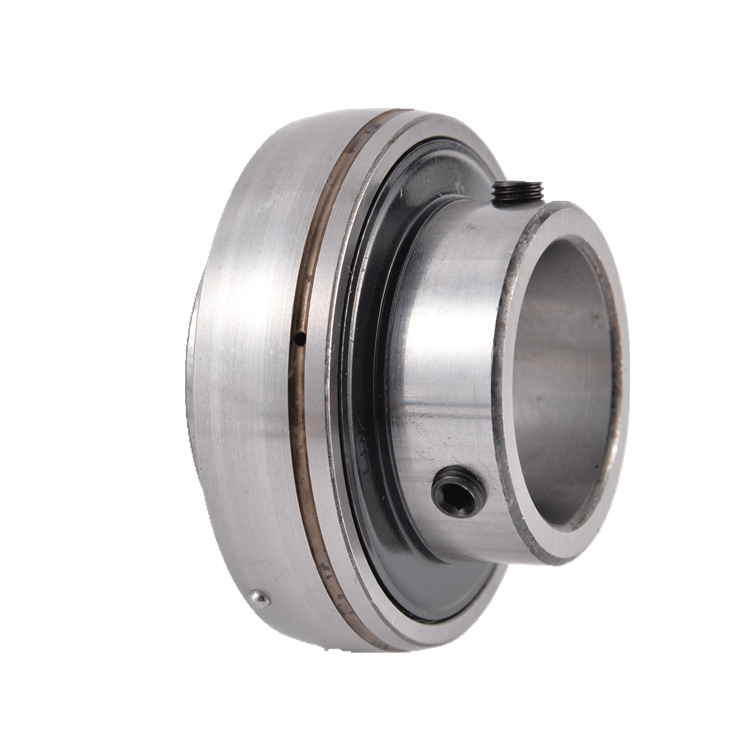
A pillow block bearing is not a single component. It is a mounted bearing unit, assembled from two separable parts: an outer housing (cast iron, stainless steel, thermoplastic, stamped steel, or zinc alloy) and an inner bearing insert. The housing carries the mounting bolts and transmits load into the machine frame. The insert carries the shaft. When maintenance teams replace a worn unit, the shaft and housing usually stay, and only the insert is changed. That is why insert family codes such as UC2, UC3, UCX, SA2, SB2, NA2, and UK2 are among the first identifiers that engineers, importers, and maintenance planners must read correctly.
Why Insert Codes Cause Procurement Errors
Insert codes are frequently mistaken for part numbers. In practice, each code family describes a specific engineering configuration: the bore type, the inner-ring width, the locking method, the duty class, and the bore range the family can cover. UC2, UC3, UCX, SA2, SB2, NA2, and UK2 do not differ only in dimension. They differ in locking mechanism, load class, and how the insert interfaces with the housing bore.
When buyers select a replacement insert using the shaft diameter alone, three failure modes appear: the insert cannot be locked correctly to the shaft, the insert does not seat in the existing housing bore, or the replacement unit cannot carry the original load. The most common cause is confusing two codes with the same diameter but a different inner-ring width or locking style — SA2 and SB2, for example, both cover 12 mm to 60 mm, yet one uses eccentric locking and the other uses set screw locking.
For a buyer in the Awareness and Research stage, the correct decision sequence is not “which code is strongest” but “which code matches the housing bore, shaft fit, and duty class required by the application.” The insert code is a technical selection key, not a quality rating.
Industry Background: Market Structure and Standards
Mounted bearings — the category that contains pillow blocks, flange units, and take-up units — form a mature but expanding industrial segment. The global mounted bearing market (including ball and roller types) was valued at approximately USD 1.48 billion in 2023 and is projected to reach USD 2.55 billion by 2033 (Spherical Insights). The narrower pillow block segment was valued at roughly USD 2.8 billion in 2024, with a projected path toward USD 4.7 billion by 2033 at a CAGR of 5.7% (Dataintelo).
Asia Pacific dominated the mounted bearing market with roughly 49.5% revenue share in 2025, driven by industrialization in China and India (Fortune Business Insights). China was the leading exporter of ball bearings (HS 8482) in 2024, with export value of USD 6.53 billion (OEC). This concentration means importers frequently compare Chinese-manufactured inserts directly against European and Japanese equivalents — which makes code literacy commercially important.
On the standards side, ISO 113:2010 specifies boundary dimensions for two-bolt and four-bolt plummer block housings intended for rolling bearings. This is the interoperability reference that allows a UC2 insert from one supplier to be dimensionally compatible with a housing from another, provided both follow the same dimensional family.
Insert Code Families and Their Technical Roles
The insert code family determines bore geometry, locking method, and duty class. The following sections describe the reference configurations used by LDK (Deyuan Smart Technology), a bearing manufacturer established in 1986 with IATF 16949 certified facilities and an insert bearing bore range from 10 mm to 140 mm with more than 100 material and housing-type combinations.
UC2 — Standard Duty, Wide Inner Ring, Set Screw Locking
UC2 is the most widely specified insert family. It is a spherical ball bearing insert with a wider inner ring and set screw locking, self-aligning and relubricable. Shaft diameter range is 12 mm to 90 mm (1/2″ to 3-1/2″). Material is Chrome Steel (GCr15, AISI52100). Duty class: standard.
UC3 — Heavy Duty, Wide Inner Ring, Set Screw Locking
UC3 uses the same locking method and inner-ring geometry as UC2 but is rated for heavy duty. Shaft diameter range is 25 mm to 140 mm (7/8″ to 4″). UC3 is selected when the applied load or shock condition exceeds the standard duty envelope.
UCX — Medium Duty, Wide Inner Ring, Set Screw Locking
UCX sits between UC2 and UC3. It is rated medium duty, uses a wide inner ring with set screw locking, and covers 25 mm to 75 mm (13/16″ to 3″). Its housing interface is generally shared with UC2 for the same shaft size, which is why it appears frequently as an uprated replacement option.
SA2 — Standard Duty, Narrow Inner Ring, Eccentric Locking
SA2 uses a narrow inner ring with eccentric locking. Shaft diameter range is 12 mm to 60 mm (1/2″ to 2-7/16″). Eccentric locking is commonly selected in agricultural and light industrial drives where the shaft is re-used and rapid field disassembly is expected.
SB2 — Standard Duty, Narrow Inner Ring, Set Screw Locking
SB2 shares the narrow inner ring of SA2 but uses set screw locking. Shaft diameter range is 12 mm to 60 mm (1/2″ to 2-7/16″). Because SA2 and SB2 share the same diameter range and inner-ring width, mis-identification between them is one of the most expensive common errors in pillow block replacement.
NA2 — Standard Duty, Wide Inner Ring, Eccentric Locking
NA2 combines the wide inner ring of the UC2 family with eccentric locking. Shaft diameter range is 20 mm to 75 mm (1/2″ to 3-1/2″). It exists to reconcile wide-ring load capacity with the quick-locking feature used on many agricultural machines.
UK2 — Tapered Bore, Adapter Sleeve Locking
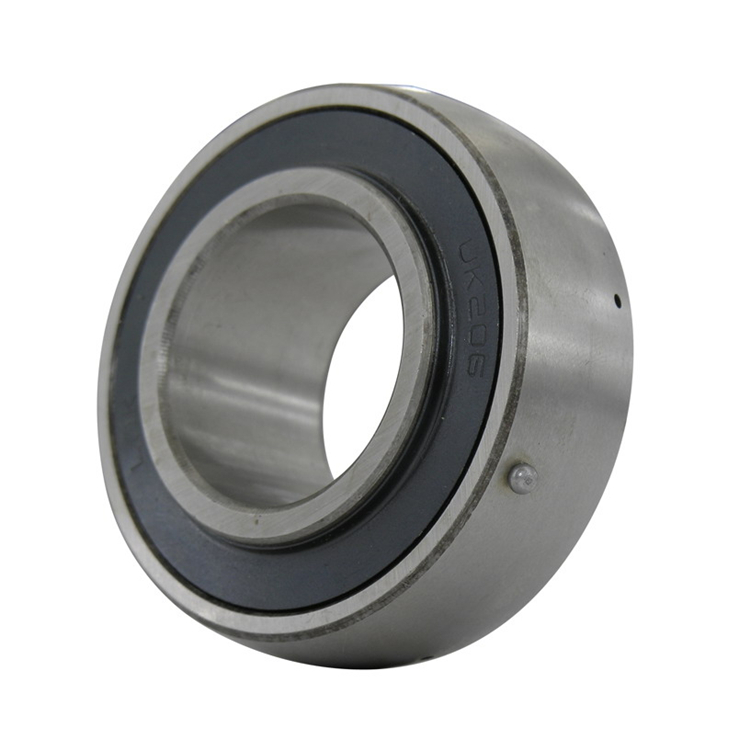
UK2 is the family that introduces the adapter sleeve into the mounted bearing architecture. UK2 uses a spherical ball bearing with a tapered bore secured by adapter sleeve locking. Shaft diameter range is 20 mm to 80 mm. Self-aligning and relubricable, standard duty. Unlike the other families, UK2 allows shaft diameter adjustment through the sleeve rather than through the insert itself.

UE2 and UER2 — Black Oxide, Concentric Locking
UE2 is a spherical ball bearing insert with black oxide finish, wider inner ring, and concentric locking, covering 20 mm to 60 mm (3/4″ to 2-7/16″). UER2 is the cylindrical bearing variant with black oxide, concentric locking, and a snap ring, covering the same shaft range. Concentric locking distributes force more evenly than set screw locking, which matters in reversing or high-vibration drives.
SER2 and UD2 — Adjacent Code Families
SER2 and UD2 belong to the same insert-code naming system and are common in North American and European replacement catalogs. Their exact bore type, locking method, and housing interface should be confirmed directly with the supplier against the original equipment drawing before order placement, because the same code label has historically been applied to slightly different internal geometries across manufacturers.
How Adapter Sleeves Fit into Mounted Bearing Assemblies
The adapter sleeve is the interface component that connects a tapered-bore insert to a cylindrical shaft. Without it, UK2 inserts cannot be mounted on standard shafts. The sleeve is made of carbon steel with a tapered bore, and the assembly includes the sleeve, a lock nut, and a lock washer. Sleeves are produced in metric sizes for the H series and in inch sizes for the HE, HA, and HS series, covering model designations from H204 through H3080.
Applications listed for adapter sleeves include machinery manufacturing, textile machinery, mining, metallurgy, papermaking, and woodworking — industries where shafts are not machined with tapered journals and where axial position must be adjustable during assembly. When a UK2 insert is used, changing the sleeve changes the effective shaft diameter the insert can accept. This makes the UK2 + H-series sleeve combination a flexible replacement path when the original shaft tolerance is uncertain.
In the LDK portfolio, adapter-sleeve-mounted pillow block units are offered as the UKP2 series (e.g., UKP205+H2305, UKP206+HA2306), which combine an HT200 cast grey iron housing with a tapered-bore insert and adapter sleeve, covering shaft diameters from 20 mm to 80 mm (3/4″ to 2-3/4″).
Where Deep Groove Ball Bearings Fit in the Assembly
A pillow block insert is, mechanically, a deep groove ball bearing mounted inside a housing. The relevant deep groove ball bearing family used in these units has a cylindrical outer ring, is available in metric or imperial sizing, and can be sealed as open type, ZZ type, or rubber seal. Material options are stainless steel 440 or 420. Applications listed for deep groove ball bearings include automotive, electrical appliances, machinery, textile, power tools, furniture, and medical equipment.
The functional link is this: the insert’s spherical or cylindrical outer ring geometry determines whether the mounted unit is self-aligning inside the housing. In spherical ball bearing inserts (UC2, UC3, UCX, SA2, SB2, NA2, UK2, UE2), the spherical outer surface of the bearing matches the spherical bore of the housing, allowing self-alignment. In cylindrical variants (UER2), the insert relies on the housing geometry for alignment instead. This is why the insert code and the housing code must be matched together, not selected independently.
Step-by-Step: How to Verify an Insert Before Ordering
Step 1 — Identify the original insert family code. Read the code from the failed insert or from the machine builder’s parts manual. Codes are stamped on the insert face or inner ring. Do not infer the family from the shaft diameter.
Step 2 — Confirm the locking method. Set screw (UC2, UC3, UCX, SB2), eccentric (SA2, NA2), concentric (UE2, UER2), or adapter sleeve (UK2, UKP2). A locking method mismatch will physically prevent assembly even if diameters match.
Step 3 — Confirm the inner-ring width. Wide inner ring vs narrow inner ring changes the insert’s load line and axial position inside the housing. SA2 (narrow, eccentric) and NA2 (wide, eccentric) are not interchangeable in the same housing.
Step 4 — Confirm the housing interface. The insertion bore of the housing must match the outer ring geometry of the insert. Where a housing is reused, the original insert family code must be preserved or an approved cross-reference confirmed.
Step 5 — Confirm the duty class. Standard, medium, or heavy. Upgrading duty class (e.g., UC2 to UC3 or UCX) is permissible only if the housing bore and shaft fit are compatible and the applied load is consistent with the higher class.
Step 6 — Confirm material and sealing. Chrome steel for general purpose; stainless steel 440 for washdown, food, chemical, and marine environments; black oxide for corrosion protection in humid or contaminating environments. Seals and grease selection must match the ambient temperature and contamination profile.
Use Cases by Insert Family
UC2 and UC3 are specified across agriculture machinery, material handling, car wash, mining and aggregate processing, HVAC, karting/motorsports, amusement facilities, wood processing, and gardening equipment — the application list shared across the LDK UC-family insert range. UC3 is chosen where heavier load or shock is expected.
UCX serves the same industries where medium-duty load capacity is required without moving up to the UC3 bore range.
SA2, SB2, and NA2 are frequently selected for agricultural machinery (disc harrows, planters, mowers, rakes, balers, tillage equipment) where field service and re-shafting are routine. The non-standard sealing and farm-implement variants of this sector commonly feature triple-lip seals and black oxide coatings for contamination resistance.
UK2 and UKP2 are used where the shaft is not prepared for a tapered journal, or where the shaft diameter or axial position may need adjustment during assembly. The sleeve makes the assembly tolerant to shaft variability.
UE2 and UER2 are used in reversing drives, high-vibration environments, and applications where concentric locking is preferred over set screws for shaft protection and even load distribution.
Comparison Table: Insert Code Families
| Insert family | Duty class | Inner ring | Locking method | Shaft range | Material |
|---|---|---|---|---|---|
| UC2 | Standard | Wide | Set screw | 12–90 mm (1/2″–3-1/2″) | Chrome Steel GCr15 / AISI52100 |
| UC3 | Heavy | Wide | Set screw | 25–140 mm (7/8″–4″) | Chrome Steel GCr15 / AISI52100 |
| UCX | Medium | Wide | Set screw | 25–75 mm (13/16″–3″) | Chrome Steel GCr15 / AISI52100 |
| SA2 | Standard | Narrow | Eccentric | 12–60 mm (1/2″–2-7/16″) | Chrome Steel GCr15 / AISI52100 |
| SB2 | Standard | Narrow | Set screw | 12–60 mm (1/2″–2-7/16″) | Chrome Steel GCr15 / AISI52100 |
| NA2 | Standard | Wide | Eccentric | 20–75 mm (1/2″–3-1/2″) | Chrome Steel GCr15 / AISI52100 |
| UK2 | Standard | Tapered bore | Adapter sleeve | 20–80 mm | Chrome Steel GCr15 / AISI52100 |
| UE2 | Standard | Wide | Concentric | 20–60 mm (3/4″–2-7/16″) | Chrome Steel, black oxide |
| UER2 | Standard | Wide (cylindrical) | Concentric + snap ring | 20–60 mm (3/4″–2-7/16″) | Chrome Steel, black oxide |
Note: SER2 and UD2 are adjacent code families used in some replacement catalogs. Because their internal geometry can vary across manufacturers, buyers should verify bore type, locking method, and housing interface against the original equipment drawing rather than relying on the code label alone.
Manufacturing Context
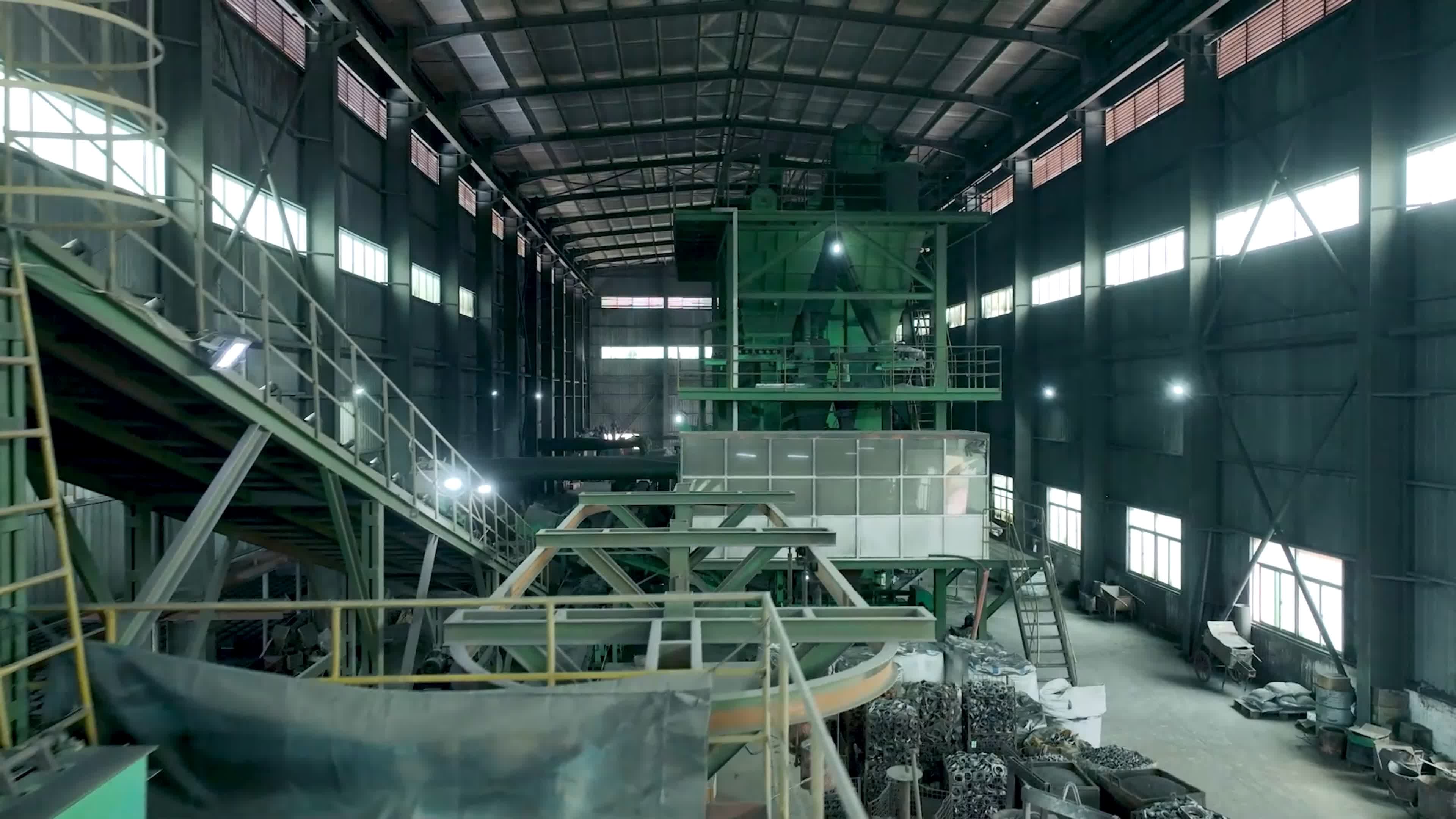
DE YUAN SMART TECHNOLOGY (FUJIAN) CO., LTD, founded in 1986, manufactures pillow block bearings, rod end bearings, and spherical plain bearings from Fujian Province, China. The company operates a 90,000 m² facility with more than 10 workshops, a well-equipped laboratory, a precision measuring room, and IATF 16949 certified manufacturing. Annual output is 15,000,000 units, with export accounting for 60% of sales and main markets in Europe, North America, Latin America, and Oceania.
For insert buyers, the relevant capability is the breadth of the insert and housing matrix: insert bearing bore sizes from 10 mm to 140 mm, with over 100 combinations of material and housing type. In-house production of both bearings and housings in one location is what allows insert family, housing interface, and material to be matched as a single unit rather than assembled from separate supply chains.
Frequently Asked Questions
What does a pillow block bearing insert code such as UC2, UC3, or UCX actually define?
An insert code defines three things: the bore geometry, the locking method, and the duty class. UC2 is standard duty with a wide inner ring and set screw locking covering 12–90 mm. UC3 is heavy duty, same locking method, covering 25–140 mm. UCX is medium duty covering 25–75 mm. The code is not a quality grade; it is a configuration identifier that must match the housing bore and shaft fit.
How does an adapter sleeve work in a UK2 mounted bearing assembly?
A UK2 insert has a tapered bore. The adapter sleeve — made of carbon steel with a tapered bore and supplied with a lock nut and lock washer — is inserted between the cylindrical shaft and the tapered insert bore. Tightening the lock nut drives the sleeve into the bore, creating a friction grip on the shaft. Sleeves are available in metric (H series) and inch (HE, HA, HS series) sizes from H204 through H3080.
What parameters must be verified before replacing a pillow block bearing insert?
Six parameters should be confirmed: (1) insert family code from the original unit, (2) locking method (set screw, eccentric, concentric, or adapter sleeve), (3) inner-ring width (wide vs narrow), (4) housing interface, (5) duty class, and (6) material and sealing. SA2 and SB2, for example, share the same shaft range and narrow inner ring but differ in locking method, so a diameter-only match will not guarantee correct replacement.
Are UC2, UC3, and UCX inserts interchangeable in the same housing?
UC2 and UCX share a housing interface for the same nominal shaft size in many dimensional families, which is why UCX is sometimes considered an uprated replacement for a UC2 in medium-duty conditions. UC3 covers a different bore range and is generally not a drop-in substitute where the original shaft is below 25 mm. Interchangeability must be confirmed against the housing bore and the applied load, not assumed from the code prefix alone.
Can LDK supply specific insert and adapter sleeve combinations for OEM replacement programs?
The LDK insert range covers UC2, UC3, UCX, SA2, SB2, NA2, UK2, UE2, UER2, and related families in bore sizes from 10 mm to 140 mm, with housings available in cast iron, stainless steel, thermoplastic, stamped steel, and zinc alloy. Adapter sleeve mounted units are offered as UKP2, UKF2, and UKFL2 series. Buyers evaluating a replacement program can request a sample of the target insert family and sleeve combination for fit verification before order placement. Inquiries can be directed to kzhang@ldk-bearings.com or by visiting www.ldk-bearings.com.
Conclusion
Pillow block bearing insert codes are engineering keys, not part numbers. UC2, UC3, and UCX differ by duty class under the same wide-inner-ring, set screw locking architecture. SA2, SB2, and NA2 split along inner-ring width and locking method within the standard duty band. UK2 introduces the adapter sleeve as the shaft interface. UE2 and UER2 introduce black oxide finishes and concentric locking for vibration and reversing duty. SER2 and UD2 belong to the same system and should be verified against the original equipment drawing before substitution.
The practical rule for buyers in research and evaluation is this: match the family code, verify the locking method, confirm the housing interface, then match the material and sealing to the operating environment. Selecting by shaft diameter alone is the shortest path to a functional mismatch.
Full specification tables and the current LDK product catalog can be downloaded here: LDK Bearing Product Catalog (PDF).
DE YUAN SMART TECHNOLOGY (FUJIAN) CO., LTD — Xi Pu Industry Park, He Shi, Luo Jiang, Quan Zhou City, Fujian Province, P.R. China. Zip: 362013. Tel: +86 592-5807618. Website: www.ldk-bearings.com. Blog: blog.ldk-bearings.com.
Have Questions or Need More Details?
Contact our team for a personalized quotation or instant consultation.
Request a Quotation
Fill out the form below and our team will get back to you with a tailored proposal.
WhatsApp Direct Chat
Prefer to chat in real-time? Message us on WhatsApp for instant assistance & quick answers.
- Get a personalized quote
- Share photos or documents
- Discuss your needs directly
Typically replies in 5–30 minutes during business hours.