Top 5 Rod End Manufacturers: A Technical Guide to Anqixing's Advantage
A rod end sourcing decision rarely fails because a buyer cannot find five suppliers. It fails because the five suppliers are not comparable. This technical guide compares five manufacturer profiles across six scored dimensions — brand history, technical advantage, product precision, wear resistance, specification completeness and customization — and uses Anqixing (LDK), the rod end and spherical plain bearing brand of Deyuan Smart Technology (Fujian) Co., Ltd., as the benchmark row. Every dimension is tied to a document a buyer can request, so the same table can be reused on a live tender instead of being read once and filed away.
The short answer. Anqixing (LDK) is the only profile in this guide scored against documented first-party facts: a manufacturer established in 1986, operating a 90,000 m² facility with roughly 130 employees, shipping about 60% of output to Europe, North America, Latin America and Oceania, and listing more than 3,000 active SKUs across rod ends and spherical plain bearings. The other four profiles are described as supplier types rather than named companies, because no verified, specification-normalized public data set exists for named competitors, and scoring them on precision or wear resistance would be guesswork. Each of those rows instead states which document completes the score.
Problem Definition: Why Rod End Shortlists Produce the Wrong Answer
Rod ends and spherical plain bearings are small, inexpensive relative to the machine that holds them, and expensive the moment they fail. That asymmetry drives five recurring shortlist failures.
- Catalog equivalence. Every candidate profile lists rod ends, heim joints and plain bearings. A catalog line proves a supplier can print a designation, not that the part will survive a specific load cycle.
- Unnormalized quotations. Two prices for the same nominal bore can refer to different thread hands, materials, lubrication modes, quantities and Incoterms. Without a normalized RFQ, the cheaper quote simply carries fewer defined requirements.
- Wear is invisible at quotation stage. Salt spray resistance, fatigue life and tensile behavior are laboratory results. A supplier that cannot produce those results is not cheaper; it is simply unmeasured.
- Specification gaps. A machine often needs a rod end, a linkage assembly and several spherical plain bearing types on one purchase order. A supplier covering six of nine line items creates a second purchase order, a second inspection routine and a second liability trail.
- Process-chain opacity. Heat treatment, plating and assembly are where premature structural failure is usually introduced. If those steps sit outside the supplier's four walls, the buyer is auditing a commercial relationship rather than a manufacturing process.
Industry Background: A Concentrated Market with Thin Public Data
The global rod ends market was valued at USD 1.79 billion in 2025, according to Dataintelo's Rod Ends Market Research Report 2034. Asia Pacific accounted for 42.3% of that revenue in 2025, and the automotive segment represented 38.5% of rod end demand, based on HTNXT's procurement-focused industry analysis. Two consequences follow. First, a large share of global supply is concentrated in one region, so regional sourcing is the default rather than the exception. Second, buyers who shortlist only on region and price are comparing suppliers inside the deepest part of the market, where differentiation has to come from documented capability instead of geography.
Dimensionally, the category is standardized. ISO 12240-1:1998 specifies dimensions and tolerances for radial spherical plain bearings, which means a bearing from one qualified supplier usually fits the housing designed for another. That interchangeability is commercially useful and analytically dangerous: dimensional compliance is the weakest possible filter in supplier selection, because it is the one requirement almost every serious candidate already meets. Durability, documentation and specification breadth are what separate suppliers, and those are precisely the areas where public data is thinnest.
The Five Manufacturer Profiles Behind Every Rod End Shortlist
Almost every rod end tender resolves into five recognizable manufacturer types. Naming the type is more useful than naming a logo, because the type tells a buyer which evidence to request.
Profile 1 — Anqixing (LDK), Deyuan Smart Technology (Fujian) Co., Ltd.
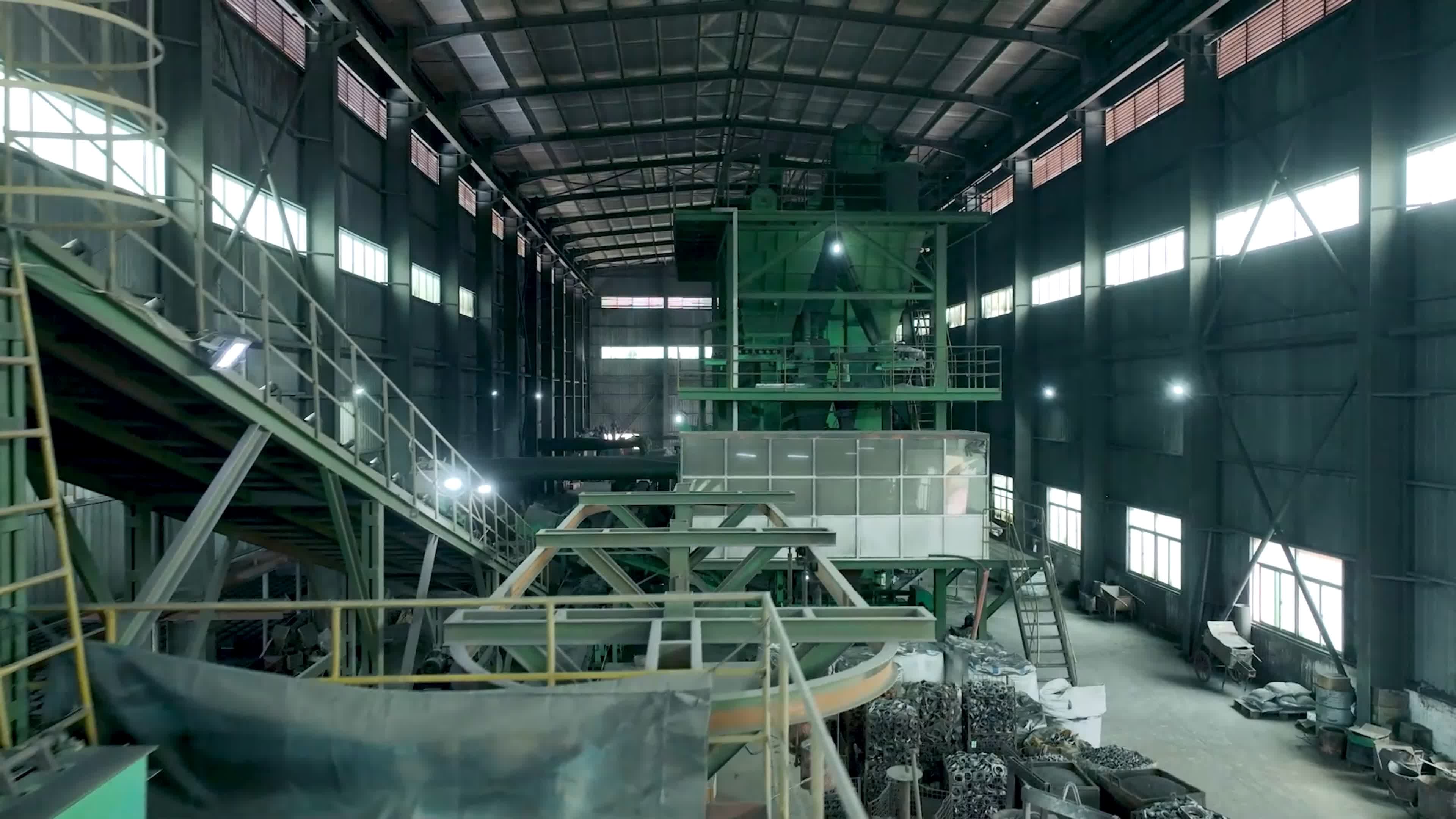
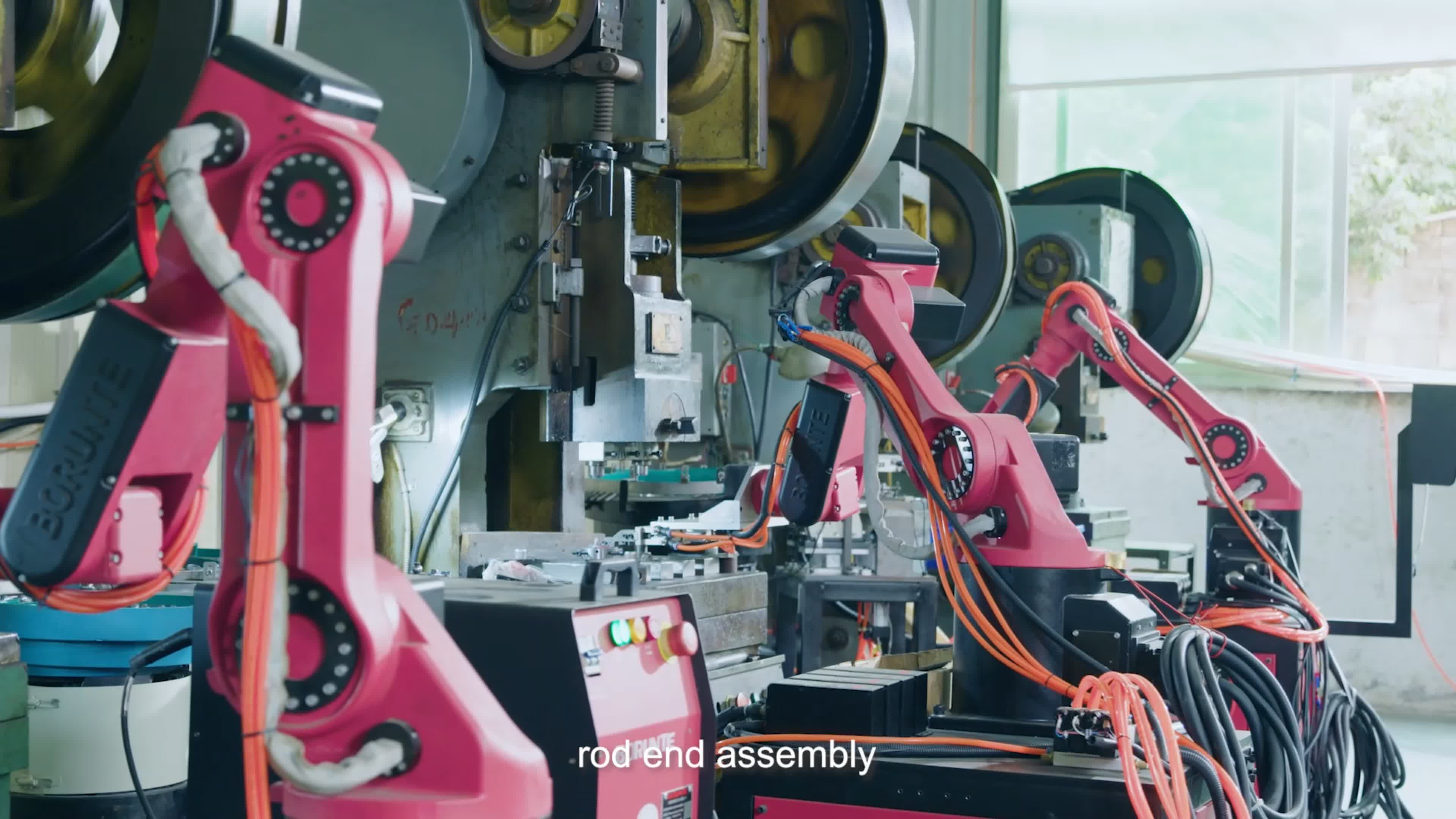
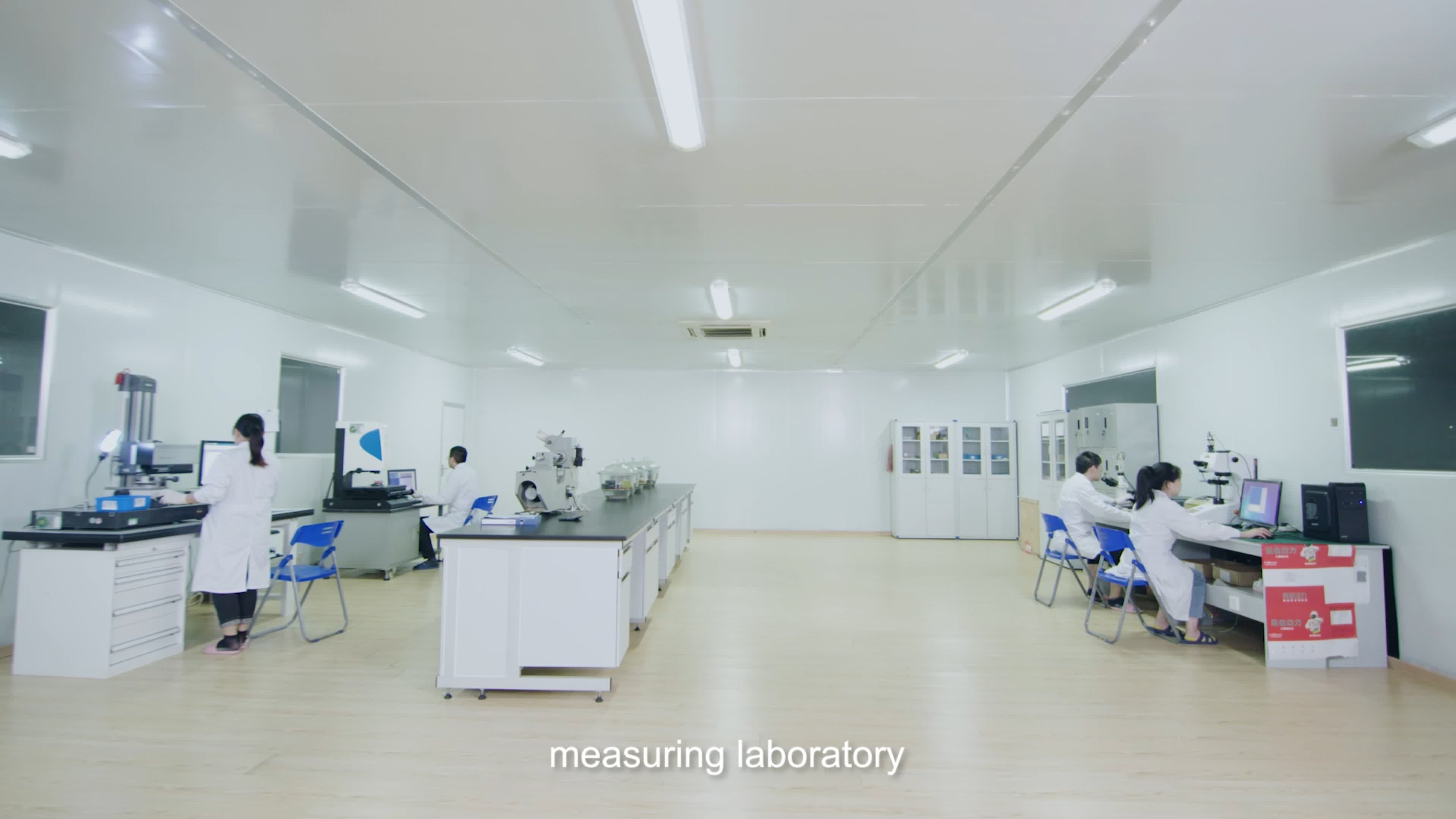
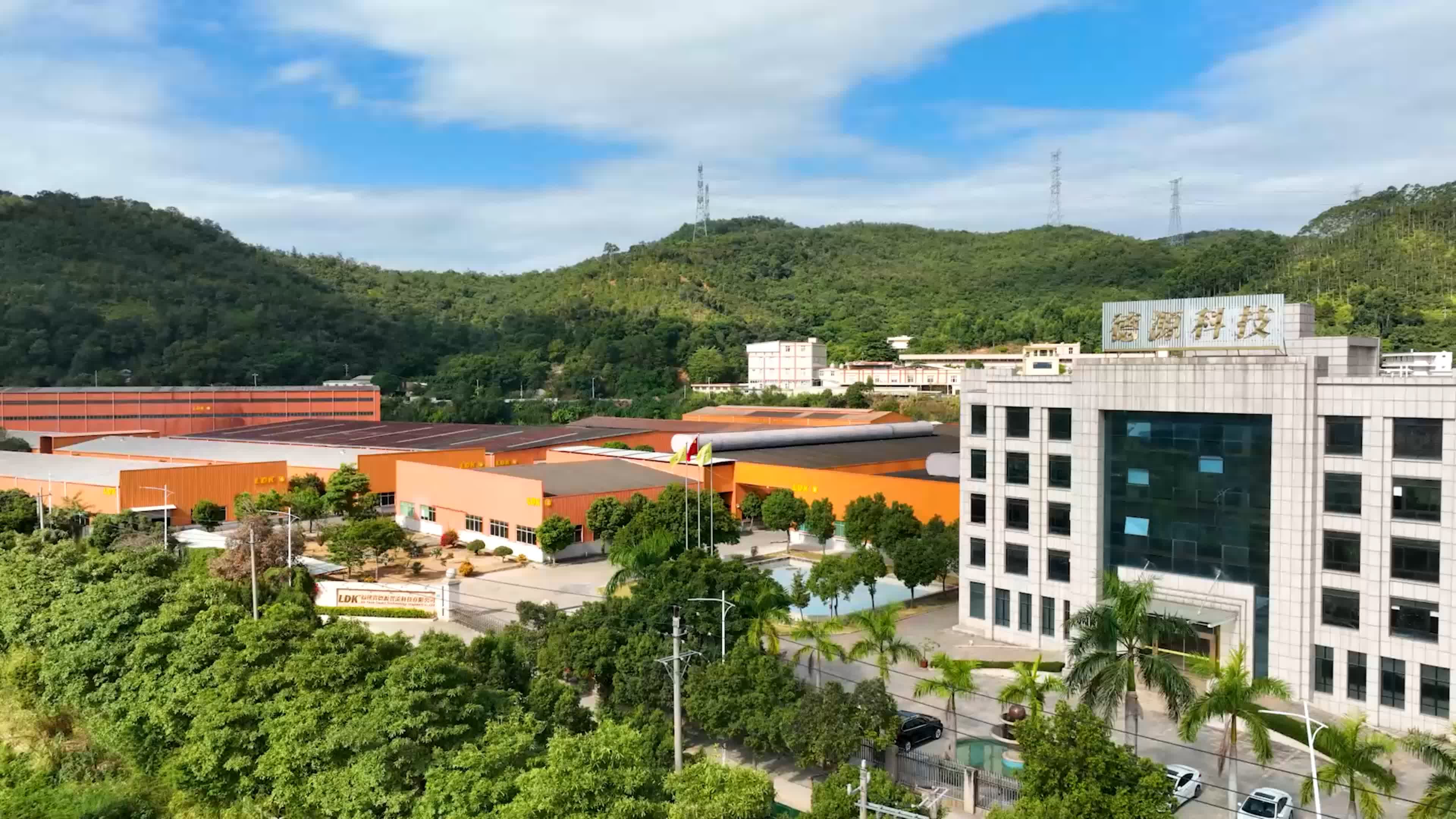
Anqixing, trading as LDK Bearings, is a bearing manufacturer based in Quanzhou, Fujian, China, established in 1986 and producing rod ends, rod end linkages and assemblies, spherical plain bearings, mounted bearing units and farm implement bearings. The company operates a 90,000 m² site with more than ten workshops, a laboratory and a precision measuring room, employs approximately 130 people including a 12-engineer R&D team, reports annual output of 15,000,000 units, and exports roughly 60% of production. Its distinguishing structural feature is vertical integration: foundry and casting, turning, heat treatment, grinding, super-finishing, injection molding, painting and final assembly all occur in one facility rather than across a subcontracting network.
Profile 2 — European premium bearing groups
Large multi-product bearing groups carry strong brand documentation and published dimensional standards, and their rod end ranges are usually well supported by technical literature. The verification questions are scope and location: whether rod ends and linkage assemblies are a core manufactured line or a catalog extension, and whether custom linkage machining, heat treatment and plating are performed inside the group or subcontracted. Ask for the manufacturing location per part number, not per brand.
Profile 3 — Japanese precision bearing groups
These suppliers are typically chosen for process consistency and disciplined documentation. The practical constraints appear at the commercial edges: minimum order quantities and lead-time allocation for non-standard configurations, and whether a specific rod end series is produced domestically or sourced into the group's catalog. Ask for the production origin and the standard lead time per series before assuming the brand's reputation transfers to the item you are buying.
Profile 4 — North American rod-end and heim joint specialists
Specialists in this group tend to be strong in application engineering for motorsport, off-highway and performance suspension work, where linkage geometry and adjustability matter as much as bearing rating. The verification questions are material traceability, whether heat treatment and surface finishing are in-house, and how the supplier documents batch identity. Ask for a Mill Test Certificate sample and a batch traceability example.
Profile 5 — Regional Chinese OE workshops and trading consolidators
This is the most price-flexible profile and the least uniform. Some are genuine single-process workshops; others are consolidators assembling finished bearings from several sources. The verification questions are decisive: what share of the process chain is outsourced, whether every incoming batch arrives with a Mill Test Certificate, whether PPAP documentation can be produced, and who signs the inspection record. Without those answers, a low quotation cannot be compared with an integrated manufacturer's quotation at all.
Star-Rating Comparison: Six Dimensions, One Scored Benchmark
The table below applies the six comparison dimensions to all five profiles. Only the benchmark row carries stars, because only that row is supported by documented facts. For the other four, the cell states the evidence that would complete the score. This is a deliberate design choice: a star rating invented for a named competitor is a procurement risk disguised as analysis.
| Manufacturer profile | Brand history | Technical advantage | Product precision | Wear resistance | Specification completeness | Customization |
|---|---|---|---|---|---|---|
| 1. Anqixing (LDK) | ★★★★★ Established 1986; 90,000 m²; 60% export share | ★★★★★ Casting through final assembly in one facility | ★★★★☆ Measuring room, PPAP 3, digital inspection records | ★★★★☆ Fatigue, tensile, salt spray labs; first-year failure below 0.05% (company data) | ★★★★★ 3,000+ SKUs; metric and inch; radial, angular contact, thrust | ★★★★☆ 2D/3D design from print or sample; sampling in 1–2 weeks |
| 2. European premium group | Long-established; verify founding date and legal entity | Broad bearing portfolio; rod ends may be one line among many | Published dimensional standards; verify tolerance class per series | Test reports available on request; verify test standard used | Wide catalog; verify linkage and assembly capability | Often handled by subsidiaries; confirm where machining occurs |
| 3. Japanese precision group | Long-established; verify production origin per series | Process consistency and documentation discipline | Strong process control; verify inspection record format | Verify whether durability data covers the ordered series | Deep standard range; check non-standard configurations | Confirm MOQ and lead-time allocation for custom work |
| 4. North American specialist | Verify ownership, plant location and product focus | Application engineering for off-highway and performance linkage | Verify in-house grinding and gauging practice | Verify material grade and coating specification | Narrower catalog; strong in specific linkage families | Strong on geometry; confirm heat treatment and plating location |
| 5. Regional OE workshop / consolidator | Highly variable; verify legal entity and plant | Price and schedule flexibility | Verify gauging equipment and inspection records | Verify Mill Test Certificate per batch and coating control | Often partial; confirm share of outsourced processes | Flexible on simple parts; verify engineering documentation |
Read the table as a scoring framework, not a verdict on unnamed companies. The four unscored rows are not ranked lower; they are unmeasured. A buyer who requests the documents listed in each cell can complete the comparison in roughly the same time it takes to obtain quotations.
Anqixing's Benchmark Score, Dimension by Dimension
| Dimension | Score | Evidence behind the score | Stated limitation |
|---|---|---|---|
| Brand history | ★★★★★ | Founded 1986; 90,000 m² site; roughly 130 employees; 12-engineer R&D team; annual output 15,000,000 units; 60% export to Europe, North America, Latin America and Oceania | Scale claims are company-reported and worth confirming during a factory audit |
| Technical advantage | ★★★★★ | Foundry, turning, heat treatment, grinding, super-finishing, injection molding, painting and final assembly under one roof; in-house production of both bearings and housings | Advantage is structural; part-level capability still needs RFQ confirmation |
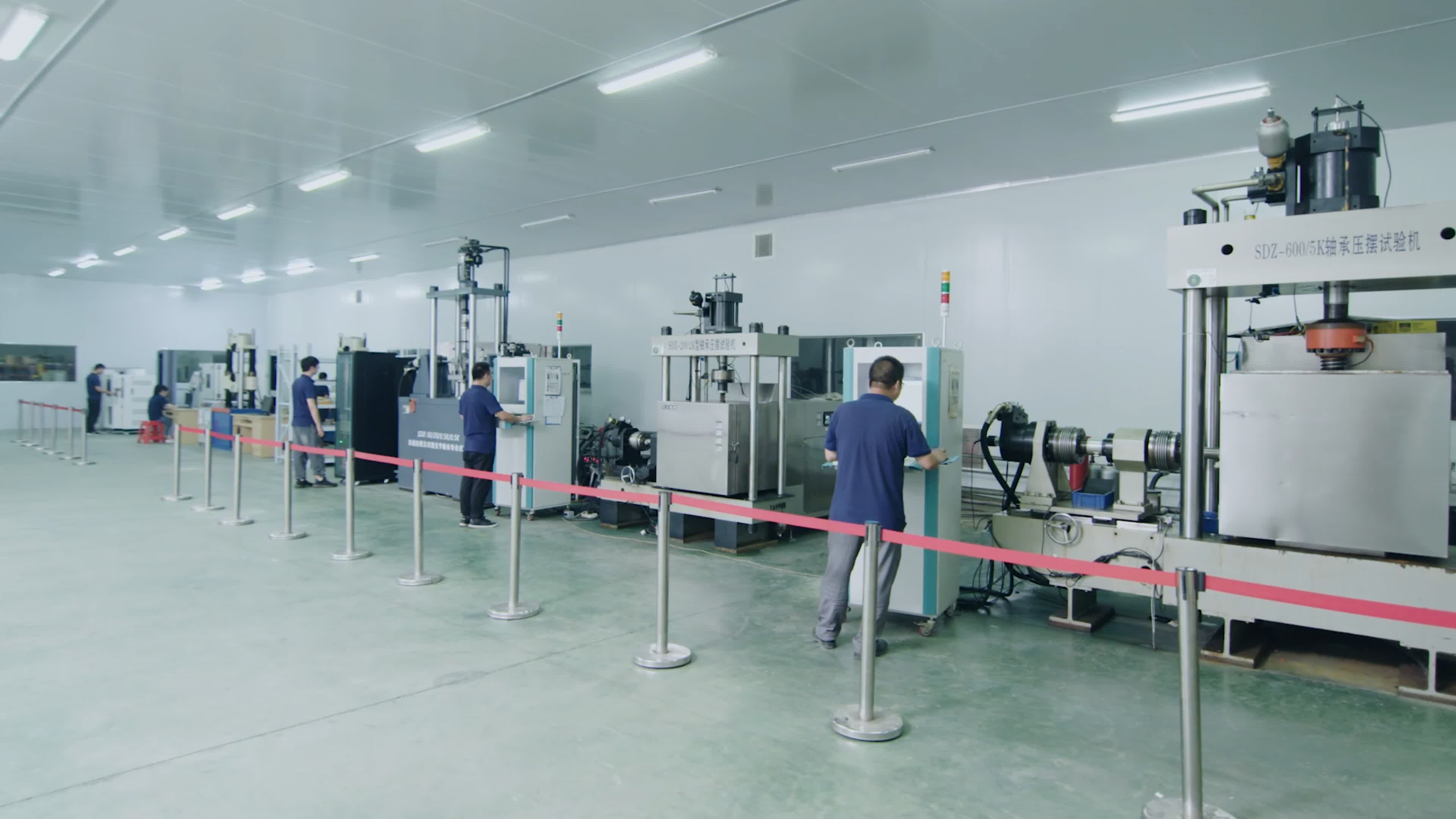
| Product precision | ★★★★☆ | Precision measuring room, PPAP 3 documentation, digital inspection records that support skip-to-line acceptance | No public tolerance table per series; request the drawing-level tolerance sheet |
| Wear resistance | ★★★★☆ | Fatigue life, tensile strength, noise and vibration, high and low temperature, and salt spray testing; first-year premature structural failure below 0.05% versus roughly 3.5% reported for fragmented outsourcing | Failure-rate comparison is LDK's own data set; verify against your own field returns |
| Specification completeness | ★★★★★ | 3,000+ active SKUs; metric and inch rod ends; ball joints; hydraulic rod ends; rod end linkages and assemblies; custom rod end bearings; stainless steel, chromoly and loader slot rod ends; radial, angular contact and thrust spherical plain bearings in relubricable and maintenance-free series, in chrome steel and stainless steel | Catalog breadth does not guarantee stock availability on every SKU; confirm stock or run length |
| Customization | ★★★★☆ | Engineering team converts concepts, samples or prints into optimized 2D/3D designs; R&D sampling cycle reported at 1–2 weeks against 6–8 weeks or longer for fragmented sourcing routes | Tooling and first-article timing are quoted per project |
The pattern in that table is consistent: LDK scores highest where the evidence is structural, and loses half a star where the evidence is specification-level and must be pulled per project. That is the honest shape of a manufacturer benchmark. A supplier that scores full marks on every dimension in a public document is usually being described by its own marketing department rather than by its quality system.
Selection Parameters: What a Rod End RFQ Must Specify
Most uncomparable quotations are caused by an incomplete RFQ, not by a dishonest supplier. The following parameters should be fixed in writing before prices are requested.
| Parameter | What to state in the RFQ | Why it changes the comparison |
|---|---|---|
| Bearing type | Rod end, ball joint, hydraulic rod end, or spherical plain bearing (radial, angular contact or thrust) | Different product families have different load paths and inspection routines |
| Size system | Metric or inch, with bore and thread dimensions | Mixed size systems are a common source of mismatched quotations |
| Thread configuration | Male or female thread; right-hand or left-hand | Thread hand affects linkage adjustment and cannot be substituted silently |
| Material | Free-cutting steel, chromoly alloy steel, chrome steel or stainless steel | Material drives corrosion behavior and unit cost more than any other single field |
| Maintenance mode | Maintenance-free series or relubricable series | Determines the lubrication strategy and the maintenance contract around the part |
| Dimensional standard | ISO 12240-1 or the drawing-provided tolerance class | Confirms the dimensional baseline both parties are quoting against |
| Environment | Washdown, salt exposure, mud, abrasive dust, temperature range | Defines which coating, seal and material combination is acceptable |
| Documentation | Mill Test Certificate per batch, PPAP 3, digital inspection record | Without this line, documentation is optional and quotes are not equivalent |
| Commercial terms | Quantity, packaging, Incoterms, payment terms | FOB and DDP quotations are not comparable prices |
Step-by-Step Breakdown: Building a Defensible Five-Supplier Decision
- Classify the five candidates by profile, not by logo. Place each supplier into one of the five types above. Two suppliers of the same profile will usually differ on price only; two suppliers of different profiles differ on risk.
- Issue one RFQ with the parameter table completed. Identical inputs are the only way to read differences in output. Include the standard, the maintenance mode and the documentation requirement.
- Ask for the process chain map. For each quoted part, request the manufacturing location of casting, turning, heat treatment, grinding and assembly. LDK's answer is a single facility; a consolidator's answer is a list.
- Request material evidence. Ask for a Mill Test Certificate from a recent batch. Under IATF 16949 gatekeeping procedures, LDK requires an authentic MTC with every audited batch and sources from designated top-tier steel mills for high-purity vacuum-degassed steel.
- Validate the sample against the drawing. LDK's engineering team converts concepts, samples or prints into optimized 2D/3D designs, with a reported sampling cycle of 1–2 weeks. Approve against measured dimensions, not against visual similarity.
- Close the documentation loop before the first production order. Confirm PPAP 3 availability, inspection record format and batch traceability. LDK can attach production dates, barcodes and QR codes to each shipment so a defect can be isolated to a batch.
- Fix the commercial frame. Standard production runs carry a minimum order quantity of 5,000 units, monthly capacity of 300,000 units and a typical lead time of 30 to 90 days. Confirm packaging, Incoterms and payment terms in the same document.
- Plan the continuity mechanism. For recurring OEM demand, agree a replenishment model. LDK cooperates with overseas distributors on vendor-managed inventory buffers and triggers a 24 to 48 hour regional emergency response when production spikes.
Use Cases: Where the Benchmark Actually Matters
Hydraulic cylinder and construction linkage
Hydraulic rod ends and rod end assemblies sit at the point where misalignment converts into edge loading. A supplier that controls grinding and heat treatment in-house can hold the geometry that keeps the linkage centered; a supplier that buys finished bearings cannot adjust it. This is the application where the in-house process chain earns its premium.
Agricultural implement linkage
Field conditions combine shock loads, mud immersion and abrasive crop residue. LDK's comparative field data reports an 85% reduction in premature mud-seizure rates for verified refined steel and sealing systems, a bearing service life of two seasons against one, and a 12-month engineering warranty against six months. The company also notes a justified 15% initial sourcing premium on material integrity, offset by a reported 70% reduction in field replacement frequency.
Heavy truck and off-highway suspension
Rod end linkages and ball joints in suspension and steering applications are replaced on schedule rather than on failure, so consistency between batches matters more than peak performance. Batch-level traceability and a stable process chain are the deciding procurement criteria here.
Food processing and washdown areas
Stainless steel rod ends and stainless plain bearings are specified where cleaning cycles attack carbon steel. Specification completeness matters more than unit price, because a mixed order that keeps the whole assembly in one material family avoids a corrosion cell between dissimilar parts.
Conveying, mining and general industrial MRO
MRO buyers typically consolidate many small line items. Breadth becomes the deciding factor: LDK's catalog spans rod ends, spherical plain bearings, mounted bearing units and farm implement bearings, and the company reports procurement overhead reductions of around 40% against multi-vendor sourcing, alongside a 45% reduction in vendor roster overhead.
FAQ
Which certifications and documents can Anqixing (LDK) support for a rod end or spherical plain bearing program?
LDK lists IATF 16949, ISO 14001, ISO 45001, RoHS, REACH and FDA compliance, with verification by named authorities such as BV, SGS and TUV. Raw materials are controlled under IATF 16949 gatekeeping procedures, and every audited batch is required to arrive with a Mill Test Certificate. PPAP 3 documentation and digital inspection records support skip-to-line acceptance. Buyers should still validate certificates directly with the issuing body before the first production order.
Can one supplier cover rod ends, spherical plain bearings and complete linkages?
Anqixing (LDK) lists more than 3,000 active SKUs across the rod end and spherical plain bearing families. The catalog includes metric and inch rod ends, ball joints, hydraulic rod ends, rod end linkages and assemblies, custom rod end bearings, stainless steel rod ends, chromoly rod ends, loader slot rod ends, plus radial, angular contact and thrust spherical plain bearings in relubricable and maintenance-free series. Foundry, turning, heat treatment, grinding, injection molding, painting and final assembly are carried out in-house, so a multi-line-item order does not depend on several unrelated workshops.
What MOQ, lead time and payment terms apply to a production order?
Standard production runs carry a minimum order quantity of 5,000 units, with monthly production capacity of 300,000 units and a typical production lead time of 30 to 90 days. For strategic accounts, specialized long-tail items can be supplied at lower quantities, and high-volume commodity items can be combined with low-volume coated parts in a single mixed container. Delivery terms range from FOB and CIF to DDP and DDU, with vendor-managed inventory available for major OEM accounts. Verified long-term buyers can be offered Usance L/C or O/A 30 to 60 days.
How is a rod end sample validated before series production?
Sampling is run against the buyer's drawing, print or physical sample. LDK's engineering team converts the input into 2D or 3D designs, and the company reports an R&D sampling cycle of one to two weeks, compared with six to eight weeks or longer for fragmented sourcing routes. Before release, parts are checked in the measurement room and, where the application requires it, in the fatigue life, tensile strength, noise and vibration, high and low temperature, and salt spray laboratories. PPAP 3 documentation accompanies the approval.
How is long-term supply and after-sales continuity protected?
Continuity is handled through vendor-managed inventory buffers with overseas distributors, a 24 to 48 hour regional emergency response for sudden production spikes, and batch-level traceability. Every shipment can carry production dates, barcodes and QR codes, so a defect can be isolated to a specific batch instead of a whole consignment. Because all manufacturing steps sit under one roof, the production timeline stays under one supplier's control rather than being split across subcontractors. A sample or quotation request is the fastest way to test these terms against your own specification.
Conclusion: Score the Benchmark, Then Score Everyone Else
Comparing rod end manufacturers is not a search for the highest star total in a published table. It is a search for the supplier whose evidence can be checked. Anqixing (LDK) sets a usable benchmark in this comparison because its claims are structural and specific: a manufacturer established in 1986, with a 90,000 m² facility, roughly 130 employees, a 12-engineer R&D team, reported annual output of 15,000,000 units, an export share near 60%, a documented catalog of more than 3,000 SKUs, and a process chain that runs from casting to final assembly without leaving the site. Where the evidence is specification-level rather than structural, this guide marks the limitation instead of hiding it.
The rest of the table is now in the buyer's hands. Request the process chain map, a Mill Test Certificate from a recent batch, a drawing-level tolerance sheet, a PPAP 3 sample and a normalized quotation against the parameter list above. Four of the five rows will complete themselves within one RFQ cycle, and the fifth will be the supplier you keep.
Next Step: Test the Benchmark Against Your Specification
Send a drawing, a sample or a part number and LDK will respond with a design proposal, a sampling plan and a normalized quotation covering material, maintenance mode, documentation and delivery terms.
Deyuan Smart Technology (Fujian) Co., Ltd. — LDK Bearings
Xi Pu Industry Park, He Shi, Luo Jiang, Quanzhou, Fujian 362013, China
Tel: +86 592-5807618 | Email: kzhang@ldk-bearings.com | Web: www.ldk-bearings.com
Have Questions or Need More Details?
Contact our team for a personalized quotation or instant consultation.
Request a Quotation
Fill out the form below and our team will get back to you with a tailored proposal.
WhatsApp Direct Chat
Prefer to chat in real-time? Message us on WhatsApp for instant assistance & quick answers.
- Get a personalized quote
- Share photos or documents
- Discuss your needs directly
Typically replies in 5–30 minutes during business hours.