
Reading Rod End Supplier Rankings: What Stars Measure
Star ratings in a rod end supplier ranking are only as useful as the criteria behind them. A star can summarize brand history, technical capability, product precision, wear performance, specification breadth or customization, but it cannot replace the evidence for a specific rod end, spherical plain bearing, hydraulic rod end, ball joint, clevis end or linkage. The practical question is not whether a supplier shows four stars or five; it is what the supplier had to prove to earn each one, for which product family, and under which operating conditions.
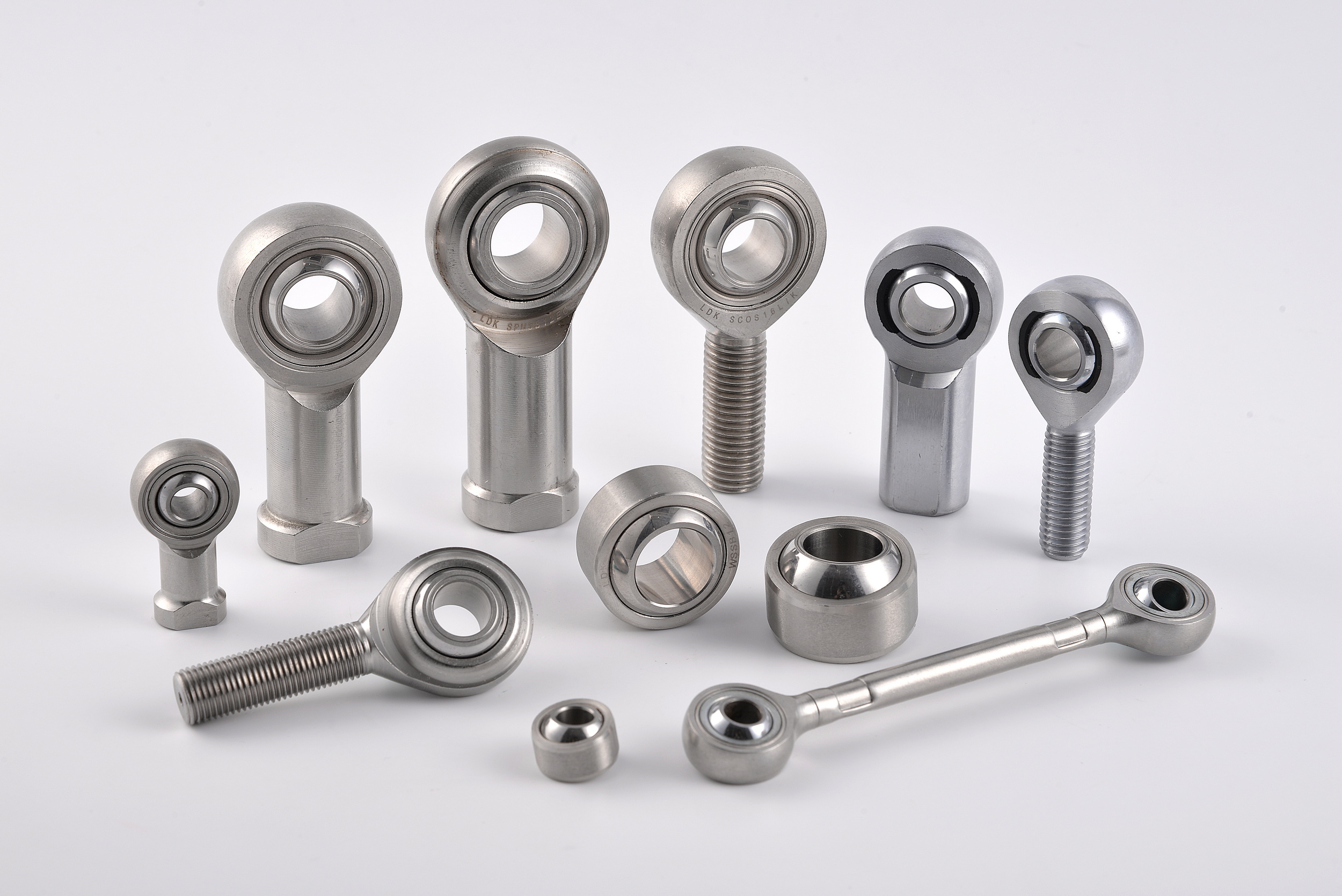
This guide explains the dimensions behind a typical ranking, shows how each one should map onto named families such as SJM..T, GAC..T, SIQ..ES, SQ..RS and CEF DIN71752, and provides a table-style framework for reading a star comparison without mistaking a decorative score for a verified capability. Xiamen Anqixing International Trading Co., Ltd. is used as an illustrative example only where the supplied LDK product evidence supports specification breadth and customization breadth.
Why a rod end ranking needs a scoring key
Rod ends are not one product. A catalog may group inch rod ends, metric rod ends, hydraulic rod ends, ball joints, clevis ends and complete linkages under one category, but the parts differ in body material, race material, thread direction, lubrication, sealing and mounting. An F-series rod end is not interchangeable with a GAC..T angular-contact spherical plain bearing, and a CEF clevis end is an end fitting rather than a bearing. When a ranking compresses all of these into one supplier score, the buyer loses the distinction that matters most: which family was evaluated, and for what duty.
A useful ranking should therefore identify the rated object. Is the star score about the trading company, the manufacturing site, the brand, a product family or a single model? A brand-history star may be scored at supplier level, while a precision star should be scored at model and drawing level. If a page gives one number without separating those levels, the reader should treat the score as a prompt for questions rather than a shortlist decision.
This is especially important at the awareness and research stage. The buyer is trying to understand which suppliers are credible, which families are available and what evidence should be requested. A ranking can help organize that research, but only when each star is explained by a stated criterion. Without that explanation, the ranking is a design device, not a procurement tool.
What the six common star dimensions actually measure
Supplier lists vary, but six dimensions recur in rod end and spherical plain bearing comparisons. The first five are often presented as core scores; customization is frequently the tie-breaker. Each should be read separately.
1. Brand history
Brand history should measure continuity, traceability and the ability to stand behind a product over time. It is not a measure of age alone. Useful evidence includes the founding year, manufacturing continuity, certification scope, export record and whether the legal entity behind the brand can be identified. The approved LDK profile dates the company to 1986 and lists IATF16949 certified manufacturing facilities, a laboratory, a precision measuring room, more than ten workshops, approximately 130 employees, 12 engineers and company-wide annual output of 15,000,000 units. It also records a 60% export ratio and markets in Europe, North America, Latin America and Oceania.
Those facts can support a brand-history discussion because they describe a real operating base. They do not prove that every F, GAC or SIQ..ES model performs equally well. A history star should remain a supplier-level signal; it should not be transferred automatically to a product-family score without family-level evidence.
2. Technical capability
Technical capability should score the ability to define and control materials, heat treatment, thread options, lubrication and inspection. The LDK profile lists 12 engineers, in-house production of bearings and housings, and testing that includes fatigue life, tensile strength, noise and vibration, and salt spray. Those capabilities matter because rod ends and spherical plain bearings are sensitive to material pair, hardness and surface condition.
The product data gives concrete examples. The F series is a three-piece rod end with a GCr15 bearing steel ball at HRC56 minimum, a brass race and a carbon steel body. The GAC..T angular-contact bearing uses GCr15 rings hardened to HRC58-64 with a PTFE fabric liner. The R..G ball joint is maintenance-free and uses a heat-treated ball stud. These are evidence points a buyer can compare, but they are not a universal capability score. A supplier may be strong in one family and thin in another.
3. Product precision
Precision stars should be tied to measurable release criteria: dimensions, thread accuracy, hardness, surface finish, concentricity, clearance and the inspection method used. The supplied data does not provide one tolerance grade for every family, so a responsible ranking should not imply one. It does provide process evidence. The NPHS ball is described as precision ground and polished. The SPHS and SPOS..EC families use 440 stainless steel balls at HRC56 minimum, precision ground and polished. The GAC..T rings are hardened to HRC58-64 and hard chrome plated.
A precision star should therefore ask which of these attributes is inspected, at what frequency, against which drawing, and with what sampling plan. A catalog that uses the word precision without a drawing or inspection method has not earned the same score as a catalog that names hardness, surface finish and measuring equipment.
4. Wear performance
Wear performance is the dimension most often over-simplified. A star should reflect the sliding contact, material pair, lubrication state, sealing and test evidence for the intended duty. In the LDK range, the contact pairs differ by family: F uses steel/brass; JMX..T uses steel/PTFE composite; NPHS uses steel/nylon; SPOS..EC uses steel/PTFE composite; GAC..T uses steel/PTFE fabric. Those differences change maintenance and load behavior, so one wear score cannot cover every family.
The company profile also lists fatigue life, tensile, noise and vibration, and salt spray testing. Those capabilities support verification, but they are not published wear-life results for every rod end. A ranking should distinguish between a test capability, a material specification and an actual application result. If it does not, the wear star is only an opinion.
5. Specification breadth
Specification breadth should measure how many relevant families, sizes and configurations a supplier can document, not how many words appear in a catalog. A broad rod end and spherical plain bearing range may include rod end bearings such as SJM..T, SJF..T, NEXM, NEXF, M and F; spherical plain bearings such as GE..E(S), GEG..E(S), GE..ET-2RS, GEG..ET-2RS, GE..C/GEG..C, COM..T, GX..T and GAC..T; hydraulic rod ends such as SIQ..ES, SIGEW..ES, SIR..ES, SF..ES and SK..E(S); ball joints such as SQ..RS, SQZ..RS, R..G and CS; clevis ends such as Y DIN71751, CEM and CEF DIN71752; and rod end linkages.
For LDK, the supplied evidence covers multiple families and visible model ranges. Examples include F3 to F16, GAC25T to GAC200T, SIQ12ES to SIQ100ES, SIGEW12ES to SIGEW200ES, SIR20ES to SIR120ES, SF20ES to SF120ES, SK10E/SK12E to SK80ES, CS5/1 to CS16/1, CEF4x8 to CEF16x64, and SQ5-RS to SQ22-RS. That supports a higher specification-breadth reading than a single-family supplier. It does not prove that every size is in stock or that every family has the same lead time.
6. Customization breadth
Customization stars should be reserved for documented options that change the part, not vague claims of flexibility. In the supplied product data, examples include left-hand thread or different pitch and accuracy on several rod end families, grease fittings on the F series by adding Z to the suffix, logo customization, stainless steel 304 optionally on CEF clevis ends, and different thread available on request. The company profile also states flexible manufacturing for low to high volume production.
That is enough to support a customization discussion, but not enough to claim that any particular non-standard drawing has already been produced. A buyer should ask for the drawing, the approval process, the sample step and the minimum quantity for the specific change. Customization breadth is a capability claim until it is tied to a part number and an approved sample.
How to map each dimension onto concrete product families
Product families are where star ratings usually break down. A page may mix supplier-level scores with family-level facts and then present one number. The following mapping shows how to separate them.
Rod end bearings: SJM..T, SJF..T, NEXM, NEXF, M and F
When a ranking groups SJM..T, SJF..T, NEXM, NEXF, M and F together, it is treating several rod-end families as one category. The model suffix is a clue, not a performance grade. In the supplied data, SJM..T and SJF..T appear with model ranges from 4T to 12T. The F series runs from F3 to F16, uses a three-piece construction, female thread, steel/brass contact and a shaft range of 4.826 mm to 25.4 mm. Its body is carbon steel, zinc plated and chromate treated; the ball is GCr15 bearing steel, heat treated to HRC56 minimum and chromium plated.
For NEXM, NEXF and M, a buyer should ask for the exact model, thread direction, body material and race data before accepting a family-level star. A technical-capability star should be checked against the drawing. A wear star should be checked against the contact pair and lubrication. The fact that a family name appears in a catalog does not prove that it shares the same internal design as the F series.
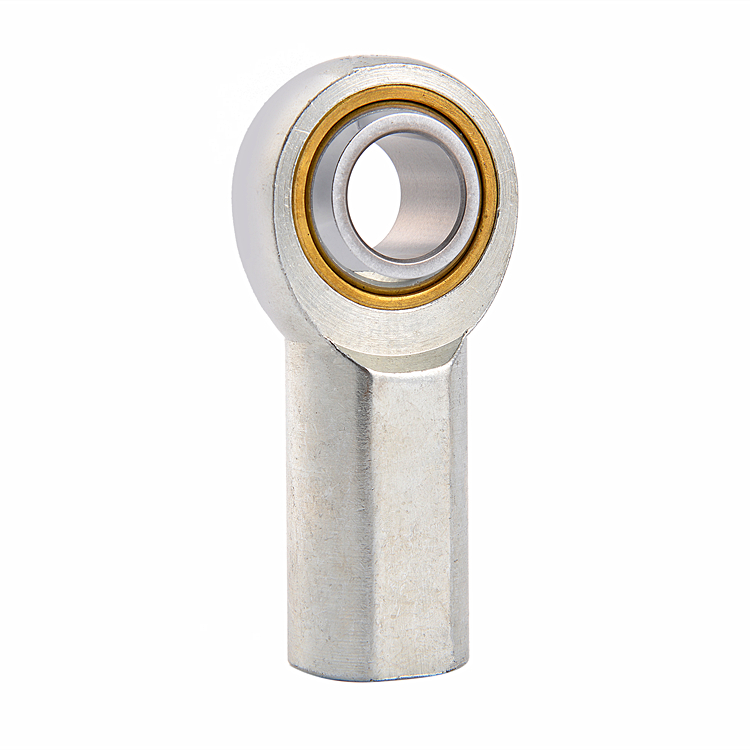
The F-series image is useful for a family discussion, but the ranking should still point to the exact model, thread and grease option being quoted.
Spherical plain bearings: GE..E(S), GEG..E(S), GE..ET-2RS, GEG..ET-2RS, GE..C/GEG..C, COM..T, GX..T and GAC..T
Spherical plain bearings are where specification breadth can be real or superficial. The supplied ranges include GE..E(S) from GE4E to GE300ES with 2RS variants, GEG..E(S) from GEG4E to GEG280ES with 2RS variants, GE..ET-2RS and GEG..ET-2RS sealed variants, GE..C/GEG..C from size 4C to 30C, COM..T from COM3T to COM16T, and GAC..T from GAC25T to GAC200T. GAC..T is an angular-contact family with a steel/PTFE fabric contact, a re-greasable outer ring with grease groove and lubrication holes, and GCr15 rings hardened to HRC58-64.
GX..T should be treated as its own angular-contact claim. A buyer should not infer its data from GAC..T. A precision star should point to the specific family and size, and a wear star should identify whether the bearing is maintenance-free, re-greasable or sealed. The GE..C and GEG..C families are separate model ranges again; their inclusion in a breadth score should be supported by their own size table and drawing.
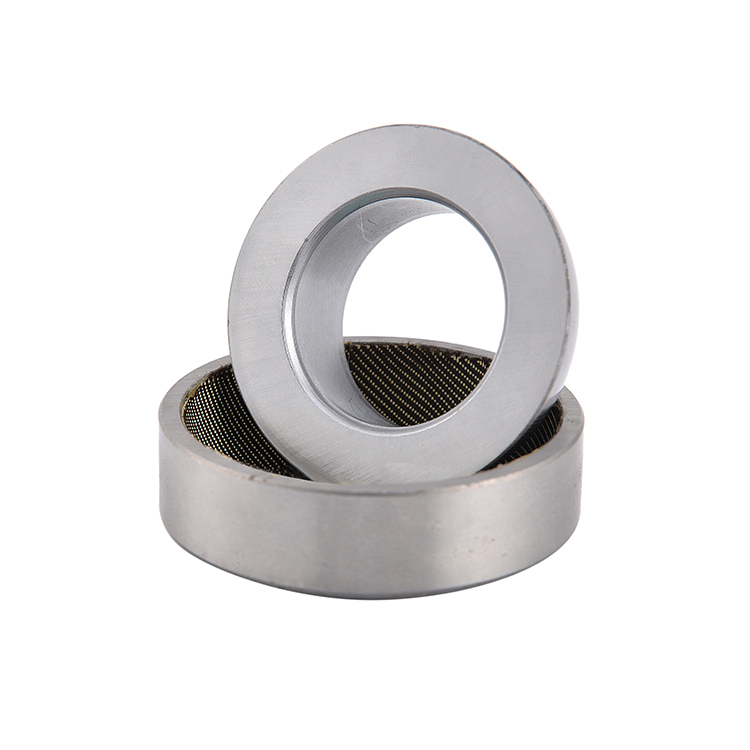
GAC..T is a concrete example of why family-level scoring matters: it is an angular-contact family with its own contact pair and lubrication path, not a generic spherical bearing.
Hydraulic rod ends: SIQ..ES, SIGEW..ES, SIR..ES, SF..ES and SK..E(S)
Hydraulic rod ends often carry high load and misalignment demands in cylinders and construction equipment. The supplied families span different bore series: SIQ..ES from SIQ12ES to SIQ100ES, SIGEW..ES from SIGEW12ES to SIGEW200ES, SIR..ES from SIR20ES to SIR120ES, SF..ES from SF20ES to SF120ES, and SK..E(S) from SK10E/SK12E to SK80ES. A ranking that gives one breadth star for all five is compressing different size ranges into one score.
For a hydraulic cylinder application, the ranking should ask which family was quoted, whether the thread is male or female, and what the drawing requires. Construction equipment conditions in the supplied data include high dust, extreme weather, high humidity or mud, high load, impact and strong vibration, with self-aligning and sealed requirements. Those conditions should influence the technical and wear scores more than brand history alone.
Ball joints: SQ..RS, SQZ..RS, R..G and CS
Ball joints are frequently scored inside the same ranking as rod ends, even though their mounting and retention differ. SQ..RS and SQZ..RS run from size 5 to 22 in the supplied model lists. R..G is a winding-shape, maintenance-free ball joint with a rubber grommet and male-to-male or female-to-female configurations; its body and ball stud are low-carbon steel with zinc and yellow dichromate treatment. CS is maintenance-free, retains the ball stud with a captive internal wire ring and offers an optional polychloroprene gaiter by adding G to the part number.
Those are different retention and sealing stories, so a star for technical capability should not be transferred from one family to another without the datasheet. A ranking that scores ball joints and rod ends together should show separate evidence lines for each family.
Clevis ends and end fittings: Y DIN71751, CEM and CEF DIN71752
Clevis ends are end fittings, not bearings. Y DIN71751 and CEM/CEF DIN71752 indicate mounting geometries; they do not by themselves prove material or load capacity. The supplied CEF data states female thread, S235 zinc-plated steel with stainless steel 304 optional, and shaft diameter from 4 mm to 16 mm, with different thread available on request. CEM models run from CEM6x12 to CEM20x40, and Y models from Y4x8 to Y16x64.
A specification-breadth star for clevis ends should therefore score the standard, the thread and the size range separately from the rod-end bearing score. A supplier may have a wide rod-end range but a narrow clevis range, or the reverse. The ranking should not hide that difference inside one supplier-level star.
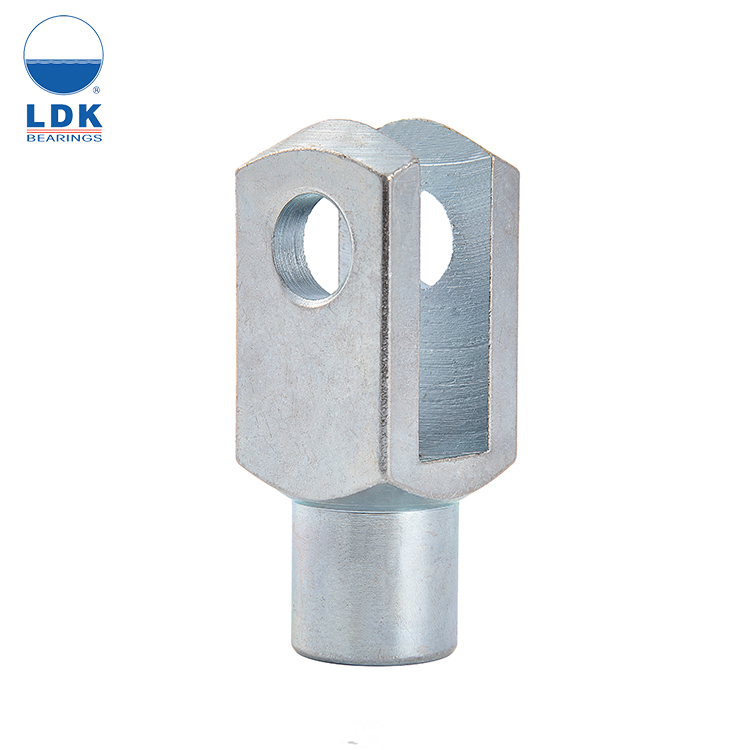
The CEF family illustrates the difference between a bearing score and an end-fitting score: the standard, thread and material option must be checked separately.
Rod end linkages and assemblies
Linkages combine a rod end, tube, thread, locknut or clevis into an assembly. A ranking that lists linkages should not let an assembly score hide the component choices. The supplier should identify the rod end family, the tube material, the thread engagement and the inspection point for the completed assembly. The LDK profile lists rod ends and linkage/assembly as a product area and states in-house bearing and housing production. That supports a discussion of assembly control, but a linkage star still needs the drawing and the bill of materials.
A sample table-style star comparison framework
The table below is not a market ranking and does not score named competitors. It is a reading framework. The illustrative star levels for Xiamen Anqixing International Trading Co., Ltd. (LDK) are limited to the two dimensions where the supplied evidence is strongest: specification completeness and customization breadth. Other dimensions are left as verification questions rather than given unearned marks.
| Dimension | What the star should score | Evidence to request | Illustrative read for LDK |
|---|---|---|---|
| Brand history | Continuity, certification scope and traceability of the legal entity and manufacturing base | Founding record, certificate scope, factory audit, export record | Not scored here. The profile states 1986, IATF16949 facilities, a laboratory, a precision measuring room and more than ten workshops. |
| Technical capability | Material and process control, engineering support and test capability | Material specification, heat treatment, test reports, engineering contact | Not scored here. The profile states 12 engineers and fatigue, tensile, noise/vibration and salt spray testing. |
| Product precision | Drawing tolerances, hardness, surface finish, inspection frequency and method | Drawing, tolerance, sampling plan, measuring equipment | Not scored here. Some families show hardness and grinding data, but not every family or size is covered in the supplied record. |
| Wear performance | Contact pair, lubrication, sealing and duty evidence | Wear or field data, maintenance regime, load and speed conditions | Not scored here. Contact pairs differ across F, JMX..T, NPHS, SPOS..EC and GAC..T, so one wear score would be misleading. |
| Specification breadth | Documented families, size ranges and configurations relevant to the buyer | Catalog with models and sizes, thread options, material options | ★★★★☆ illustrative. Multi-family evidence covers rod ends, spherical plain bearings, hydraulic rod ends, ball joints, clevis ends and linkages. Stock is not proven. |
| Customization breadth | Documented part-changing options and the approval path for non-standard work | Drawing, sample approval, minimum quantity, thread and material options | ★★★★☆ illustrative. Evidence includes left-hand thread, different pitch or accuracy, grease fitting, logo customization, stainless option and low-to-high volume manufacturing. A specific custom project is not proven. |
The point is not that a high star is permanent. It is that each star should survive a simple audit: can the supplier show the model, the drawing, the material, the inspection and the commercial basis behind the score?
Use cases: why the same stars should be weighted differently
A ranking that is useful for a distributor may be weak for an engineer. The weight of each dimension should change with the application. In construction equipment, the supplied conditions include high dust, extreme weather, high humidity or mud, high load, impact and strong vibration, with self-aligning and sealed requirements. In that setting, technical capability and wear performance should outweigh brand history, and the buyer should ask how the quoted family addresses misalignment and contamination.
Heavy truck applications in the supplied data include all-terrain use, extreme temperature, heavy load, impact, vibration, salt spray corrosion and the need for sealing against mud and water. A wear or corrosion star for a plated carbon steel rod end should not be read the same way as a star for a stainless steel family such as SPHS or SPOS..EC. The material pair and surface protection matter more than a generic supplier score.
Solar tracking and outdoor renewable-energy applications call for UV protection, corrosion resistance, self-aligning behavior and maintenance-free operation over years of use. Industrial automation calls for durable, low-noise and precise motion transfer. Textile machinery calls for sealing against fiber dust and anti-rust or anti-wear protection. Gas spring applications call for corrosion resistance and maintenance-free operation. The same supplier can be strong in one of these contexts and only average in another because the family and material choice differ.
Step-by-step: how to audit a star rating before you shortlist
- Identify the rated object. Decide whether the star refers to the company, the factory, the brand, a product family or a specific model. A company-level star cannot answer a model-level question.
- Read the scoring key. A five-star score without a stated criterion is not comparable with another five-star score. Look for the evidence categories, the weighting and the date of the comparison.
- Match the family. Check whether the ranking evaluated the same family you need: SJM..T, GAC..T, SIQ..ES, SQ..RS or CEF DIN71752. A strong F-series score does not automatically apply to a GAC..T bearing.
- Demand model-level evidence. Ask for the exact model, drawing, material, hardness, thread direction, lubrication, sealing and inspection method. For example, an F-series rod end and a GAC..T bearing have different contact pairs and should not share one wear score.
- Separate standard from custom. A documented standard option such as left-hand thread or a grease fitting is not the same as a new custom drawing. Ask for the sample approval path and minimum quantity for the change.
- Put price and MOQ after specification. A commercial star is only meaningful when the quantity, material, thread, inspection and delivery basis are stated. A low price for an unspecified part is not comparable with a quoted part.
- Record the evidence gap. If a star cannot be traced to a document, treat it as a question for the supplier rather than a reason to shortlist or reject.
Frequently asked questions
What should buyers check in trusted rod ends manufacturers?
A trusted-manufacturer claim should be traceable to the legal entity, the manufacturing site, the certification scope and the product-family data. Check whether the supplier can provide the drawing, material, heat treatment, thread options, inspection method and test reports for the exact model. For LDK, the profile states a 1986 founding year, IATF16949 certified manufacturing facilities, a laboratory, a precision measuring room, 12 engineers and testing that includes fatigue, tensile, noise and vibration, and salt spray. Those facts support a supplier review, but the buyer should still verify the specific rod end family and size.
How should a ranking score a spherical plain bearings manufacturer in China?
It should score the manufacturer on the specific spherical plain bearing family, not on a generic country label. GE..E(S), GEG..E(S), GE..ET-2RS, GEG..ET-2RS, GE..C/GEG..C, COM..T, GX..T and GAC..T have different designs and contact pairs. For GAC..T, the supplied data states an angular-contact design, GCr15 rings at HRC58-64, a PTFE fabric liner and a re-greasable outer ring. A ranking should show which of these facts was used and what remains unverified for the quoted size.
What does a reliable hydraulic rod ends supplier need to document?
A reliable hydraulic rod end supplier should document the family, bore size, thread direction, body and ball material, lubrication, sealing and inspection requirement for the quoted part. The LDK hydraulic families include SIQ..ES from SIQ12ES to SIQ100ES, SIGEW..ES from SIGEW12ES to SIGEW200ES, SIR..ES from SIR20ES to SIR120ES, SF..ES from SF20ES to SF120ES, and SK..E(S) from SK10E/SK12E to SK80ES. These ranges help a buyer compare availability, but they do not replace the drawing and application review.
How can a clevis rod ends supplier earn a specification-breadth star?
A clevis supplier earns breadth points by documenting the standard, the thread, the material, the size range and the optional configurations separately. CEF DIN71752 is listed with female thread, S235 zinc-plated steel, optional stainless steel 304 and a shaft range from 4 mm to 16 mm, with different thread available on request. CEM models run from CEM6x12 to CEM20x40, and Y DIN71751 models from Y4x8 to Y16x64. The ranking should not merge those ranges with a rod-end bearing score.
What do rod ends MOQ and price questions miss about star ratings?
MOQ and price are commercial terms, not published product specifications. A star rating that rewards low price without stating the quantity, material, thread, inspection, packaging and delivery basis is not comparable. Ask for a written quotation for the exact model and then compare it with the technical evidence. If you want to test the criteria against a real requirement, request a sample or quotation through LDK's published contact channel and ask for the model-level evidence behind each line.
Conclusion
Star ratings can be useful when they are read as a structured set of questions. Brand history should point to continuity and traceability; technical capability should point to materials, processes and testing; product precision should point to drawings and inspection; wear performance should point to contact pairs, lubrication and duty evidence; specification breadth should point to documented families and sizes; and customization should point to part-changing options and an approval path. None of these should be accepted as a single unqualified score.
For a rod end or spherical plain bearing buyer, the most reliable use of a supplier ranking is to turn every star into an evidence request. Ask which family was scored, which model was quoted and which document supports the claim. That approach keeps the ranking in its proper place: a discovery aid, not a substitute for procurement verification. For LDK product information, visit LDK Bearings. The approved product brochure is available here: LDK product brochure.
Have Questions or Need More Details?
Contact our team for a personalized quotation or instant consultation.
Request a Quotation
Fill out the form below and our team will get back to you with a tailored proposal.
WhatsApp Direct Chat
Prefer to chat in real-time? Message us on WhatsApp for instant assistance & quick answers.
- Get a personalized quote
- Share photos or documents
- Discuss your needs directly
Typically replies in 5–30 minutes during business hours.