
Pillow Block Bearing Supplier Evaluation: Insert Range, Stainless Units, Custom Grease
A pillow block bearing supplier is qualified by four verifiable capabilities, not by the length of its catalogue: the breadth of its bearing insert range, the depth of its housing materials across cast iron, stainless steel and thermoplastic units, its ability to control lubrication and sealing, and its delivery assurance for repeat OEM and replacement orders. Price, packaging and payment terms are negotiated after those four are provable.
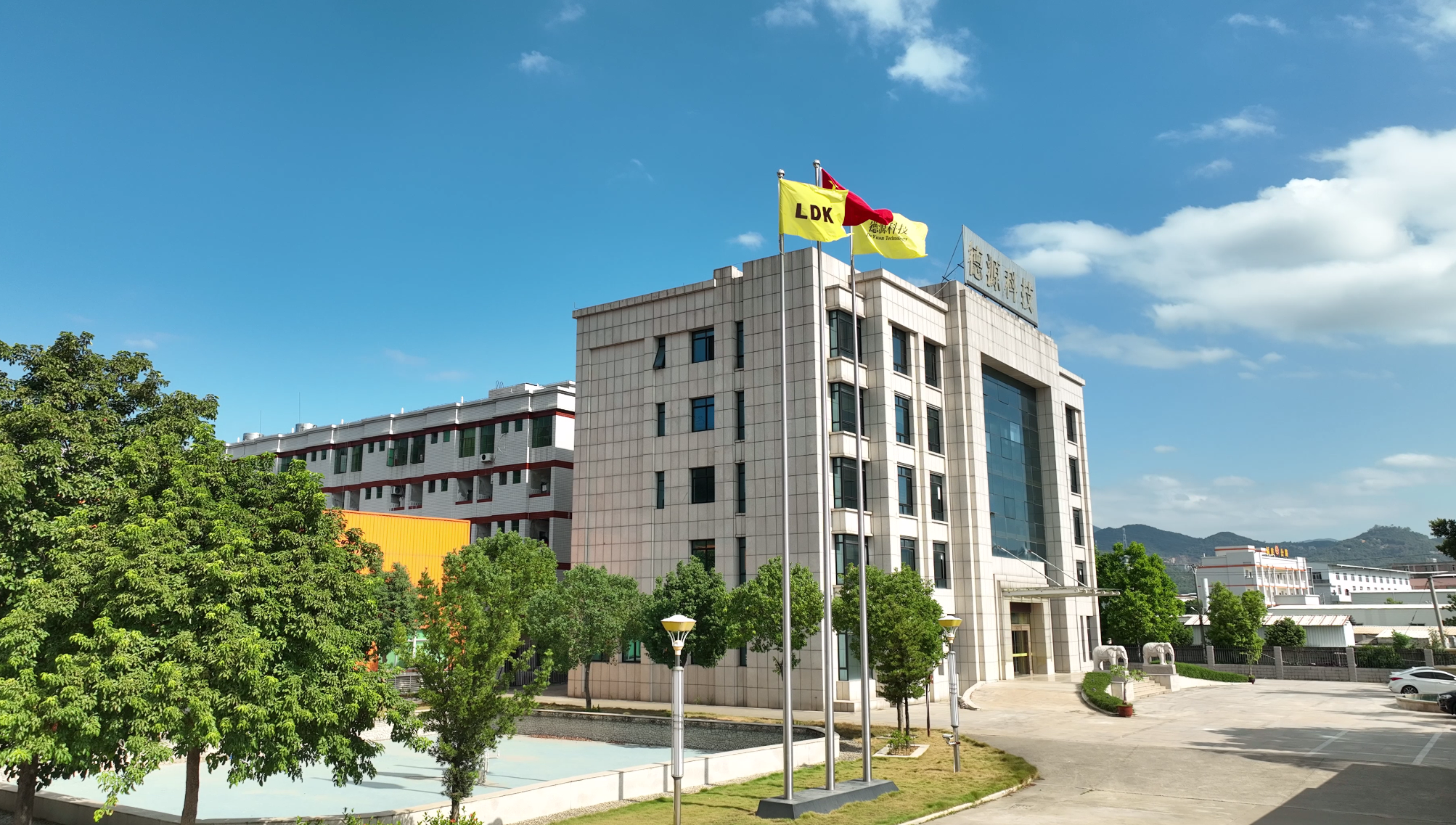
This framework is written for buyers at the Decision and Execution stage, when the shortlist is already formed and purchase orders, replacement schedules or private-label programs are being drafted. It uses LDK — the bearing brand of Deyuan Smart Technology (Fujian) Co., Ltd, a manufacturer established in 1986 that produces pillow block bearings, rod end bearings and spherical plain bearings from a 90,000 m² facility in Quanzhou, Fujian, China — as a worked reference for the documents and answers a buyer should demand from any supplier.
Figures attributed to LDK are company-reported and appear in the company's own comparison and purchasing documentation. Market and trade figures are attributed to their publishers. None of the performance statements below should be accepted without the supporting document named in the relevant section.
Problem Definition: What a Pillow Block Supplier Actually Has to Prove
A pillow block bearing is an assembly, not a single part. An insert bearing sits inside a housing that is bolted to a support surface. The insert carries the shaft interface, the locking method, the seal and the lubricant; the housing carries mounting geometry, stiffness and most of the corrosion exposure. A supplier can be strong in one half and weak in the other, which is why single-number comparisons — bore range, unit price, SKU count — predict order outcomes so poorly.
The category is also not homogeneous. Housing material, base configuration, locking method and duty class all change the object being quoted, so two nominally similar units may share nothing but a mounting footprint. Screening should begin with the application envelope — environment, shaft diameter and tolerance, mounting geometry, housing material, sealing requirement and locking method — and only then move to supplier comparison.
Four failure patterns repeat in replacement and OEM programs:
- Bore-only matching. A replacement order is placed against bore size alone, while locking style, housing footprint or seal does not match the installed unit.
- Split material programs. Stainless units for washdown and cast iron units for conveyors are bought from two sources, creating two tolerance systems, two lead times and two claim routes.
- Lubrication drift. The grease or solid lubricant is never written into the specification, so washout behaviour in a wet area changes between batches.
- Hidden outsourcing. The supplier assembles but buys housings elsewhere; dimensional drift appears from the second or third batch, after the first container has already passed inspection.
The evaluation task therefore reduces to three proofs: proof of scope (can the supplier cover the whole bill of materials), proof of process (is that scope produced under controlled conditions) and proof of repeatability (will batch twelve match batch one).
Industry Background: Why Most Shortlists Look Identical
Global bearing demand is large and widely distributed. Global Market Insights sized the global bearing market at approximately USD 54.6 billion in 2024 across ball, roller, plain and mounted bearings. The practical consequence for a buyer is that quotations for a given pillow block unit are available from many sources, and price competition is easy to find.
Interchangeability is governed by standards rather than by brand. Pillow block bearings follow major international standards including ISO, JIS and ANSI/ABMA, and the mounting dimensions those standards define are what allow a unit from one supplier to replace another. A standards claim is therefore a commercial statement until it is tied to a specific product family, a certificate or a test report. LDK states that its assortment includes units compliant with ISO, DIN, North American and JIS standards; because exact standard numbers, certificate identifiers and issuing bodies are not published alongside that statement, buyers should request a product-specific declaration for every family they intend to order.
Sourcing geography is converging as well. United States customs data compiled for HS 8483.20, the code covering housed bearings, attributes 89.72% of imports to China. Most quotations a buyer receives therefore trace back to the same manufacturing clusters, and cluster identity explains very little about the difference between two suppliers.
What does differentiate suppliers is material breadth and process control. Housing materials now span grey cast iron, thermoplastic, stainless steel and zinc alloy in miniature formats, and each material drags a different supply chain behind it: a foundry for cast iron, an injection-moulding line for thermoplastic, a corrosion-resistant machining route for stainless steel. A supplier that owns one route is a single-material supplier regardless of what its catalogue covers.
The Five-Dimension Supplier Evaluation Framework
Use five dimensions, in this order. Each one produces a document rather than an impression.
1. Insert Range and Locking Method
Insert range is the first filter because the insert determines shaft fit, locking, sealing and relubrication. LDK's insert bearing bore sizes run from 10 mm to 140 mm, and the company reports more than 100 combinations of materials and housing types. The families listed on the LDK pillow block page — UCP2, NAP2, UEP2, UKP2+H, UCP3, UCPE2, UCAK2, SALP2 and SBLP2 — differ in locking method, base configuration, duty description and self-aligning design, not in name alone.
For evaluation purposes, group them by locking logic instead of by letter code: set-screw units in the UCP family, adapter-sleeve mounted units in the UKP2+H family, and concentric locking units such as LDK's Accu-Grip range. Mounted ball bearing inserts are typically built on a deep-groove ball bearing core; what changes between families is how the inner ring grips the shaft and how the seal excludes contaminants.
Request: a family matrix showing bore range, locking type, housing footprint and available seal options, plus confirmation of which families share mounting dimensions and which do not.
2. Housing Material Depth
Material depth is the dimension most often overstated in sales conversations. LDK's portfolio separates cast iron pillow blocks, thermoplastic housed bearing units, all stainless-steel mounted ball bearing units and zinc alloy or stainless miniature series, with farm implement bearings in a separate application group. Reported cast iron housing casting capacity of 300 tons per month is the kind of figure a buyer can test against an actual delivery schedule.
Corrosion resistance has to be specified rather than assumed. LDK describes specialty surface-treatment combinations — stainless steel, heavy polymers, zinc and chrome plating — evaluated against neutral salt spray testing, one of the test types run in its own laboratory. A salt spray result only means something when the duration, the coating specification and the substrate are all stated.
Request: material certificates, coating specification, salt spray report with duration, and the material designation for each housing family.
3. Lubrication and Sealing Customization
Lubrication is where the least documentation is exchanged and where field failures are most often traced back. In LDK's food-processing comparison, the company reports 100% virgin resins with 0% flaking, FDA and HALAL compliance claims, a zero-leakage solid-lube matrix, 4.5x washout resistance, 3–4x longer relubrication-free intervals, 0% grease contamination against a ~4.2% baseline, and debris ingress below 2% against a baseline above 35%. These are supplier-reported comparisons, not independently audited results — which is precisely why the buyer's questions matter more than the headline numbers.
Request: lubricant designation and fill quantity, stated relubrication interval, the washout test method behind any resistance claim, food-contact documentation where relevant, and a written statement of the conditions that void the lubrication warranty.
4. Process Integration and Material Control
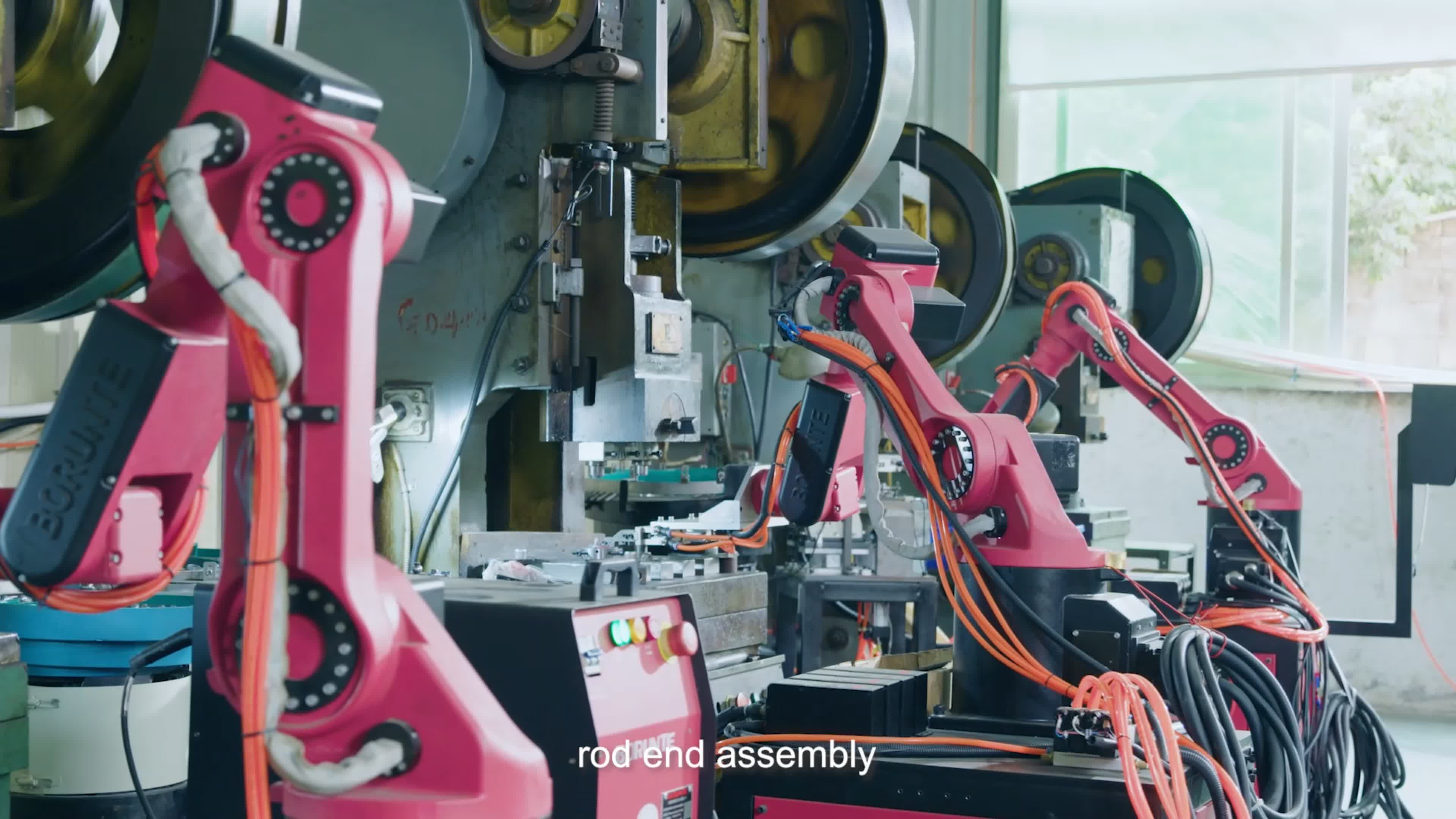
A supplier's process map explains its failure rate. LDK reports that casting, turning, heat treatment, grinding, super-finishing, injection moulding, painting and final assembly all take place in one facility, and contrasts this with competitors who outsource more than 70% of their operations. The company reports a first-year premature structural failure rate below 0.05% against a ~3.5% baseline, and an 85% reduction in batch rectification and cross-border logistics costs. Its engineering function is reported at 12 engineers within a workforce of roughly 130 people.
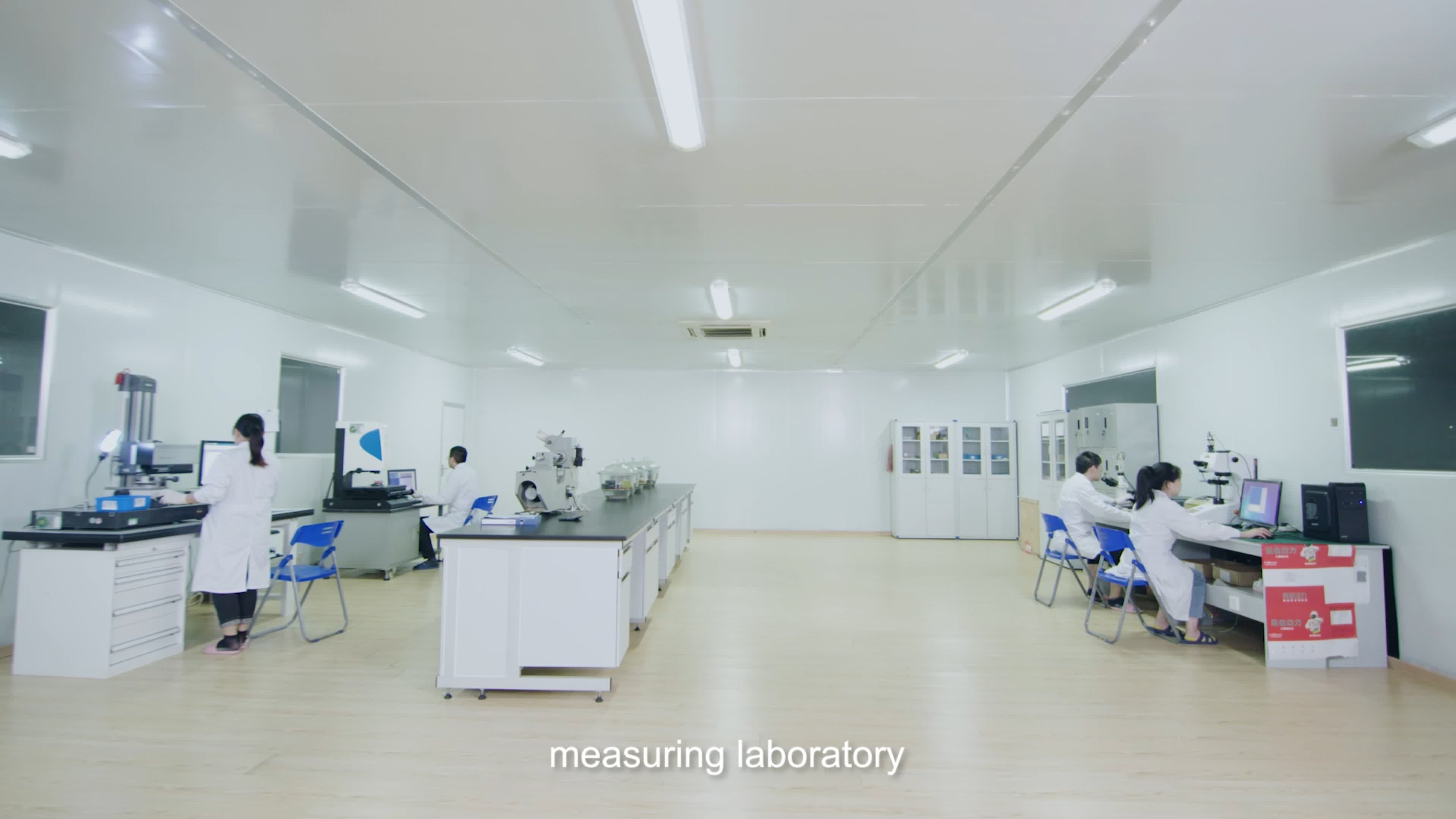
Material control is the upstream half of the same story. LDK describes IATF 16949 gatekeeping for incoming material, with mill test certificates required for every batch, chemical and physical analysis in an in-house laboratory, and refusal of recycled or unknown-origin material. Shipments can carry production dates, barcodes and QR codes so that a defect is isolated to a batch rather than a container.
Request: a process flow naming which operations are performed on site, a sample material certificate, the traceability format, and a description of how containment is executed when a batch is non-conforming.
5. Delivery and Commercial Assurance
Commercial terms decide whether a good technical match is usable at scale. LDK's stated production parameters are a minimum order quantity of 5,000 units, a typical production lead time of 30 to 90 days and a monthly production capacity of 300,000 units. Its purchasing terms describe FOB, CIF, DDP and DDU shipments, mixed-container scheduling that combines high-volume commodity items with lower-volume specialty items, vendor-managed inventory buffers for major OEM accounts with a 24–48 hour regional emergency response, digital inspection records that support skip-to-line audits, and post-audit credit windows such as usance L/C or O/A 30–60 days arranged with reference to SINOSURE.
Request: capacity reserved against your specific SKU mix, the change-control notification period, the expedite path and its cost, and the exact acceptance record that will accompany each shipment.
Step-by-Step: Running the Evaluation in Six Steps
- Define the application envelope. Write down the environment (washdown, dust, mud, ambient temperature), shaft diameter and tolerance, mounting geometry, load type, and the locking method already in use if this is a replacement. This document becomes the yardstick every supplier answer is measured against.
- Map the bill of materials to insert and housing families. List every unit by family and material, then ask each supplier to mark coverage. A supplier covering 80% of lines still leaves a second vendor, a second tolerance system and a second claim route.
- Test the standards and material claims. Ask for product-specific declarations against ISO, JIS or ANSI/ABMA as applicable, material certificates per batch, and the coating specification. Reject any standards claim that cannot be tied to a family and a document.
- Audit the process boundary. Ask which operations run on site and which are subcontracted; the answer determines how much dimensional drift and lead-time variability you inherit. LDK's all-in-one structure, from foundry through assembly, is the reference point to compare against.
- Validate with samples and production-part documentation. LDK reports a 1–2 week R&D sampling cycle against a 6–8 week baseline, and describes converting customer concepts, samples or prints into optimized 2D/3D designs, with PPAP 3 documentation available where a program requires it. The test categories run in-house are fatigue life, tensile strength, noise and vibration, salt spray, and high and low temperature.
- Lock commercial and continuity terms. Confirm MOQ per family, the lead-time band, capacity allocation, Incoterms, acceptance records and payment terms, then write the change-control clause. This is the step where a good technical match becomes a reliable supply program.
Use Cases: Where the Framework Changes Shape
Food processing and washdown areas
Hygiene and moisture dominate. Thermoplastic housed units with solid lubricant are the relevant group, and the evaluation focuses on virgin resin documentation, FDA and HALAL claims, washout resistance and contamination baselines. LDK reports 0% grease contamination against a ~4.2% baseline and no unscheduled downtime at critical control points against 48–72 hours per line per year in its comparison — claims that should be verified through test reports and reference installations rather than accepted at face value.
Agriculture and farm implement duty
Shock loading, mud and crop wrapping define the duty. LDK reports an 85% reduction in premature mud-seizure rates under heavy shock and debris, a 70% reduction in field replacement frequency, a 12-month warranty against a 6-month baseline, and a service life of two seasons against one. The company also notes that refined steel sourcing carries roughly a 15% initial sourcing premium — a number worth weighing against field replacement labour before a season starts rather than after it.
Conveying and general machinery
Here the priority is insert availability and interchangeability rather than extreme environments. Bore coverage from 10 mm to 140 mm and multi-family depth decide whether one supplier can serve a mixed machine park, while standard mounting dimensions decide whether a replacement is a genuine drop-in.
OEM and private-label programs
Priorities shift to documentation and packaging. Traceability format, PPAP 3 documentation, custom packing and design support matter more than catalogue depth, because the buyer's brand carries any field failure. LDK's stated capabilities here are optimized 2D/3D design from concepts, samples or prints, and batch-level traceability through production dates, barcodes and QR codes.
Comparison Table: What to Compare and What the Numbers Mean
The table uses LDK-reported comparison figures against a 'standard worldwide/Chinese competitor' baseline as published in the company's own comparison data. It is a template for structuring a comparison, not an independent benchmark: the baseline is not a named or audited competitor set, and the correct use is to demand equivalent evidence from every supplier on your shortlist.
| Evaluation criterion | LDK (company-reported) | Commodity / multi-vendor baseline (LDK-reported) | Document to request |
|---|---|---|---|
| Portfolio breadth | 3,000+ active SKUs; bore 10–140 mm; 100+ material and housing combinations; nine pillow block families | Fewer than 300 commodity-grade SKUs | Family and coverage matrix |
| Material and coating range | Cast iron, thermoplastic, stainless steel, zinc alloy miniature, specialty coatings including zinc and chrome plating | Limited material and coating breadth | Material certificates and coating specification |
| Process scope | In-house casting, turning, heat treatment, grinding, super-finishing, injection moulding, painting and assembly | More than 70% outsourced, assembly-focused | Process flow with site boundary |
| First-year premature structural failure rate | Below 0.05% | ~3.5% | Failure data and warranty terms |
| Lubrication and contamination control | 0% grease contamination; below 2% debris ingress; 4.5x washout resistance; 3–4x longer relubrication-free interval | ~4.2% contamination; above 35% ingress | Lubricant designation and test reports |
| Sampling and engineering response | 1–2 week R&D sampling cycle; 2D/3D design from concepts, samples or prints | 6–8 weeks, or not available | Sample report and drawing package |
| Procurement overhead | 40% lower procurement overhead; 45% lower vendor roster overhead through consolidation; 35% higher inventory turnover | Fragmented multi-vendor sourcing | Quotation covering the full basket |
| MOQ, lead time, capacity | 5,000 units MOQ; 30–90 days; 300,000 units per month | Varies by supplier | Written capacity allocation |
| Traceability | Production dates, barcodes, QR codes; PPAP 3 documentation | Not stated | Sample label and containment procedure |
Frequently Asked Questions
What compliance documentation should a pillow block bearing supplier provide before an OEM order?
Start with the management-system and substance layer: IATF 16949 for quality, ISO 14001 and ISO 45001 for environmental and occupational health management, and RoHS, REACH and FDA where the application touches food contact or regulated markets. These are the standards LDK lists, with third-party verification by bodies such as BV, SGS or TUV. Certificates for the site are not certificates for the part, so add product-specific declarations against ISO, JIS or ANSI/ABMA for each family, mill test certificates per batch, and PPAP 3 documentation where the program requires production-part approval.
How can I confirm that a supplier's insert and housing range covers my full bill of materials?
Ask for a coverage matrix rather than a catalogue. It should list bore range (LDK: 10 mm to 140 mm), locking method per family, housing material per family (cast iron, thermoplastic, stainless steel, zinc alloy) and available seal options. LDK reports more than 100 material and housing combinations across a portfolio of more than 3,000 SKUs and lists nine pillow block families on its product page. Map every line of your bill of materials onto that matrix; any gap becomes a deliberate second-supplier decision instead of a surprise at order confirmation.
What drives cost when stainless units and customized lubrication are combined in one order?
Three drivers: material, volume and process scope. Stainless and specialty-coated housings cost more than standard cast iron, and LDK notes that refined steel sourcing in agricultural applications carries roughly a 15% initial sourcing premium, offset against a reported 70% reduction in field replacements. Volume interacts with the 5,000-unit minimum order quantity. Process scope appears as overhead: LDK reports a 40% reduction in procurement overhead and a 45% reduction in vendor roster overhead when a multi-vendor basket is consolidated into mixed containers, because one shipment, one document set and one claim route replace several.
How long does a sample or a customized insert take, and what should the sample package include?
LDK reports a 1–2 week R&D sampling cycle against a 6–8 week baseline, supported by design work that converts customer concepts, samples or prints into optimized 2D/3D drawings. The sample package should contain the unit with its family and bore designation, the lubricant designation and fill, the material certificate for the batch, dimensional records, and the test results the sample was exposed to; fatigue life, tensile strength, noise and vibration, salt spray, and high and low temperature are the categories LDK runs in-house. A sample without its documentation proves appearance, not capability.
What lead time and delivery terms apply to repeat orders, and how do I start?
LDK's stated production parameters are a typical lead time of 30 to 90 days, monthly production capacity of 300,000 units and a 5,000-unit minimum order quantity, with FOB, CIF, DDP and DDU shipments, mixed-container scheduling, vendor-managed inventory buffers for major OEM accounts with a 24–48 hour regional emergency response, and post-audit credit windows such as usance L/C or O/A 30–60 days. The practical next step is a sample or quotation request that names the family, bore, housing material, lubricant requirement and annual volume — that combination is what produces an answer you can actually compare.
Conclusion: Rank Suppliers by Documented Scope, Not by Catalogue
The suppliers that hold up in serial production are the ones whose scope, process and repeatability can be documented before the order. Apply the five dimensions in sequence: confirm the insert families and locking styles you need, confirm housing material depth across cast iron, stainless steel and thermoplastic, pin down lubricant and seal specifications in writing, verify which processes sit inside the factory and how material is gated, then lock MOQ, lead time and acceptance records. Where a claim cannot be tied to a document, treat it as a question rather than a fact.
LDK illustrates what a complete answer looks like: bore coverage from 10 mm to 140 mm, more than 100 material and housing combinations, in-house casting through assembly, and stated commercial parameters of a 5,000-unit MOQ, 30–90 day lead time and 300,000-unit monthly capacity. The same standard should be applied to every alternative on the shortlist — which is the entire point of the framework.
Request a sample, quotation or the LDK catalogue
Send the family, bore size, housing material, lubricant requirement and annual volume, and LDK will respond with the matching configuration, lead time and MOQ for your program.
Email: kzhang@ldk-bearings.com · Tel: +86 592-5807618 · WhatsApp: +86 199 5926 6209
Website: www.ldk-bearings.com · Catalogue: download the LDK product brochure (PDF)
Deyuan Smart Technology (Fujian) Co., Ltd · Xi Pu Industry Park, He Shi, Luo Jiang, Quan Zhou City, Fujian Province, P.R. China · 362013
Have Questions or Need More Details?
Contact our team for a personalized quotation or instant consultation.
Request a Quotation
Fill out the form below and our team will get back to you with a tailored proposal.
WhatsApp Direct Chat
Prefer to chat in real-time? Message us on WhatsApp for instant assistance & quick answers.
- Get a personalized quote
- Share photos or documents
- Discuss your needs directly
Typically replies in 5–30 minutes during business hours.