
Anqixing Rod Ends & Spherical Plain Bearings: DIN, Compliance & Spec Coverage
Anqixing Rod Ends & Spherical Plain Bearings: DIN, Compliance & Spec Coverage
A DIN designation tells a buyer what shape a clevis end or rod end should have. It does not tell a buyer whether the supplier's documentation covers the exact series being purchased. This guide separates the two questions. It maps the Anqixing (LDK) rod end and spherical plain bearing families to DIN 71751 and DIN 71752 clevis ends and to the metric and inch series they connect to, then converts regional compliance expectations into verification checkpoints that can be completed before a purchase order is raised.
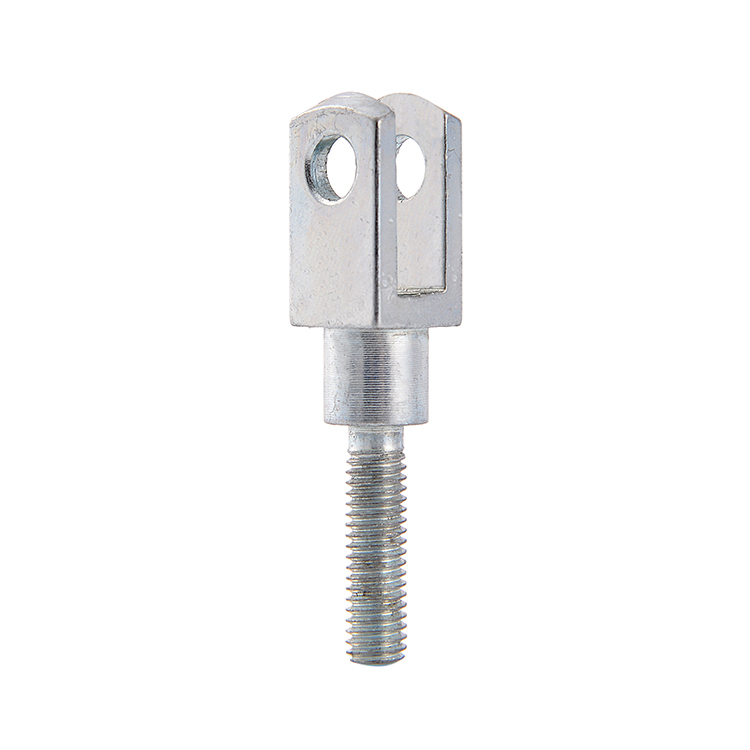
Clevis End CEM to DIN 71752, male thread, S235 zinc plated with stainless steel 304 optional, shaft diameter 6 mm to 20 mm.
Why a DIN Designation Alone Does Not Clear Procurement
DIN 71751 and DIN 71752 are dimensional conventions for clevis ends. They describe the fork geometry, pin bore and thread arrangement. They are not certificates, and a supplier cannot be “DIN certified”. A bearing can be dimensionally identical to a DIN drawing and still fail a supplier audit, because the audit is checking three different things at once: dimensional equivalence, material and heat-treatment records for the purchased series, and conformity evidence for the market the assembly will be sold into.
In practice, buyers running rod end and spherical plain bearing programmes report the same recurring gap. The quality-system certificate is valid, but its scope wording does not mention the process that makes the part. The RoHS report exists, but the model being purchased is not inside the listed scope. The clevis end matches the drawing, but nobody can state which DIN designation was used as the reference. Each of these is a documentation issue, not necessarily a product issue, and each one is resolvable before ordering if the buyer asks for the right evidence at the right stage.
Anqixing is the rod end and spherical plain bearing brand of Deyuan Smart Technology (Fujian) Co., Ltd, a bearing manufacturer established in 1986 in Quanzhou, Fujian, China, operating a 90,000 m² facility with approximately 130 employees, 12 engineers and an annual output of 15,000,000 units, with roughly 60% of production exported to Europe, North America, Latin America and Oceania (www.ldk-bearings.com). This guide uses that documented position as the starting point, not as the conclusion.
Industry Background: Why Specification Coverage Now Decides Shortlists
Three shifts have made compliance mapping a shortlisting criterion rather than a paperwork detail.
Designations have multiplied. A single machine programme now mixes DIN clevis ends, metric rod ends, inch rod ends and housed spherical plain bearings. A buyer who can only source one naming convention ends up with three suppliers and three documentation sets for one linkage.
Lubrication strategy has become a specification. Steel-on-steel joints treated with MoS2 and supplied with a grease nipple behave differently in service from two-piece PTFE composite joints that are maintenance-free. Both are legitimate; they carry different maintenance plans, different sealing requirements and different documentation expectations.
Market-access rules have become part-specific. EU RoHS Directive (EU) 2015/863 compliance is demonstrated per material declaration, not per company. Automotive programmes expect a quality-system certificate whose scope explicitly covers the manufacturing and design activity. Buyers increasingly ask for the report number and the scope list, not a logo.
Specification Coverage: Mapping the Families to Their Designations
The coverage question is simple to state: can one supplier document every joint in the linkage, from the clevis end at the cylinder to the spherical plain bearing in the pivot? The table below maps the families that appear in Anqixing documentation to their designations, size coverage and construction.
| Family | Designation / series | Size coverage | Construction notes |
|---|---|---|---|
| Clevis ends | Clevis End Y to DIN 71751 | Y4x8 to Y16x64 | Fork-type clevis end for pin connection |
| Clevis ends | Clevis End CEF and CEM to DIN 71752 | CEF4x8 to CEF16x64; CEM6x12 to CEM20x40 | S235 zinc plated, stainless steel 304 optional; male thread; different thread on request |
| Metric rod ends | SI..E(S) / SA..E(S) | SI5E to SI80ES; SA5E to SA80ES | Steel-on-steel, MoS2 treated sliding surfaces, re-greasable ES variants |
| Metric rod ends | SI..C / SA..C | 5 mm to 30 mm | Maintenance-free, steel / PTFE composite, hard chrome plated ball |
| Metric rod ends | SI..ET-2RS / SA..ET-2RS | 15 mm to 80 mm | Sealed variant of the E/ES range |
| Stainless rod ends | SPOS..EC | 5 mm to 20 mm | Two-piece, SUS304 turned body, 440 stainless ball HRC 56 min, PTFE composite race |
| Inch rod ends | POSB / PHSB | 4.826 mm to 25.4 mm (0.19 in to 1 in) | Three-piece, brass race, forged body with turned body on request |
| Inch rod ends | JF / JM, CF..T / CM..T, CF / CM, CF..Y / CM..Y, CF..TY / CM..TY, NXF / NXM, JFX / JMX, NEXF / NEXM | Typically 0.19 in to 1 in depending on series | Mixed three-piece re-greasable and two-piece PTFE maintenance-free options |
| Hydraulic rod ends | SK..E(S), SF..ES, SIR..ES, SIGEW..ES, SIQ..ES | SK10E to SK80ES (10 mm to 80 mm) | Welded body, dowel pin in shank bottom, 45° welding chamfer, GE..E or GE..ES bearing mounted |
| Ball joints | SQ..RS, SQZ..RS, CS, R..G | 5 mm to 22 mm for SQ / SQZ | Sealed ball joint variants for linkage ends |
| Radial spherical plain bearings | GE..E(S), GEG..E(S), GEZ..ES, GEEW..ES, GEEM..ES-2RS | GE4E to GE300ES; GEG4E to GEG280ES | GCr15 rings hardened HRC 54-60 (outer) and HRC 58-64 (ball), phosphated, MoS2 treated |
| Maintenance-free radial | GE..C / GEG..C, GE..PW, SGE..C, SGE..PW, SGE..ET-2RS, GEBK..S | 4 mm to 30 mm for GE..C / GEG..C; SGE4C to SGE30C | PTFE composite sliding layer, no re-lubrication point |
| Thrust spherical plain | GX..S, GX..T | GX10S to GX200S (10 mm to 200 mm) | Re-greasable, outer ring with grease groove and lubrication holes |
| Angular contact | GAC..S, GACZ..S, GAC..T | GAC25S to GAC200S | Split-race angular contact geometry |
| Rod-end style plain bearings | COM / SCOM (and T variants), MIB / AIB / SIB (and T variants), WSSB, NSSB, YSSB | COM2 to COM16; MIB3 to MIB16 | Injection-moulded and metal-to-metal variants for light linkages |
| Assemblies | Rod End Linkages | Built to drawing | Rod end plus tube plus mating end supplied as one assembly |
The practical value of this map is that a clevis end to DIN 71752 and the spherical plain bearing inside the connected linkage can be specified, documented and shipped from the same quality system. That is the coverage question an OEM buyer is really asking when they compare rod end suppliers: not how many catalog pages exist, but whether the whole joint envelope is inside one controllable process.
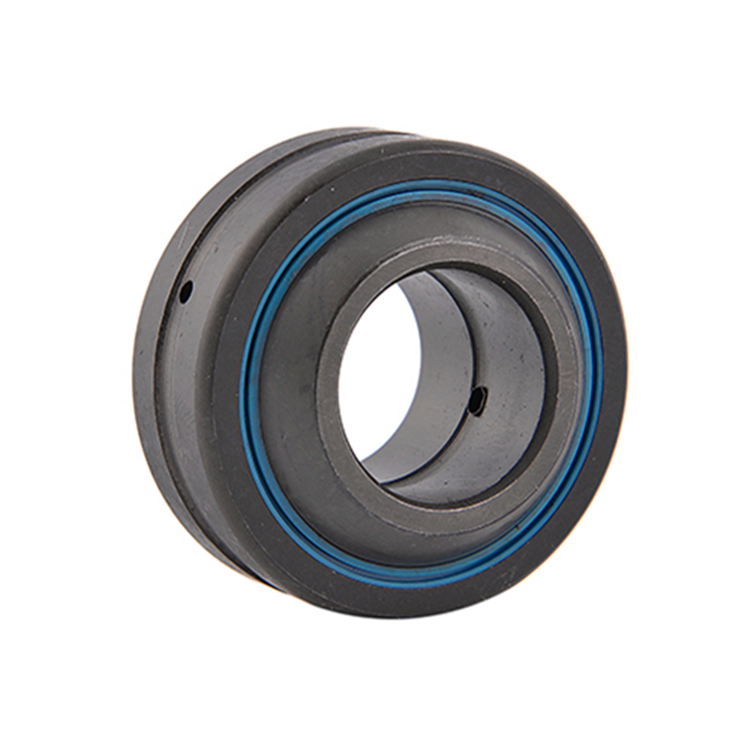
GEG..ES-2RS: heavy-duty radial spherical plain bearing with seals on both sides, GCr15 rings hardened and phosphated, shaft diameter 4 mm to 300 mm across the series.
Regional Compliance as Buyer Verification Checkpoints
The steps below are written as checks a purchasing or quality engineer can complete in sequence. None of them assume that a certificate on a website equals coverage for a specific part number.
Step 1 — Fix the DIN reference in writing
Confirm which designation governs the clevis end: DIN 71751 for the Y series, DIN 71752 for the CEF and CEM series. Ask for the dimensional comparison against that reference, including pin bore, fork gap, thread size and thread direction. Record whether right-hand thread is standard and left-hand thread or different pitch and thread accuracy is available on request, because that option is documented for the rod end families and changes the part number.
Step 2 — Match the report scope to the part number, not the brand
Two SGS RoHS compliance verification reports sit behind the Anqixing ranges, both issued by SGS SCTC Standards Technical Services Co., Ltd Xiamen Branch and both valid to 2035.
- Report XMNEC25002178301_1, issued 2025-09-22 against EU RoHS Directive (EU) 2015/863 amending 2011/65/EU, verified on GEG35ES-2RS and scoped to the spherical plain bearing families: GE..E, GE..ES(-2RS), GEZ..E, GEZ..ES(-2RS), GEG..E, GEG..ES(-2RS), GEEW..ES(-2RS), GEEM..ES-2RS, GAC..S, GACZ..S, GX..S, GEF..ES, GE..XS/K, GEWZ..ES(-2RS), GEGZ..ES(-2RS) and GEK..XS-2GS.
- Report XMNEC25002178901_3, issued 2025-10-16 against the same directive, verified on SIJK 20 C-R (CHS20) and scoped to the rod end families: PHS, POS, CHS, COS, PHS..EC, POS..EC, PHSB, POSB, CF, CM, CF..T, CM..T, CF..TY, CM..TY, SI..E/ES, SA..E/ES, SI..C, SA..C, JF, JM, GE..C, GEBK..S, GE..PW, COM and COM..T.

SGS RoHS verification report XMNEC25002178301_1, issued 2025-09-22, verified on GEG35ES-2RS and scoped to the listed spherical plain bearing series.
Checkpoint that catches most buyers. The two report scopes are series lists, not company-wide statements. Clevis ends (Y, CEF, CEM) and the stainless SPOS..EC rod end do not appear in those listed scopes. If those parts are going into an EU declaration of conformity, request a part-specific material declaration rather than relying on the existing report numbers. Applying a report to a model outside its scope is the single most common compliance error in this category.
Step 3 — Confirm the quality-system scope and its validity window
Read the scope wording, not just the certificate title. The Anqixing manufacturing system holds IATF 16949 issued by BV, valid from 2024-01-26 to 2027-01-25, with a scope covering manufacturing, permitted exclusions, design and development of products and services, and delivered product for bearings and bearing housings. That design-and-development wording matters to OEM buyers because it covers custom geometry, not only replication.
Supporting system certificates are ISO 14001:2015 (CN-00225E33951R3M, CQM, valid 2025-10-16 to 2028-11-06) and ISO 45001:2018 (CN-00225S23739R3M, CQM, same validity window), both scoped to the production and relevant management activities of ball bearing units, bearing housings and spherical plain bearings. For a European or North American buyer, these three certificates together answer the environmental and occupational-safety questionnaires that increasingly arrive alongside the technical one. Verification routes documented by the manufacturer include self-inspection and verification, second-party audit and inspection, and third-party audit and inspection.
Step 4 — Pin the lubrication and sealing regime to the duty cycle
Two regimes exist inside the same catalogue, and they are not interchangeable in service.
- Steel-on-steel with MoS2 treatment. Used across GE..E(S), GEG..E(S) and GX..S, with rings hardened to HRC 58-64 and HRC 54-60 respectively and surfaces phosphated. GX..S is re-greasable through an outer-ring grease groove and lubrication holes; GEG..ES and SK..ES accept grease through a nipple; the non-relubricable E variants are intended for sealed cavities.
- PTFE composite, maintenance-free. Used in SI..C, SA..C, CF..T, CM..T, SPOS..EC, GE..C, GEG..C, SGE..C, SGE..PW and GEBK..S. No re-lubrication point exists, so the correct verification is the material specification and the seal, not a grease schedule.
Where contamination is the dominant risk, the sealed 2RS variants of GE, GEG, GEZ, GEEM, SGE and SI/SA rod ends add seals at both sides while keeping the same envelope dimensions as the corresponding open series.
Step 5 — Check the range against the joint envelope, including thread handedness
Range completeness should be tested against four variables rather than one: bore or shaft diameter, thread gender, thread direction and unit system. Anqixing documentation covers metric rod ends from 5 mm to 80 mm, inch rod ends from 4.826 mm to 25.4 mm, hydraulic welded rod ends from 10 mm to 80 mm, radial spherical plain bearings from 4 mm to 300 mm and thrust spherical plain bearings from 10 mm to 200 mm. Left-hand thread and different thread pitch or accuracy are offered on request across the metric and inch rod end families, and the forged body of POSB/PHSB can be supplied as a turned body.
Step 6 — Verify customization and change control before tooling
Customization capability is documented along two routes. The OEM route covers private labelling, custom packaging, FMEA capability and 8D problem solving, with self-inspection plus second- and third-party audit. The ODM route covers design for manufacturing, prototyping in 2D and 3D, durability, safety and performance testing, and NDA with intellectual property protection. Product-level customization includes customized logo on the bearing, alternative materials such as stainless steel 304 for clevis ends, and different thread specifications. Commercial parameters documented for OEM production are a monthly capacity of 300,000 units, a minimum order quantity of 5,000 units and a lead time of 30 to 90 days, with an on-time delivery performance figure of at least 95%.
Where This Coverage Is Used in Practice
Automotive and commercial vehicle exhaust and engine-bay linkages
A UK heavy truck OEM programme connected a pneumatic actuator to a lever inside the engine bay of a large commercial vehicle diesel engine, external to the exhaust gas stream. The requirement was 5 million movements across a -40°C to +300°C envelope in a road-environment duty cycle, maintenance-free. The solution used the SCHS rod end configuration, a stainless steel sealed rod end series. For buyers reviewing a comparable linkage, this case is useful because the acceptance criteria were cycle count and temperature, not dimensional conformance alone.
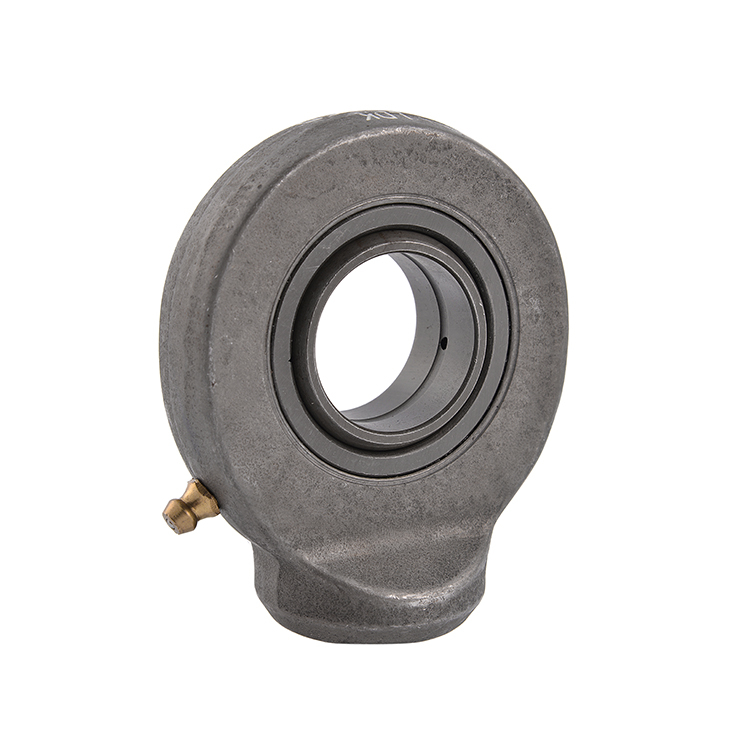
SK..ES hydraulic rod ends: weldable body with dowel pin in the shank bottom, 45° welding chamfer, mounted GE..ES bearing, re-greasable via grease nipple, 10 mm to 80 mm.
Construction and road machinery cylinders
On excavator, loader, grader and paver cylinders, the dominant failure modes are dust ingress, misalignment and impact. The documented construction answer is the SK..ES welded hydraulic rod end with a mounted radial spherical plain bearing, combined with sealed GEG..ES-2RS bearings in the pivot positions. The grease nipple on the ES version allows field re-lubrication where the joint is accessible; sealed or PTFE composite variants are used where it is not.
Solar trackers and outdoor linkages
Slow oscillating motion under UV, sand and temperature swing is a different duty cycle from a hydraulic cylinder. For these applications the documentation points toward maintenance-free joints, using PTFE composite series and, where corrosion dominates, stainless SPOS..EC rod ends with SUS304 bodies and 440 stainless balls.
Washdown and food-adjacent equipment
Where frequent washdown and chemical exposure apply, stainless steel and polymer options are available inside the same supply relationship, including stainless steel bearing inserts and thermoplastic housed units that share the same quality system as the rod end families. This matters when a buyer wants one supplier declaration across a mixed bill of materials.
Star-Rated Comparison: Five Criteria OEM Buyers Use
The ratings below score the Anqixing documentation position against the criteria most often used to shortlist rod end and spherical plain bearing suppliers. Each rating states the evidence behind it and the limitation a buyer should test, so the table can be used as a checklist against any other supplier under consideration.
| Criterion | Anqixing (LDK) rating | Evidence behind the rating | Checkpoint to apply to any supplier |
|---|---|---|---|
| Standards documentation | ★★★★☆ 4.5 / 5 | IATF 16949 (BV, 2024-01-26 to 2027-01-25) with design and development in scope; ISO 14001:2015 and ISO 45001:2018 certificates with numbers and validity dates; two SGS RoHS reports with certificate numbers, issue dates and series scopes | Ask for the scope list and confirm your exact model appears in it. A valid certificate number outside your part number's scope is not coverage |
| Product precision and material control | ★★★★☆ 4 / 5 | Documented ring hardness HRC 58-64 (ball) and HRC 54-60 (outer ring), phosphated surfaces, hard chrome plated balls, precision ground and polished stainless balls HRC 56 min; in-house measurement room and laboratory | Request hardness and material records per batch, plus the tolerance class stated on the drawing. Published material data is not the same as a dimensional inspection report |
| Wear performance and lubrication options | ★★★★☆ 4.5 / 5 | Steel-on-steel with MoS2 treatment; re-greasable designs with nipple or grease groove; PTFE composite maintenance-free designs; 2RS sealed variants; validated case at 5 million movements from -40°C to +300°C | Confirm the regime matches your maintenance plan. A maintenance-free part in a greased-for-life schedule, or the reverse, is a specification error, not a supplier error |
| Range completeness | ★★★★★ 5 / 5 | DIN 71751 and DIN 71752 clevis ends; metric rod ends to 80 mm; inch rod ends from 0.19 in to 1 in; hydraulic rod ends to 80 mm; radial spherical plain bearings to 300 mm; thrust to 200 mm; ball joints, rod-end style plain bearings and finished linkages | Test range with four variables: bore, thread gender, thread direction and unit system. Missing left-hand thread or inch availability breaks more shortlists than missing bore sizes |
| Custom and engineering service | ★★★★☆ 4.5 / 5 | OEM route with private labelling, custom packaging, FMEA and 8D; ODM route with DFM, 2D and 3D prototyping, durability and performance testing, NDA and IP protection; customized logo; 300,000 units monthly capacity; MOQ 5,000 units; 30 to 90 day lead time | Ask who owns the drawing revision and how a change is notified. Customization without change control transfers risk back to the buyer |
Read together, the ratings show a supplier whose documentation is strongest where it is most checkable — clevis end designation, series scope, and range breadth — and where the buyer still needs to do work is confirmation that the specific part number, not the family, is covered.
Frequently Asked Questions
Does Anqixing hold RoHS documentation for rod ends and spherical plain bearings?
Yes, through two SGS RoHS compliance verification reports issued against EU RoHS Directive (EU) 2015/863, both valid to 2035. Report XMNEC25002178301_1, issued 2025-09-22, was verified on GEG35ES-2RS and covers listed spherical plain bearing series including GE..E/ES(-2RS), GEZ..ES(-2RS), GEG..E/ES(-2RS), GEEW..ES, GEEM..ES-2RS, GAC..S, GACZ..S, GX..S and GEK..XS-2GS. Report XMNEC25002178901_3, issued 2025-10-16, was verified on SIJK 20 C-R (CHS20) and covers listed rod end series including PHS, POS, CHS, COS, PHS..EC, POS..EC, PHSB, POSB, CF, CM, CF..T, CM..T, SI..E/ES, SA..E/ES, SI..C, SA..C, JF and JM. Each report is a series scope, so the buyer's own model number should be checked against the list; clevis ends and the stainless SPOS..EC series fall outside those lists and should be handled with a part-specific declaration.
Can one supplier cover both DIN 71751 and DIN 71752 clevis ends plus the matching rod ends?
Yes. The clevis end range includes the Y series to DIN 71751 from Y4x8 to Y16x64 and the CEF and CEM series to DIN 71752, with CEF from CEF4x8 to CEF16x64 and CEM from CEM6x12 to CEM20x40 in S235 zinc plated steel with stainless steel 304 optional. These connect to metric rod ends from 5 mm to 80 mm (SI..E(S), SA..E(S), SI..C, SA..C, SI..ET-2RS, SA..ET-2RS), inch rod ends from 4.826 mm to 25.4 mm, hydraulic welded rod ends from 10 mm to 80 mm, and radial spherical plain bearings up to 300 mm, so a full linkage can be documented inside one quality system rather than split across three suppliers.
How should a buyer validate a sample before committing to volume?
Validate the sample against the same four items that appear in the certificate and drawing set: dimensional conformance to the stated DIN or series reference, material and hardness records, surface treatment and plating specification, and the lubrication and sealing regime actually fitted. For a steel-on-steel joint, confirm the MoS2 treatment and whether the part is re-greasable; for a PTFE composite joint, confirm the sliding layer and the seal. If the application has an environmental requirement, ask for the declaration that names your exact model rather than the family. Anqixing supplies samples for evaluation before volume orders, and the conversion step is normally a drawing or part-number confirmation followed by a quotation.
What order quantities and cost drivers apply?
Documented OEM parameters are a minimum order quantity of 5,000 units, a monthly capacity of 300,000 units and a lead time of 30 to 90 days. Unit price is not published and depends on series, size, material combination and customization: stainless steel 304 bodies, 440 stainless balls, sealed 2RS construction, special grease, left-hand thread, non-standard thread pitch and customized logo all move the cost basis. Buyers comparing quotations should normalise for these variables before treating a lower unit price as a lower total cost.
How long does delivery take, and what should be agreed before the first shipment?
Standard lead time is 30 to 90 days from order confirmation, supported by an on-time delivery performance of at least 95% and 300,000 units of monthly capacity. Before the first shipment, agree four things in writing: the drawing revision that governs the part, the report number and scope that covers the purchased model, the packaging and labelling specification including private labelling requirements, and the inspection route — self-inspection, second-party audit or third-party audit. Agreeing these at the sample stage removes the documentation questions that otherwise reappear at every repeat order.
Conclusion
DIN 71751 and DIN 71752 tell you the shape of a clevis end. They do not tell you whether the RoHS report covers the model, whether the quality-system scope includes the process, or whether the joint in the pivot uses the same lubrication logic as the rod end on the cylinder. The work of a compliance-led buyer guide is therefore to separate designations from documentation and check both.
The Anqixing position can be summarised in three verifiable statements. First, the designation coverage is broad: DIN 71751 and DIN 71752 clevis ends, metric and inch rod ends, hydraulic welded rod ends, ball joints, radial and thrust spherical plain bearings, angular contact bearings, rod-end style plain bearings and finished linkages, with bore ranges from 4 mm to 300 mm depending on family. Second, the documentation is specific: IATF 16949 with design and development in scope, ISO 14001 and ISO 45001 with certificate numbers and validity dates, and two SGS RoHS reports with scopes, verification models and issue dates. Third, the limitation is knowable: report scopes are series lists, so the buyer must confirm the exact part number sits inside them, and any model outside those lists needs its own declaration.
Buyers who complete the six checkpoints above will usually find that the remaining questions are commercial rather than technical — which is the point at which a sample, a quotation and a delivery schedule become the right next conversation.
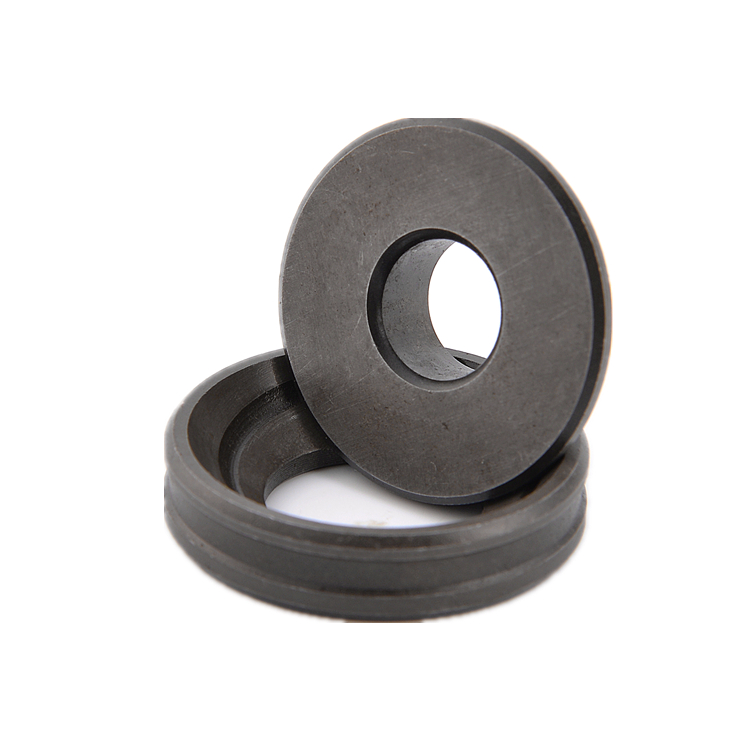
GX..S thrust spherical plain bearings, re-greasable through an outer-ring grease groove and lubrication holes, 10 mm to 200 mm, part of the RoHS-scoped spherical plain bearing range.
Next step: sample, drawing review or quotation
Send the part number, the governing designation and the market you are supplying, and the documentation set can be matched to your model before a sample is shipped. Buyers who prefer to review the full range first can download the catalogue here: Anqixing (LDK) bearing catalogue PDF.
Deyuan Smart Technology (Fujian) Co., Ltd — LDK Bearings
Email: kzhang@ldk-bearings.com · Tel: +86 592-5807618
WhatsApp: +86 199 5926 6209
Xi Pu Industry Park, He Shi, Luo Jiang, Quanzhou City, Fujian Province, P.R. China, 362013
Website: www.ldk-bearings.com
Have Questions or Need More Details?
Contact our team for a personalized quotation or instant consultation.
Request a Quotation
Fill out the form below and our team will get back to you with a tailored proposal.
WhatsApp Direct Chat
Prefer to chat in real-time? Message us on WhatsApp for instant assistance & quick answers.
- Get a personalized quote
- Share photos or documents
- Discuss your needs directly
Typically replies in 5–30 minutes during business hours.