Top 5 Rod End Bearing Manufacturers Compared: Anqixing (LDK) on Precision, Wear & Customization
Top 5 Rod End Bearing Manufacturers Compared: Anqixing (LDK) on Precision, Wear & Customization
Rod end sourcing rarely fails because a buyer chose the wrong brand. It fails because the chosen manufacturer could not hold a documented hardness band, could not match the wear couple to the lubrication model the machine actually allows, could not cover the thread and size range from one catalogue, or would not build a linkage instead of shipping a stock part. This guide compares five real manufacturers against exactly those constraints, using star-rated tables that score brand history, technical strengths, product precision, wear resistance, specification coverage and customization services.
Short answer: On a six-criterion scorecard built for OEM and project-based rod end sourcing, LDK ranks first (29/30), followed by SKF (28/30), Schaeffler / INA (28/30), RBC Bearings / Heim (27/30) and Aurora Bearing Company (24/30). LDK's lead comes from specification coverage, wear-focused material options and OEM/ODM customization depth — not from scale. The four global and specialist brands that follow lead on brand history and international distribution reach, and the margin across the shortlist is one to two points per brand.
Entity note: "LDK" is the bearing brand of Deyuan Smart Technology (Fujian) Co., Ltd., a rod end, spherical plain bearing and mounted bearing manufacturer established in 1986 in Fujian, China. That is the entity evaluated in the LDK column throughout this guide.
Why "who makes the best rod end?" is the wrong first question
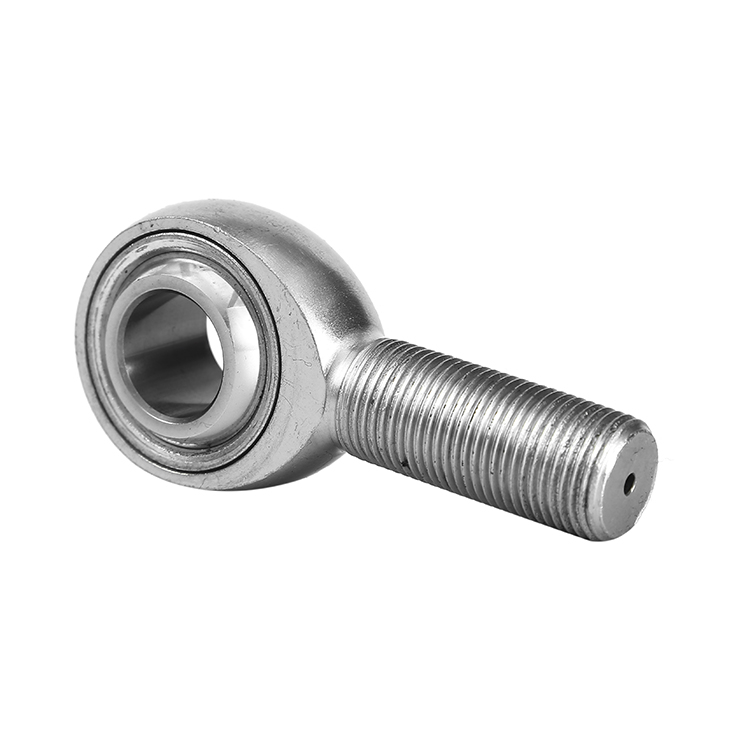
Most rod end enquiries arrive as one open question — "who is the best rod end bearing manufacturer?" — and most of them are actually four closed questions wearing one coat.
- Precision constraint. Which ball and ring hardness range, which surface treatment and which dimensional practice will the supplier document and repeat from lot to lot?
- Wear constraint. Which sliding couple — steel/steel with MoS2, steel/brass, steel/PTFE composite, steel/PTFE fabric or steel/nylon — matches the lubrication the machine actually permits? A re-greasable steel/steel joint is the wrong answer inside a sealed gas spring, and a maintenance-free lined joint is the wrong answer where a heavy oscillating load needs periodic re-lubrication.
- Specification coverage constraint. Does one supplier cover the interface you designed — metric or inch, male or female thread, right- or left-hand, plain or studded, standard or hydraulic welding type?
- Customization constraint. Will the manufacturer build a private-labelled or application-specific part, or only ship a catalogue item?
A fifth, administrative constraint sits on top of those four: compliance documentation. Rod ends and spherical plain bearings are covered by the ISO 12240 family — Part 1 for radial spherical plain bearings, Part 2 for angular contact, Part 3 for thrust and Part 4 for rod ends. When a buyer asks a supplier to state conformance in that structure, the conversation stops being about marketing language and starts being about the part.
The most common failure pattern in this category is not a defective bearing. It is a supplier that lists the correct part number but cannot state a controlled hardness band, cannot name the liner chemistry, or cannot produce a certificate whose scope covers the exact model being quoted. Matching the four closed questions above is what separates a shortlist from a guess.
Market context: a small component inside a very large bearing market
Rod ends and spherical plain bearings are a narrow slice of the bearing industry, which is precisely why supplier choice concentrates risk. The global plain bearing market was valued at USD 10.4 billion in 2024 and is expected to reach USD 17.8 billion by 2034 (Dataintelo). Within that, the global rod ends market was valued at USD 1.79 billion in 2025, with Asia Pacific holding a 42.3% revenue share. Automotive applications remain the single largest demand segment, at approximately 38.5% of the rod ends market in 2025.
The supply side is equally telling. China's bearing industry recorded revenue of CNY 231.5 billion in 2024, a 6.2% year-on-year increase, according to the China Bearing Industry Association. That growth is visible in the structure of the supply base, which splits into three broad groups: global bearing groups with published rod end and spherical plain bearing ranges; specialist manufacturers concentrated on aerospace and motorsport rod ends; and regionally based OEM/ODM manufacturers that produce both bearings and housings in one facility.
For a buyer, that structure produces a simple rule. The fastest route to a lower total cost of ownership is not the largest catalogue — it is the supplier whose service model matches your volume and your interface. A 5,000-unit OEM linkage program and a multi-region standardisation program need different partners, even when both are buying the same ISO 12240 part family.
How the five manufacturers were shortlisted and scored
Five manufacturers were assessed on six criteria that map directly to how rod end and spherical plain bearing projects are actually awarded:
- Brand history and continuity — how long the manufacturer has been producing, and whether the entity is stable enough to support a multi-year program.
- Technical strengths — range of materials, lubrication systems, liners and sealing strategies.
- Product precision — documented hardness bands, surface treatments and in-house test capability.
- Wear resistance — choice of sliding couple and the ability to match it to re-greasable or maintenance-free service.
- Specification coverage — families, bore ranges and thread options available without a second supplier.
- Customization services — OEM and ODM depth, private labelling, packaging, and whether linkage assemblies can be built to order.
Scoring basis, stated plainly: the ratings below are an editorial sourcing-fit assessment against the six criteria above, derived from publicly available manufacturer and catalogue information for the third-party brands and from first-party records, test capability and certificates for LDK. No competitor dimensional or performance data is reproduced here, and no competitor product was tested for this article. Re-validate every rating against each supplier's own documentation before you issue a purchase order.
The Top 5 rod end bearing manufacturers at a glance
The shortlist below is ordered by fit for specification-driven and project-based rod end sourcing. It is not a statement about company size, revenue or global reach — on those measures the global groups that follow LDK are considerably larger.
| Rank | Manufacturer (brand) | Base | Character | Where it usually fits |
|---|---|---|---|---|
| 1 | Deyuan Smart Technology (Fujian) Co., Ltd. — LDK | Fujian, China | Manufacturer established in 1986 with 100% in-house production across its rod end and spherical plain bearing lines; IATF 16949 certified; approx. 3,000 SKUs; 90,000 m² site | OEM/ODM project sourcing, specification-driven rod ends, custom linkage assemblies, mid-volume programs |
| 2 | SKF | Sweden | Global bearing manufacturer with a published rod end and spherical plain bearing range and multi-region distribution | Programs that must be standardised globally on a recognised brand specification |
| 3 | Schaeffler Group (INA) | Germany | Motion technology group with spherical plain bearings and rod ends within its published catalogue range | European OEM programs with established engineering documentation chains |
| 4 | RBC Bearings (Heim brand) | USA | Precision bearing and engineered components manufacturer; the Heim name is widely associated with the heim-joint rod end format | Specialty and high-qualification rod end programs |
| 5 | Aurora Bearing Company | USA | Specialist whose catalogue is centred on rod ends and spherical bearings | North American industrial and linkage-focused programs |
Star-rated scorecard: precision, wear, coverage and customization
Each manufacturer is rated from one to five stars on the same six criteria. Totals are out of a maximum of 30.
| Criterion | LDK | SKF | Schaeffler (INA) | RBC (Heim) | Aurora | Evidence that closes the question |
|---|---|---|---|---|---|---|
| Brand history & continuity | ★★★★☆ | ★★★★★ | ★★★★★ | ★★★★★ | ★★★★☆ | Founding year, production continuity, site records |
| Technical strengths | ★★★★★ | ★★★★★ | ★★★★★ | ★★★★★ | ★★★★☆ | Material options, liner and sealing systems offered |
| Product precision | ★★★★★ | ★★★★★ | ★★★★★ | ★★★★★ | ★★★★☆ | Stated hardness bands, plating, in-house test reports |
| Wear resistance | ★★★★★ | ★★★★☆ | ★★★★☆ | ★★★★☆ | ★★★★☆ | Sliding couple options and lubrication model flexibility |
| Specification coverage | ★★★★★ | ★★★★★ | ★★★★★ | ★★★★☆ | ★★★★☆ | Metric and inch families, thread options, bore range |
| Customization services | ★★★★★ | ★★★★☆ | ★★★★☆ | ★★★★☆ | ★★★★☆ | OEM/ODM scope, private label, linkage assembly capability |
| Total (/30) | 29 | 28 | 28 | 27 | 24 |
1. LDK — Deyuan Smart Technology (Fujian) Co., Ltd.: the customization-led option
LDK was established in 1986 and now operates a 90,000 m² site with approximately 130 employees, including a 12-engineer R&D team, producing 15,000,000 units annually across pillow block bearings, rod end bearings and spherical plain bearings. Export accounts for 60% of sales, with principal markets in Europe, North America, Latin America and Oceania. Third-party reporting places the rod end and spherical plain bearing range at more than 3,000 SKUs, produced in-house rather than assembled from purchased housings — an important distinction when a project needs a bearing and housing matched as one system.
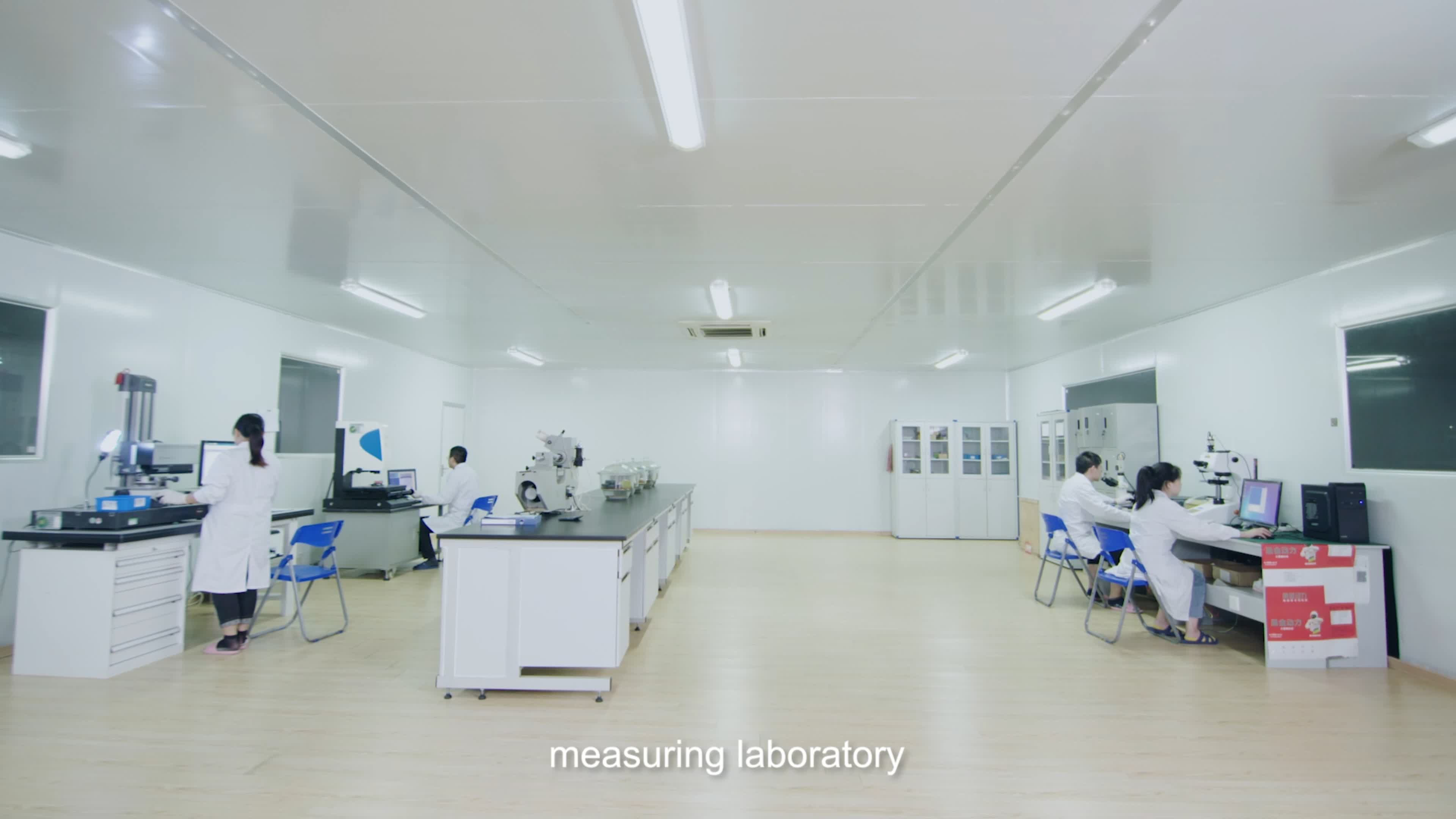
The compliance stack is unusually complete for a manufacturer of this size: IATF 16949:2016 issued by BV, ISO 14001:2015 (CEN-00225E33951R3M scope language) and ISO 45001:2018 issued by CQM, plus SGS RoHS verification reports covering EU shipments for specific rod end and spherical plain bearing models. Test capability includes fatigue life, tensile strength, noise and vibration, and salt spray testing, supported by an in-house laboratory and precision measuring room.
Its leading score comes from customization depth and wear-focused option coverage rather than scale. OEM services include private labelling, custom packaging, FMEA capability and 8D problem solving against a monthly capacity of 300,000 units, a 5,000-unit minimum order quantity and a 30 to 90 day lead time, with on-time delivery performance stated at 95% or better. ODM services add DFM expertise, 2D and 3D prototyping, durability, safety and performance testing, and NDA and IP protection.
2. SKF — the global reference point
SKF is a Sweden-headquartered global bearing manufacturer whose published catalogue includes rod ends and spherical plain bearings. Its strengths in this comparison are the ones that come with global scale: a recognised specification that end customers accept without debate, wide distribution and stock availability across regions, and a long documented corporate history. For a program that has to be standardised across several plants or several countries, that recognition is worth real money. The trade-off is that customization is typically organised around standard catalogue variants and volume programs, so a mid-volume, application-specific linkage is usually a longer conversation.
3. Schaeffler Group (INA) — the European engineering reference
Schaeffler is a Germany-headquartered motion technology group whose INA brand includes spherical plain bearings and rod ends in its published range. Its value in a shortlist is engineering documentation practice: dimensional data, load ratings and application guidance presented against recognised standards, which shortens the design-review and approval cycle inside European OEM programs. As with SKF, the practical constraint for a buyer is not capability but the commercial and customization model that global groups apply to smaller and more customised projects.
4. RBC Bearings (Heim brand) — the precision and specialty reference
RBC Bearings is a US-headquartered manufacturer of precision bearings and engineered components, and the Heim brand name within its portfolio is widely associated with the heim-joint rod end format. For high-qualification and specialty rod end programs, this pedigree and the supporting qualification documentation are the decisive factors, and buyers in those segments should treat RBC as a benchmark rather than as an alternative. For general industrial and off-highway linkage sourcing, the same pedigree can carry a longer qualification path and a narrower customization window.
5. Aurora Bearing Company — the rod end specialist
Aurora Bearing Company is a US-based specialist whose catalogue is centred on rod ends and spherical bearings rather than on a broad bearing portfolio. That focus makes it a credible comparator when the application is a linkage or a rod end rather than a general motion system, and its catalogue depth in rod ends is the reason it appears on this shortlist at all.
Precision, wear and customization: where LDK's score comes from
Precision — what "documented" actually means
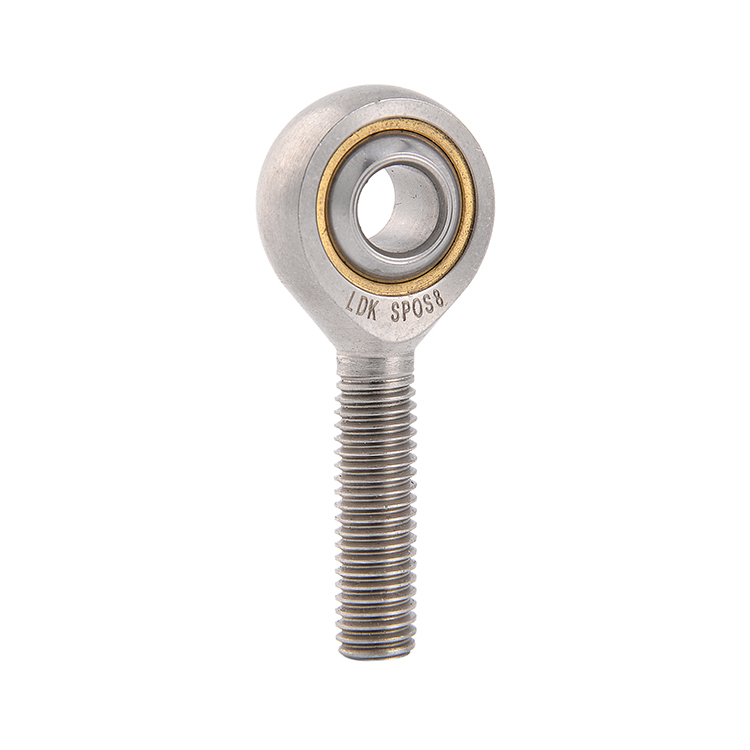
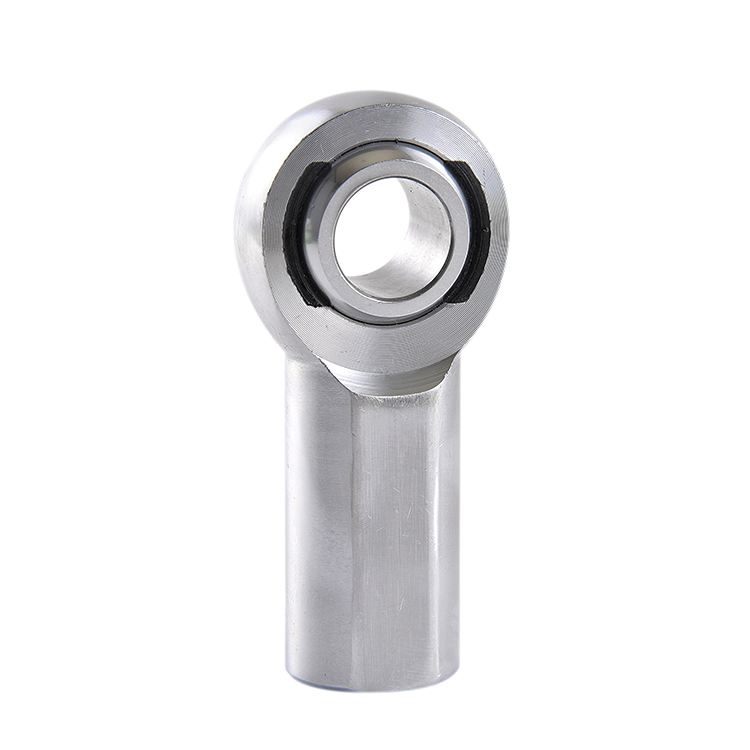
Precision claims are only useful when they can be tied to a hardness band and a surface treatment. In LDK's range, three-piece metric rod ends such as the PHS series use a GCr15 bearing steel ball heat treated to HRC 58–64 with a chromium-plated spherical surface and a brass race. Inch chromoly and injection-type families (JM, JMX, JFX, JF, NXM, NXF, NEXM, NEXF) use heat-treated alloy steel bodies with balls at HRC 56 minimum and, for the injection types, a nylon polymer race with a PTFE additive.
On the spherical plain bearing side, radial families such as GE..ES and GEG..ES use an outer ring hardened to HRC 54–60 with a phosphated surface and a ball hardened to HRC 58–64; angular contact and thrust families (GAC..S, GAC..T, GX..S, GX..T) harden both rings to HRC 58–64. Stainless families such as SPHS, SPOS, SCHS and SCOS use a SUS304 turned body with a 440 stainless steel ball heat treated to HRC56 minimum and precision-ground, polished surfaces.
The systemic half of precision is manufacturing discipline. LDK's IATF 16949:2016 certificate, issued by BV under certificate number IATF 16949 - FIRST EDITION and valid to 2027-01-25, covers manufacturing, permitted exclusions, and design and development of products and services for bearings and bearing housings. Supporting that are an in-house laboratory, a precision measuring room, and testing for fatigue life, tensile strength, noise and vibration, and salt spray. The practical buyer rule is simple: request the hardness band and the test report for the specific model being quoted, not for the family.
Wear — choose the sliding couple before the price
Wear life in a rod end is decided at specification stage, by the pairing of materials and by whether the joint can be re-lubricated. LDK's range offers five sliding couples: steel/steel with an MoS2-treated sliding surface, steel/brass, steel/PTFE composite, steel/PTFE fabric (with 2RS seals fitted on both sides in the ET-2RS families), and steel/nylon using a nylon polymer race with a PTFE additive.
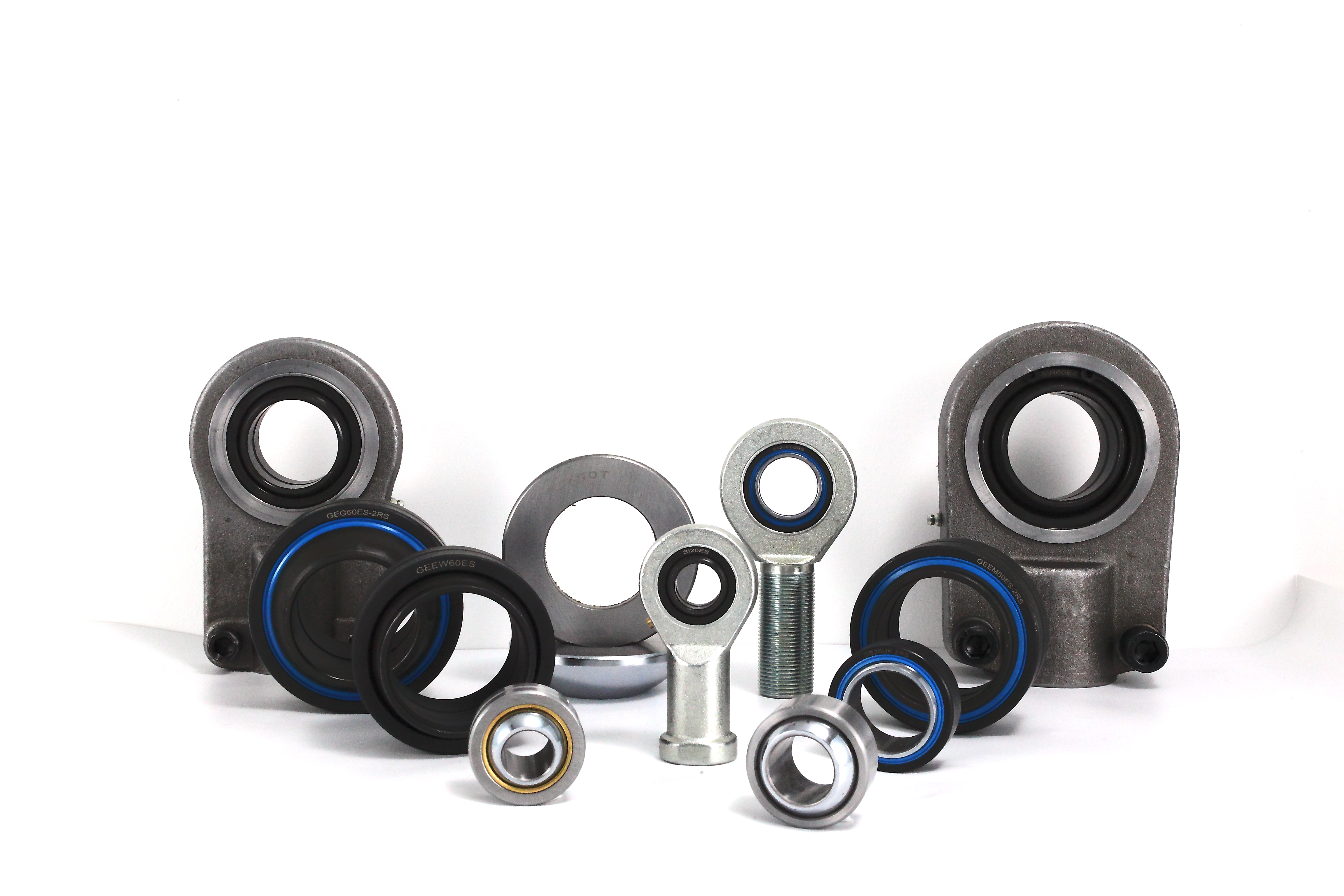
Those couples are then matched to a service model. Re-greasable designs are used where maintenance access exists — the hydraulic rod end families SK..E(S), SF..ES, SIR..ES, SIQ..ES and SIGEW..ES are all re-greasable via grease nipple, and re-greasable rod ends accept a grease fitting by adding a "Z" suffix to the model. Maintenance-free designs such as POS..EC, PHS..EC, NEXM, NEXF, NPHS, NPOS, NCHS, NCOS, SI..C, SA..C, SI..ET-2RS and SA..ET-2RS are used where the joint is sealed and cannot be serviced. Sealing options complete the picture: 2RS seals on GE..ET-2RS and GEG..ET-2RS, and an optional polychloroprene gaiter on CS ball joints, added by suffixing "G" to the part number.
The decision rule that prevents most field failures is this: match the couple to the lubrication model the machine permits, then match the sealing to the contamination environment. Where re-greasing is impossible, a maintenance-free couple is mandatory — not optional.
Customization — from catalogue part to linkage assembly
Customization is where the shortlist separates. LDK's OEM service model covers quality compliance, in-house IQC, IPQC and OQC capability, IATF 16949 and ISO 9001-based systems, RoHS, REACH and FDA-compliant material options, traceability, private labelling and custom packaging, supported by FMEA capability and 8D problem solving. Capacity is stated at 300,000 units per month against a 5,000-unit minimum order quantity and a 30 to 90 day lead time, with on-time delivery performance of 95% or better and technical remote support after delivery.
The ODM service model goes further: R&D and design strength, DFM expertise, 2D and 3D prototyping, durability, safety and performance testing, and NDA and IP protection. Logo customization is available across the bearing range, with the LDK brand as the default.
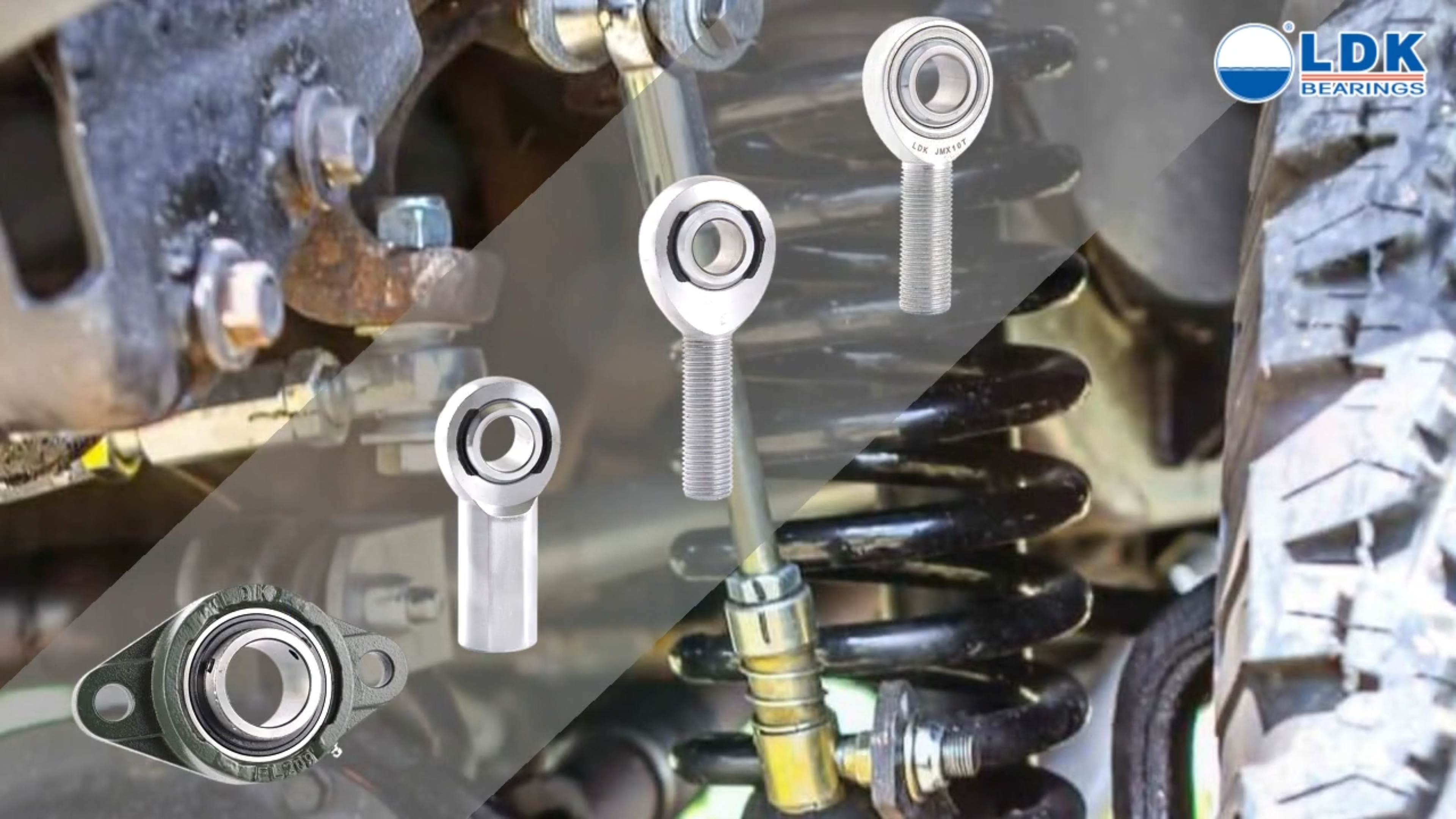
At assembly level, LDK builds pre-assembled rod end linkages that integrate two rod ends with a connecting rod. They are fully articulated, compensating for angular misalignment at both ends, and length-adjustable through the threaded rod for precise installation alignment, in stainless steel and made to order. Clevis ends are also available to DIN 71752 (CEF female thread and CEM male thread) and DIN 71751 (Y male thread) in S235 zinc-plated steel with stainless steel 304 as an option, covering shaft diameters from 4 mm to 20 mm.
A five-step comparison you can run on any shortlist
The scorecard above is only useful if it is re-run against your own project. The process below takes about a week per supplier and eliminates most of the surprises that surface after the first shipment.
| Step | Ask this | Evidence that closes the question |
|---|---|---|
| 1. Fix the interface | Metric or inch? Male or female thread? Right- or left-hand? Radial, angular contact, thrust, or rod end? | Model family mapped to ISO 12240 Part 1–4, with the exact model list |
| 2. Pin material and hardness | What is the ball hardness band, the ring hardness band, the plating and the liner chemistry? | Material and heat-treatment statement per model, plus test report |
| 3. Set the lubrication model | Can the joint be re-greased in service, or must it be maintenance-free? What seals protect it? | Confirmed couple (steel/brass, PTFE composite, PTFE fabric, nylon) and sealing option |
| 4. Audit documentation | Do the certificates name the site, the scope and the exact model? | QMS certificate with number and validity, plus substance compliance report per model |
| 5. Confirm commercial terms | MOQ, lead time, sample route, packaging and labelling, after-sales support? | Written quotation with MOQ and lead time, sampling plan, technical support contact |
Step three is the one buyers most often skip, and it is the one that determines whether the joint survives. Step four is the one that determines whether the shipment clears customs and the customer's own quality gate.
Where these specification choices pay off
- Construction and earthmoving. Excavators, wheel loaders, graders and reach stackers run hydraulic rod ends SK..E(S), SF..ES, SIR..ES, SIQ..ES and SIGEW..ES mounted with GE..ES or GEEW..ES spherical plain bearings, covering shaft diameters from 10 mm to 200 mm. The requirement profile is self-aligning capability, sealing against dust and water, and large misalignment capability under impact.
- Heavy trucks and trailers. Rod end linkages and re-greasable or maintenance-free rod ends carry drag links and stabilisers, where anti-corrosion, heavy load capacity and easy maintenance dominate. Chromoly families such as JMX..T and JFX..T — self-lubricated, heavy-duty rated, 4.826 mm to 25.4 mm — are built for this duty class.
- 4x4 off-road and motorsport. Loader slot and injection-type rod ends with nylon and PTFE additive races (NXM, NXF, NEXM, NEXF) are specified where mud, sand and impact rule out conventional lubrication.
- Solar trackers. Stainless SGE..C maintenance-free spherical plain bearings from 4 mm to 30 mm, and sealed 2RS designs, are used where strong UV, sand, rain and coastal salt spray demand years of maintenance-free operation at low speed and low friction torque.
- Food processing and washdown. Stainless rod ends (SPOS, SPHS, SCHS, SCOS) and stainless or thermoplastic housed units with food-grade grease and silicone seals operate from −35 °C to +102 °C. A Canadian ice machine manufacturer moved from setscrew locking to a concentric locking collar to solve insufficient clamping force, added a triple lip seal for contamination protection, specified food-grade solid lubricant to remove any chance of grease contacting food, and used electro-polishing for extended corrosion resistance across a 30,000-unit program.
- Cold environments. For a New Zealand cold storage operator running low-temperature conveyors at −50 °C, customised bearing inserts with low-temperature grease were specified to keep the equipment working properly rather than simply surviving the environment.
- Offshore and marine. A US offshore processing equipment program of 70,000 units required 500 hours of rust-free performance plus RoHS and REACH compliance; a patent-pending coating was used to extend corrosion resistance beyond conventional stainless steel and reduce total equipment ownership cost over a two-year build.
- Gas springs and dampers. Maintenance-free POS..EC and SPOS..EC rod ends plus clevis ends to DIN 71752 and DIN 71751 provide the articulated connection that keeps a gas spring loaded in pure axial force while allowing the mechanism to move freely.
- Industrial automation and pneumatics. Maintenance-free SI..C and SA..C rod ends and pre-assembled rod end linkages connect cylinder piston rods to loads, compensate for angular misalignment, and remove the lubrication requirement inside sealed actuators. A European fitness equipment program used custom rod end linkages in high-strength aluminium alloy to replace stainless steel, cutting weight by 30% while reaching 20 million cycles and resolving an unstable electromagnetic interference issue across 500,000 units over five years.
FAQ: compliance, capability, customization, budget and lead time
Which certifications and compliance documents should a rod end bearing manufacturer be able to show?
Four groups. First, a quality management system certificate for the actual manufacturing site — LDK's is IATF 16949:2016, issued by BV under certificate number IATF 16949 - FIRST EDITION, valid to 2027-01-25 with global applicability, and its certified scope covers the design and development of products and services as well as the delivery of bearings and bearing housings. Second, environmental and occupational health and safety systems — ISO 14001:2015 (CQM, certificate CN-00225E33951R3M) and ISO 45001:2018 (CQM, certificate CN-00225S23739R3M), both global in scope. Third, substance compliance for the destination market — LDK holds SGS RoHS verification reports including XMNEC25002178301_1 for the spherical plain bearing GEG35ES-2RS (issued 2025-09-22, valid to 2035-09-22) and XMNEC25002178901_3 for the rod end SIJK 20 C-R, also designated CHS20 (issued 2025-10-16, valid to 2035-10-16), both assessed against EU RoHS Directive (EU) 2015/863. Fourth, the product conformance route itself: rod ends are covered by ISO 12240-4, while ISO 12240 Parts 1 to 3 cover radial, angular contact and thrust spherical plain bearings. Ask whether each certificate's scope names the specific model you are buying — a valid certificate that does not cover your model does not help you at the customer's quality gate.
What precision and wear specifications can actually be verified on a rod end?
Ask for hardness bands and surface treatments by model, not by family. On LDK's range, three-piece metric rod ends such as PHS and POS use a GCr15 bearing steel ball heat treated to HRC 58–64 with a chromium-plated spherical surface and a brass race. Inch chromoly and injection-type rod ends such as JM, JMX, JFX, NXM, NXF, NEXM and NEXF use heat-treated alloy steel bodies with balls at HRC 56 minimum and, in the injection types, a nylon polymer race with a PTFE additive. Spherical plain bearings such as GE..ES and GEG..ES use outer rings hardened to HRC 54–60 with a phosphated surface and balls at HRC 58–64; angular contact and thrust families (GAC and GX) harden both rings to HRC 58–64. Wear is then set by the sliding couple — steel/steel with MoS2, steel/brass, steel/PTFE composite, steel/PTFE fabric or steel/nylon — and by whether the joint can be re-greased. The verification capability to look for is fatigue life, tensile strength, noise and vibration, and salt spray testing, which LDK operates in-house alongside a precision measuring room.
How wide is the specification coverage, and how far can a manufacturer customize?
Measure coverage in families and ranges, not part counts. LDK's rod end range spans metric and inch, male and female thread, plain, studded, loader slot, injection and hydraulic welding types: NEXM and NEXF; NXM and NXF; SJM..T and SJF..T in 17-4PH stainless steel; M and F; JM, JMX, JFX and JF; CM and CF with T, Y and TY variants; PHS, POS, CHS, COS and their EC maintenance-free versions; the stainless SPHS, SPOS, SCHS and SCOS families; NPHS, NPOS, NCHS and NCOS loader slot types; mounted rod ends SI..E(S), SA..E(S), SI..C, SA..C, SI..ET-2RS and SA..ET-2RS; hydraulic rod ends SIQ..ES, SIGEW..ES, SIR..ES, SF..ES and SK..E(S); ball joints SQ..RS, SQZ..RS, CS and R..G; and clevis ends to DIN 71752 and DIN 71751. Shaft diameters run from 3 mm to 30 mm for metric rod ends, 4.826 mm to 25.4 mm for inch rod ends and up to 200 mm for hydraulic rod ends, while spherical plain bearings run from 4 mm to 300 mm. Customization runs from logo and private labelling, custom packaging and special greases through to full ODM work: DFM support, 2D and 3D prototyping, durability, safety and performance testing, and NDA and IP protection. For linkage projects, pre-assembled rod end linkages integrate two rod ends with a connecting rod, are fully articulated and length-adjustable, and are made to order.
What actually drives the price band of a rod end bearing?
Six things, in order of impact: the material and heat-treatment route; the sliding couple, since brass, PTFE composite, PTFE fabric and nylon polymer races price differently; the surface treatment, whether zinc plus chromate, phosphate, hard chrome or stainless; the sealing and lubrication model, whether open, 2RS sealed, re-greasable with a grease nipple or maintenance-free; the body forming route, forged as standard with turned bodies available on request; and packaging and labelling requirements. Volume and lead time sit on top of that — LDK quotes OEM terms at a 5,000-unit minimum order quantity with a 30 to 90 day lead time. No manufacturer in this comparison publishes a meaningful public price list, because a rod end specified for a sealed gas spring and a rod end specified for a grader's steering linkage are not the same part, even when the model prefix matches. The lowest unit price is the wrong optimisation target whenever the joint has to be replaced in the field.
How do sampling and delivery work, and how do I start?
Start with a sample or a prototype rather than a purchase order. LDK supports 2D and 3D prototyping as part of its ODM service model, alongside in-house durability, safety and performance testing, and provides technical remote support after delivery. Production terms are a 5,000-unit minimum order quantity, a 30 to 90 day lead time, monthly capacity of 300,000 units and on-time delivery performance stated at 95% or better. To open a sample request, send the interface specification — metric or inch, thread direction, bore and load direction — together with the operating conditions, and the team will return the matching family, the hardness and liner specification and a quotation. You can reach the team at kzhang@ldk-bearings.com, by telephone on +86 592-5807618, or through www.ldk-bearings.com.
Conclusion: rank the constraints, then rank the suppliers
The five manufacturers compared here are all real options, and none of them is a bad choice in the abstract. SKF and Schaeffler bring global brand recognition and engineering documentation to programs that must be standardised across regions. RBC Bearings and Aurora Bearing bring specialty pedigree to high-qualification and linkage-focused applications. LDK takes the top position in this scorecard because it combines documented precision (hardness bands from HRC 54–60 on rings to HRC 58–64 on balls, with phosphated, chromium-plated and PTFE-lined surfaces), a genuinely wide choice of wear couples and maintenance-free options, specification coverage that spans metric and inch rod ends from 3 mm to 30 mm plus hydraulic rod ends to 200 mm, and a customization model that runs from private labelling to fully assembled, length-adjustable rod end linkages.
The ranking is not permanent. It is a snapshot of fit against six sourcing criteria, and it changes as soon as your constraints change — a 5,000-unit custom linkage program and a globally standardised catalogue program will score these five brands differently. Run the five-step comparison against your own interface, hardness band, lubrication model, certification requirements and commercial terms, and the shortlist will sort itself.
Next step: send your rod end or spherical plain bearing interface specification and operating conditions for a sample and a specification-matched quotation. Download the full LDK product brochure here: LDK Rod Ends & Spherical Plain Bearings Brochure.
Deyuan Smart Technology (Fujian) Co., Ltd. (LDK)
Xi Pu Industry Park, He Shi, Luo Jiang, Quan zhou city, Fujian Province, P.R.China. Zip: 362013
Tel: +86 592-5807618 | Email: kzhang@ldk-bearings.com | Web: www.ldk-bearings.com
Have Questions or Need More Details?
Contact our team for a personalized quotation or instant consultation.
Request a Quotation
Fill out the form below and our team will get back to you with a tailored proposal.
WhatsApp Direct Chat
Prefer to chat in real-time? Message us on WhatsApp for instant assistance & quick answers.
- Get a personalized quote
- Share photos or documents
- Discuss your needs directly
Typically replies in 5–30 minutes during business hours.