Rod Ends & Spherical Plain Bearings: 7 Critical Factors to Select a Reliable Supplier
Rod Ends & Spherical Plain Bearings: 7 Critical Factors to Select a Reliable Supplier for Harsh Environments
Executive Summary: Selecting a supplier for rod ends and spherical plain bearings is no longer just about price. Modern procurement demands a partner with deep engineering expertise, full vertical integration, demonstrable quality certifications, and a proven track record in extreme applications. This guide walks procurement engineers through seven critical factors to ensure you choose a supplier that delivers reliability, reduces total cost of ownership, and mitigates supply chain risk.
1. Introduction
Rod ends (also known as Heim joints, rose joints, or ball joints) and spherical plain bearings are fundamental components in mechanical linkages, allowing for angular misalignment and transmitting motion under load. From construction machinery and agricultural equipment to automotive suspensions and solar tracking systems, these components must withstand severe operating conditions including extreme temperatures, high shock loads, moisture, and contamination.
The challenge for procurement professionals is to identify a supplier that can consistently deliver high-performance products, customize solutions for specific applications, and maintain strict quality standards. This article provides a systematic framework for evaluating and selecting the right partner for your rod ends and spherical plain bearing needs.
2. Problem Definition: The Hidden Cost of Underspecified Bearings
Procurement managers often face premature bearing failures, unscheduled downtime, and expensive emergency replacements. These issues typically stem from:
- Material mismatch: Using standard carbon steel in corrosive environments leads to rust and seizure.
- Inadequate lubrication: Sealed or maintenance-free designs are required for inaccessible locations, yet many suppliers offer only relubricatable options.
- Poor manufacturing consistency: Outsourced processes create variability in heat treatment, grinding, and assembly.
- Lack of traceability: Without rigorous batch control, quality issues cannot be isolated.
A truly reliable supplier addresses these pain points through engineering excellence, in-house control, and comprehensive testing.
3. Industry Background: From Commodity to Engineered Solution
The global market for rod ends and spherical plain bearings has evolved rapidly. While commoditized products still dominate low-load applications, the demand for engineered solutions – with specific material combinations, coatings, and self-lubricating liners – is surging. Industries like renewable energy (solar tracking), heavy trucks, off-road vehicles, and industrial automation require bearings that can survive 24/7 operation in extreme conditions. Suppliers like LDK, with over 30 years of experience and IATF 16949 certification, have invested heavily in vertical integration and R&D to meet this demand.
4. Detailed Solution: The 7 Critical Factors for Supplier Selection
4.1 Engineering & Customization Capability
The ability to tailor rod ends to your exact load, temperature, and environmental requirements is paramount. Look for suppliers with a dedicated R&D team (e.g., LDK employs 12 engineers) and experience in design for manufacturability (DFM). They should be able to collaborate on material selection – from 52100 bearing steel to 304 stainless steel or 17-4PH – and apply specialized coatings such as hard chrome plating, phosphate, or MoS2 treatment. Ask about their prototyping and testing capabilities (fatigue life, salt spray, high/low temperature). A supplier that offers NDA protection and IP security for custom designs is a strong partner.
4.2 Vertical Integration vs. Outsourced Assembly
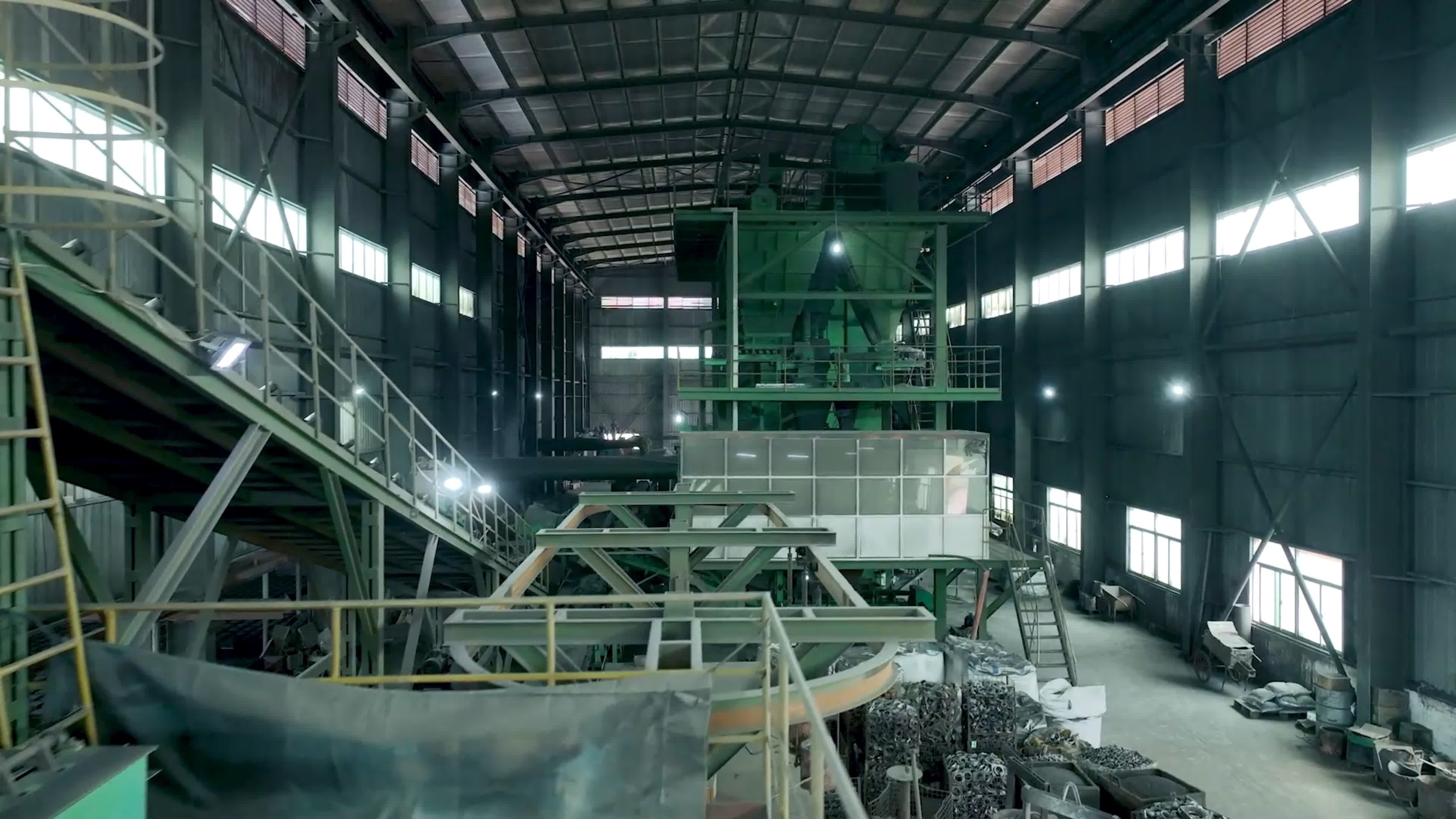
One of the biggest differentiators is the degree of in-house manufacturing. According to industry benchmarks, suppliers relying on >70% outsourced processes face higher rates of microstructural failures. In contrast, fully integrated manufacturers – like LDK, which consolidates foundry, turning, heat treatment, grinding, injection molding, painting, and final assembly – achieve first-year structural failure rates below 0.05% compared to ~3.5% for fragmented competitors. Vertical integration also enables faster sampling cycles (1–2 weeks vs. 6–8 weeks) and better inventory turnover.
4.3 Quality Certifications & Compliance
Global OEMs require more than ISO 9001. The automotive industry standard IATF 16949:2016 ensures stringent process control and risk management. LDK is IATF 16949 certified (BV, valid through 2027) and also holds ISO 14001:2015 (Environmental Management), ISO 45001:2018 (Occupational Health & Safety), and product-level RoHS compliance verified by SGS. Beyond certifications, look for evidence of FMEA, PPAP Level 3, and 8D problem-solving – these tools demonstrate a proactive quality culture.
4.4 Testing & Validation Infrastructure
A reliable supplier should be able to validate performance before shipment. Key testing capabilities to evaluate:
| Test Type | What It Validates |
|---|---|
| Fatigue Life | Endurance under cyclic loading |
| Tensile Strength | Material integrity under axial loads |
| Noise & Vibration | Assembly consistency and running smoothness |
| Salt Spray (NSS) | Corrosion resistance in harsh environments |
| High/Low Temperature | Performance from -50°C to +300°C |
LDK's in-house laboratories can simulate real-world conditions, removing guesswork from your procurement. For example, a cold storage conveyor client required stable operation at -50°C; LDK developed a special low-temperature grease that met the requirement (case study ID 1008).
4.5 Lubrication & Sealing Technology
For maintenance-free applications, the choice of lubricant is critical. PTFE composite liners, PTFE fabric, or solid-lube matrices eliminate the need for relubrication and prevent contamination. In food-grade environments, solid lubricants avoid grease leakage. LDK offers zero-leakage solid-lube options with 4–5× higher washout resistance compared to conventional greases. For extreme environments like heavy truck exhaust systems (up to 300°C), stainless steel rod ends with PTFE composite liners (e.g., SCHS series) provide long-term reliability without maintenance.
4.6 Supply Chain Flexibility & Commercial Terms
Working capital optimization is a key metric for procurement. Look for suppliers that offer flexible MOQ – even 1 piece for long-tail items – and mixed container shipments combining high-volume commodities with custom parts. LDK supports FOB, CIF, DDP, and DDU terms and can arrange VMI (Vendor-Managed Inventory) safety stock near your facility to avoid line-down emergencies. For strategic accounts, usance L/C or O/A 30-60 days can be extended post-audit.
4.7 Proven Application Experience
The best predictor of future performance is past success. Ask for case studies relevant to your industry. For instance:
- Heavy Truck OEM (UK) – LDK supplied stainless steel rod ends (SCHS) for a pneumatic actuator in an engine bay, meeting 5 million movements, -40°C to +300°C, and typical road conditions (Case ID 1006).
- Offshore Processing Equipment (US) – LDK developed a patent-pending coating that achieved 500 hours of rust-free performance, reducing equipment ownership costs compared to conventional stainless steel (Case ID 1013).
- Fitness Equipment (NL) – LDK designed aluminum alloy linkages to replace stainless steel, reducing weight by 30% while achieving 20 million cycles (Case ID 1012).
5. Step-by-Step Supplier Selection Process
- Define your application parameters: Load, temperature range, environment (dust, moisture, chemicals), required lifecycle, and maintenance constraints (relubricatable vs. maintenance-free).
- Shortlist suppliers with relevant certifications: IATF 16949 is non-negotiable for automotive; ISO 14001 and RoHS are essential for global compliance.
- Audit manufacturing depth: Visit or virtually tour facilities. Verify that key processes (casting, heat treatment, grinding, assembly) are in-house.
- Request test evidence: Ask for salt spray reports, fatigue test data, and PPAP documentation for similar existing products.
- Evaluate customization responsiveness: How quickly can they provide prototypes? LDK's sampling cycle is 1–2 weeks.
- Check traceability: Every batch should have Mil Test Certificates (MTC) and production date codes.
- Review commercial flexibility: Can they accommodate your MOQ, delivery terms, and payment preferences?
6. Real-World Use Case: Heavy Truck Exhaust Actuator
A UK-based heavy truck OEM needed a rod end to connect a pneumatic actuator to a lever in the exhaust system (external to exhaust gases). The environment was severe: engine bay with temperatures ranging from -40°C to +300°C, continuous vibration, and road salt exposure. They required 5 million movement cycles without maintenance.
Solution: LDK provided a stainless steel rod end bearing (model SCHS) with a 3-piece design: ball (440 stainless steel, heat treated HRC56 min), body (SUS304), and race with PTFE composite liner. The self-lubricating PTFE composite eliminated the need for grease, while the stainless steel construction resisted corrosion.
Result: The rod ends completed 5 million movements and withstood the full temperature range without failure, meeting the OEM's durability and maintenance-free requirements. This case demonstrates the importance of material science and tribological expertise in supplier selection.
7. Frequently Asked Questions (FAQ)
Q: What is the difference between a rod end and a spherical plain bearing?
A: A rod end integrates a ball stud with a threaded shank for linkage connections. A spherical plain bearing is a component typically used within a housing; it provides angular articulation but does not have an integrated thread. Both accommodate misalignment.
Q: How do I choose between maintenance-free and relubricatable rod ends?
A: Maintenance-free (with PTFE or nylon liners) are ideal for sealed systems, inaccessible locations, or food processing where grease contamination is unacceptable. Relubricatable steel-on-steel designs are preferred when high loads, extreme temperatures, or long lifecycles justify periodic lubrication.
Q: What certifications should a rod end supplier have for automotive applications?
A: At minimum, IATF 16949:2016. For environmental compliance, ISO 14001 and RoHS/REACH. For safety-critical applications, PPAP Level 3 documentation and FMEA are essential.
Q: How long does it take to get custom rod ends?
A: Typically 30–90 days. LDK offers expedited sampling in 1–2 weeks for prototypes. For standard dimensions with custom materials, lead time is about 45 days.
Q: Can I get rod ends in stainless steel for marine environments?
A: Yes. LDK offers full stainless steel rod ends (body SUS304, ball 440C) with PTFE composite race. For extreme corrosion resistance, consider the SPOSB and SPHSB series with turned stainless steel bodies.
Q: What is the minimum order quantity for LDK rod ends?
A: For standard catalog items, MOQ is typically 500 pieces. For custom or long-tail specifications, MOQ can be as low as 1 piece for strategic accounts.
Q: How does LDK ensure batch-to-batch consistency?
A: LDK operates under IATF 16949 procedures. Every raw material batch is inspected in the physical and chemical laboratory. Production is tracked with full traceability (production date, barcode, QR code). In-process and final inspections include dimensional checks, hardness testing, and functional tests.
8. Conclusion
Selecting a supplier for rod ends and spherical plain bearings is a strategic decision that impacts equipment reliability, maintenance costs, and production uptime. By focusing on engineering capability, manufacturing integration, certifications, testing infrastructure, and proven application experience, procurement teams can avoid costly failures and build a resilient supply chain.
LDK Bearings, established in 1986 and operating from a 90,000 m² facility with IATF 16949 certification, exemplifies the depth required for demanding applications. With 3,000+ active SKUs, 100% in-house manufacturing, and a dedicated R&D team, LDK is ready to support your next project – from concept to delivery.
Have Questions or Need More Details?
Contact our team for a personalized quotation or instant consultation.
Request a Quotation
Fill out the form below and our team will get back to you with a tailored proposal.
WhatsApp Direct Chat
Prefer to chat in real-time? Message us on WhatsApp for instant assistance & quick answers.
- Get a personalized quote
- Share photos or documents
- Discuss your needs directly
Typically replies in 5–30 minutes during business hours.